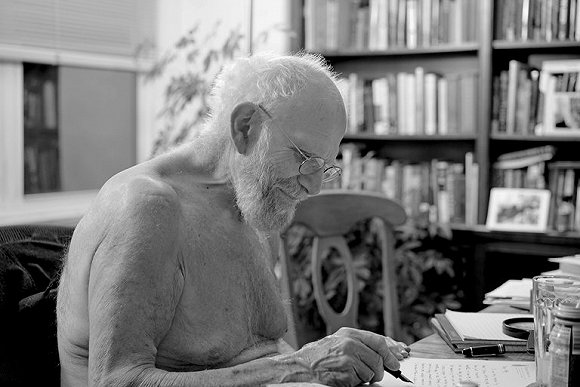
Oliver Sacks was a great example of how to deal with death. In February 2015, Oliver learned that his cancer had metastasized to his liver and spread - a rare form of eye cancer. "I have to look death in the face," he declared in an op-ed in The New York Times. He no longer discussed political news or global warming. "I have to focus on my body, my job, my friends."
In the following months, Sacks wrote articles about his views on death and his expectations about how to spend the rest of his life before his death, and compiled them into the author's last book, "Gratitude." Sachs passed away on August 30, 2015, exactly one year ago.
As one of the most important contemporary science writers, Oliver Sachs is known as the "Poet Laureate of Medicine". He is a doctor, writer, professor, speaker and scientist. He is a member of the American Academy of Arts and Letters and has won the Guggenheim Academic Award. A flamboyant medical scholar who regularly published feature stories about neurological disorders, readers of his New Yorker column called him a "clinical writer."
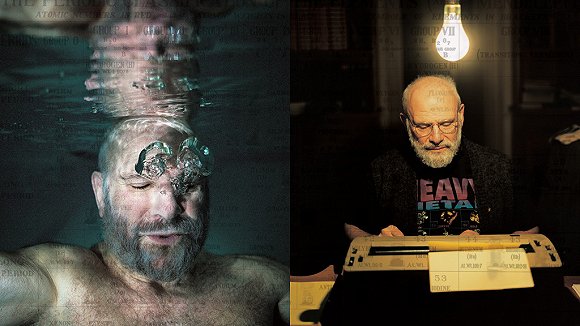
Sachs was born into a Jewish family in London, England, in 1933. He experienced the London bombing in his childhood. The person who had the greatest influence on Sachs as a child was his uncle Dave, a light bulb manufacturer. Sachs later wrote "Uncle Tungsten - The Chemical Love of Young Sachs" about his uncle and his childhood life. Under Dave's influence, Sax developed a strong interest in chemistry, which would repeatedly influence Sax in his later life. "Washington Post" writer Heller McAlpine once mentioned in an article commemorating Sacks that the 82nd element (lead) was placed on Oliver Sachs's desk, which was a birthday gift when he was 82 years old.
In 1951, Sacks entered Queens College, Oxford University, to study medicine. Later he went to UCLA for neurology and psychiatry fellowship. Since then, Sacks has been more than just a clinician, devoting himself to exploring the inconveniences patients face when dealing with difficult and complex diseases.
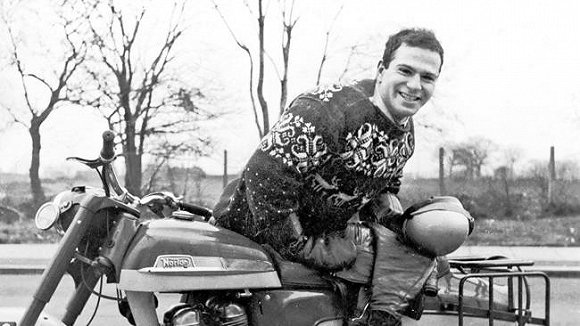
Many years later, Sacks himself described his thoughts at that time: "In modern medical history, patients are mentioned only in passing, and the patient is mentioned in passing.For example, 'Albino woman with chromosome pair 21', but this sentence can be used both for humans and mice. Sacks hopes to try more to restore the central theme of scientific articles about people—those who suffer and struggle with disease.
He rewrote these bizarre patient stories one by one and published them in The New Yorker, which earned Sacks a reputation in the public sphere. In 1973, Sachs's novel "The Awakening" was published. It described a patient suffering from a kind of "narcolepsy encephalitis". The novel was later adapted into the movie "Speechless" and won an Oscar.
After that, Sachs began to write a series of medical anecdotes that he had personally experienced or heard, and adapted them into literary works. "Standing on One Leg" in 1984 is based on his story of rupturing a tendon in his left leg after being attacked by a bull in Norway. "Mistaking My Wife for a Hat" in 1985 introduced readers to the pain of Tourette's disease, Alzheimer's disease and other brain diseases. Ten years later, the work "Anthropologist on Mars" was based on the autistic scientist Temple Grandin.
About the same era when he began his literary creation, Sacks began corresponding with the Soviet neuroscientist A.R. Luria. Both of them believed that the human brain has "excellent plasticity and amazing adaptability." In part, encouragement from his peers gave Sacks the confidence to continue working on his expository writing.
Some critics pointed out that what Sacks did was just a freak show that sold poor patients. For example, in "Mistaken My Wife for a Hat," Sacks wrote 24 stories of patients with neurological disorders in succession. These stories are full of comedy and tragedy. However, readers who support Sacks believe that the various bizarre encounters of clinical patients in daily life are tantamount to a modern version of "The Metamorphosis". It was Sachs who made more people pay attention to the conditions of patients with these diseases.
Shortly before Sachs was diagnosed with cancer, he recalled in a column his relationship with movie star Robin Williams, who gave Oliver a vivid imitation of his pet, a green iguana, during a lunch. Robin Williams is not only the star of "Speechless", but also a loyal reader of Sacks himself. He once publicly claimed that Sachs's writing had a huge influence on him. In August 2014, the famous actor hanged himself at home.
Most of Chinese readers’ impressions of Sachs come from his 2009 TED talk “Understanding Our Minds through Hallucinations”. In his speech, he was full of witty remarks and told about a 90-year-old blind woman who had hallucinations due to Charles Bonnet Syndrome at the age of 95 and could “see” again. When doctors tell old women about their diagnosisAt the end of the day, the old woman was very happy: "Tell the nurses, I'm not crazy, I just have Charles Bonnet syndrome."
It has been a year since his death, and we may have missed Saxophone in the New Yorker column, but Chinese translations of several of his works have been published in China, including "The Man Who Mistook His Wife for a Hat" and "The Man with 2,000 Operas in His Head" in the "Dr. Sachs Storytelling" series published by CITIC Publishing House. I hope that in his Chinese version of his works, we can appreciate this outstanding soul whose "writing always reveals elegance, intelligence and unfathomable humanity".