
Editor's note: Yes, John le Carré, who wrote many spy novels and fabricated many other stories, finally decided to tell the complete story of what happened to him after he turned eighty. This autobiography, titled "The Pigeon Tunnel", is now being serialized in the British "Guardian". Century Wenjing Publishing Company, which has published many Le Carré novels, has purchased the Chinese copyright of this book. The Chinese translation is tentatively titled "Pigeon Hole" and is now looking for a translator.
Le Carré was one of the great novelists of the postwar period, and his identity as a writer and MI6 agent gave his life great meaning. He insisted that he was a writer who became an agent by accident, not an agent who became a writer.
His memoirs record his writing experience in detail, supporting his long career until his final success. In his autobiography, Le Carré also focused on recalling Margaret Thatcher, Rupert Murdoch, Yasser Arafat, and other literary and political figures.
In his autobiography, Le Carré recalled his troubled relationship with his father, Ronnie, whom he described as a "liar, a dreamer, a prisoner." In the eyes of Le Carré both as a child and as an adult, his father Ronnie was a very eccentric person, and he also beat his mother Olive.
Le Carré wrote: "Of course Ronnie would hit me, but only in the minority. Moreover, I would receive phone calls from him from prisons in various countries asking for money. ”
“Today, I don’t remember any love I received in my childhood, except for my brother, who was my only relative. ”
Le Carré's real name is David Cornwell. In his autobiography, he also mentioned his creative habits. He said: “I like to write while walking, on a walk, on the train or in a café, in my notebook. ” He avoids using laptops, explaining this: “Maybe I’m arrogant, but I still prefer to use traditional habits that have been handed down from before.” ”
In 1982, Mrs Thatcher invited le Carré to lunch. Le Carré said he did not elect her during the election. At the time, he had just returned from a trip to the Middle East to advocate for stateless Palestinians. Mrs. Thatcher told Le Carré scornfully that Palestine had trained a bomber force and had killed her friend Ari Neave.
Le Carré was somewhat unkind to Murdoch in his autobiography. When they met in 1991, Le Carré thought Murdoch seemed smaller than the last time he saw him. Le Carré wrote about this celebrity who achieved one thing after another, with a small frame, a hurried step, and his hand extending out of the camera when taking pictures.
Murdoch asked le Carré directly who killed Robert Maxwell after he fell off the yacht? In fact, Le Carré did not know it, but gave Murdoch a hint of Israeli intelligence. Murdoch left shortly after, and le Carré wrote, "The incident probably occurred about 25 minutes into lunch." ”
Le Carré could not forgive King Philby, a British agent and journalist who later fled to Moscow and betrayed information about hundreds of agents to the Soviet Union. For Edward Snowden, le Carré was more sympathetic. At that time, the British public was encouraged by the media to comply with their invasion of their privacy.
Le Carré has written books or articles on personal themes before, but this is a complete autobiography. The autobiography was released by Penguin Press on September 6. It has a subtitle called "The Story of My Life." The autobiography writes about Le Carré's 1963 spy novel "The Spy in Berlin," which made him famous. This novel brought his life into the ups and downs.
Le Carré was fond of the famous actor Richard Burton, and Alec Guinness played George Smiley in the film adaptations of Le Carré's Tinker, Tailor, Soldier, Spy and Smiley's Men. When le Carré, Guinness and the old MI6 leaders were having dinner, they noticed that the retired agents were very poorly dressed and asked: "Are all our agents dressed like this?" ”
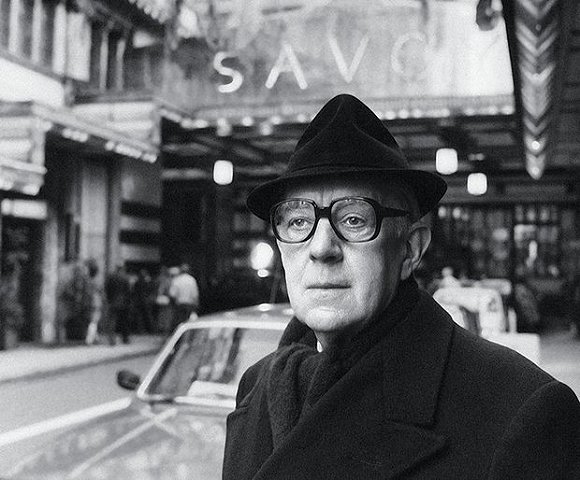
Le Carré expressed his frustration with the film industry. He wrote: "No one can surpass Hollywood in mime." ’ He named a string of well-known directors, including Fritz Lang and Stanley Kubrick, who had promised and failed to adapt his books into films.
Le Carré is now in his 80s and has been married twice. He admitted: "I am not a model husband or a good father, and I am not interested in becoming that person." ” He has lived in Korver for more than 40 years and declined most interviews. However, the amount of his output is staggering: more than 20 novels in total.
The title of the autobiography gives us a typical sense of desolation. The autobiography also mentions a sports club in Monte Carlo that Le Carré went to with his father as a child. There, the pigeons were released from the tunnel and shot down just as they were about to fly over the Mediterranean. The surviving pigeons returned to the roof and were sent into the tunnel again.
He wrote: "Readers may be able to give a better answer as to why this scene has remained in my mind for so long." ”
(Translation: Wang Yunqi)