This question was posed to myself as a summary of my ten years at Google.
The emphasis on "not showing off" is mainly to remind yourself not to fall into the following clichés:
After resigning, you rely on slandering your former employer, gossiping about your former employer, and revealing secrets about your former employer to gain a position (this is a bad thing)
Satisfy the public’s curiosity
Boast yourself and belittle others
I joined Google in March 2006 and left in September 2016. Title/position when leaving was Staff Software Engineer/Manager. 10.5 years before and after, roughly divided into three phases:
In the first two years, I focused on Linux desktop search products and Google's open source projects.
In the past three years, I spent a lot of effort on Google China-related products, such as input methods and Google Music.
In the next four to five years, I worked roughly within the scope of Knowledge Graph. This work is inseparable from the recent major changes in Google Search and Google Now.
During this period, a lot of code was written and the team led several projects. In addition, over the years, I have been working as 20% of the developers on the Google Doodles team to help develop those fun homepage doodles - well, it is true, there are many fun Doodles with my small contribution.
What did you learn? Well, there are many and they are very complicated. Let me pick out the three or four most important ones:
Living in a differentiated world for the first time
The domestic education atmosphere has always disliked differentiation. Terms such as personal hobbies, adventurous spirit, and maverick will always make parents, teachers, and even leaders and officials worry. Growing up, I basically lived in a world that tried to keep all children in rulers, frames, and cages; you can imagine how a post-70s generation like me would feel when he stepped into Google.
Google, Apple, Facebook, Twitter... For employees, these companies themselves are big families and big societies that encourage differentiated survival. Among them, Google always plays a leading role, which is something to be proud of working at Google.
The biggest advantage of differentiation is that you have the opportunity to meet all kinds of amazing people. Then, when you work with people who have hugely different outlooks on life, lifestyles, personal hobbies and even behavioral habits, you will truly feel that the world you live in is not monotonous at all. There are too many interesting people and interesting things here waiting for you to discover.

Don't be surprised to see any difference at Google.
Talk about it at a young age, there are people around me who are huddled in a corner and writing.Code, a social phobia patient who hates communicating with others, and a high-spirited social star. In the office, there are caring people who bring their dogs to work, good parents who value family, dreamers who work all night long, and technical geeks who are obsessed with strange hobbies...
Take hobbies as an example. Among the colleagues I have worked with, fun hobbies include: building weird bicycles in the garage every day, taking an unpaid vacation to help others run for president, traveling to a place I have never been to every weekend to take photos of my trip, studying ancient phonology, going to the sea to investigate marine life, long-term reselling of second-hand photography equipment, writing science fiction novels, trying to skydive outside the atmosphere and breaking world records...
Of course, if you respect differences, you can't stop anyone from going to bed from morning to night and spending only two hours a day doing what it takes others twelve hours to do.
More broadly, Google’s support for the LGBT community is well known. I initially understood this support more as something on the “political correctness” level. It didn’t take me long to realize how superficial my understanding was. Once, a video of a romantic proposal by a gay man in the company cafeteria at Google's San Francisco office went viral and moved many colleagues. Later I remembered that I had met one of the happy lovers at a conference in Silicon Valley.
On another occasion, my entire team received an email from a senior executive announcing his gender change, saying that from that day on, everyone would need to call him "she". Contrary to what many people understand, these things happening around you do not always remind you of the existence of the LGBT community. On the contrary, the more you experience them, the less you notice them - they or they are ordinary members of the human race, not much different from you and me.
When I was watching the documentary HUMAN recommended by Google on YouTube last year, it became clear to me that the word diversity has long been a part of my blood, and there is no barrier between my brain and the brain of the documentary maker. At that time, I would meditate on the unfamiliar faces on the screen.
I think one of the most ridiculous things in this world is that human evolution has obviously benefited from differences in genes and personalities. Many people actually laugh at the differences between others and themselves, and try their best to force others to change, wishing that people all over the world were as stubborn and ignorant as themselves. This is true for sexual orientation, love, marriage, family, work, and career.
Google employees often face a typical dilemma: because many colleagues left Google early to raise money, start a business, go public, and make a fortune, an ordinary engineer like me who has worked at Google for ten years has become a different kind of person - people who ask me face-to-face "Why haven't I left Google yet" can't hide the contempt in their eyes; conversely, in the eyes of my family, I plan to leave Google. His actions are tantamount to smashing his golden rice bowl, giving up stable income and generous benefits, and insisting on living with uncertainty.
In fact, if you understand the importance of "diversity", this dilemma will not disappear.Established again. Since some people choose a fast-paced and secular life, why can't I quit my job, slowly follow my interests, follow my temper, and understand the relationship between the world and myself from different angles? Why does “slow living” have to be an escape?
The universe is very big, but people are very small. A sense of security is nonsense, living a unique life is the most important thing. 2
The mentality when looking at technology is completely different
This is mainly about myself. Before coming to Google, I was engaged in business software research and development for the banking industry in China, making software for large companies such as ICBC and Bank of China. This is very different from Google's Internet background for end users.
In the past, when I looked at technology, I thought it was something external, a tool, a brick, and a necessity used to solve user needs. There is actually nothing wrong with this mentality, but it unconsciously puts you in the position of a technology follower.
At that time, I spent a lot of time trying to understand, learn and catch up with new technologies, for fear of falling behind. Chasing from this language to that language, from this framework to that framework, from this model to that model, from this platform to that platform... I can't stop at all.
At that time, I was just a "user" of technology, just like building a house with bricks. If I didn't care every day about what kind of bricks are popular this year, what kind of house architecture is popular next year, what kind of house appearance is popular the year after that, I would definitely be called "old-fashioned" by customers and other programmers.
When I went to Google and rolled up my arms and sleeves to work, I realized that I was narrow-minded, stingy, and a frog in the well. It turns out that many of the top technologies we pursued in the past were created by or were led by Google engineers. Moreover, there are many magical things hidden inside Google that are not well known to the outside world. The most important difference is that I am now part of a large team that is leading the technology trend.
In the past, I kept learning how others designed houses and what materials they recommended for building houses. Now, the top house design experts and material experts are around me, and I will soon be able to guide others to build houses like them. This feeling is like jumping into a big treasure, and knowing clearly that I am not a thief, but the owner of the treasure. The difference between stealing treasure vs. creating treasure is subtle.
The mentality suddenly changed, from a "user" of technology to a "master" of technology.
For example, there was a time when I had to solve issues related to C++'s ABI. I suddenly remembered that quite a few people in the C++ Standards Committee worked at Google. One year, the general meeting was held at Google headquarters - wouldn't it be better to just bring the guys who are both colleagues and authoritative decision-makers of C++ to have a meeting and discuss it together?
Similarly, the maintainer of the Linux kernel, the inventor of Python, the veteran of UNIX, and the creator of Google Brain…...Working in a company with so many great people, you will definitely be embarrassed to just ask for advice unilaterally. Whenever you have the opportunity, you will always hope that you can be like those great people and contribute to the development of technology, even just a little bit.
For another example, technologies such as MapReduce, Bigtable, and TensorFlow that were originated by Google and have had a profound impact on the industry are not just external tools within Google. They are the work and pride of the large collective of Google engineers. Because everyone is the owner, if you are unhappy with something, you can tinker with the source code, submit your own patches or new features, or even overturn and redo it.
Don’t underestimate the need to overthrow and redo it. Although it is very difficult because you have to convince the boss and users and find enough developers at the same time, in fact, there are many frameworks, tools, libraries, interfaces, and services that have been reinvented once, twice, or three times within Google. The mistake of starting to build a new version or system whenever there is a disagreement not only brings about countless process chaos, but also brings about healthy competition that is higher than the other. Beneath the superficial chaos, the technological leaps caused by healthy competition are often beyond imagination.
At Google, there are tens of thousands of engineers. It cannot be said that everyone aspires to be a master of technology, but there are many people who are complacent. Because Google is at the forefront of technology, ambitious engineers really have no face to be pure technology followers. Of course, I don’t mean that no one at Google does the less cool “cool work”, but that most people have a competitive mentality. Even if they are doing relatively simple technical work, they often think about how to produce world-class results.
Take the interview as an example. An engineer came up with an interview question related to the moon. He put the algorithm, programming, design, and maintenance issues in the context of the solar system and asked questions layer by layer. I used this question as a sample during an internal interview technology training. As a result, the engineers participating in the discussion expressed two completely opposite opinions. Some said that the design of the problem was as exquisite as a fantasy, while others criticized the problem as being as far away from reality as a mirror.
In fact, Google’s technical geeks work almost every day in the confrontation, contradiction, and transformation between the two extremes of reality and vision of the future. The often said “look up to the stars and keep your feet on the ground” is far from describing the duality of Google engineers.
On the one hand, engineers are well aware of how their code participates in the most avant-garde and bold computer systems on this earth and even in this galaxy, and how it contributes to search engines, mobile phones or robots with artificial intelligence, quantum computers, genetic engineering, driverless cars, etc. ten years from now;
On the other hand, the "geek" and "nerd" side of engineers are often revealed in the work details that are difficult for outsiders to notice - there are language experts who have been working on optimizing compilers for more than ten years, tool experts who design the best code review systems, technical directors who personally implement software and hardware prototypes, and an international team that insists on providing input and output solutions for every human language on the planet.……
This is a difference in mentality, or in other words, a difference in technical level. It is imprinted in the genes of Google engineers, and others may not be able to learn it even if they want to. 3
The meaning of the word "management" is completely different
At Google, engineers are sometimes difficult to manage because most people have new ideas, lots of ideas, high vision, and strong personalities. At Google, sometimes engineers are easy to manage. As long as they are encouraged to do a seemingly ordinary thing to a world-class level, they will have good enough execution capabilities without the need for supervision.
Being a technical manager and leading a team at Google is completely different from leading a team in other companies where I used to be. This may have something to do with the average level of the technical team, butit is fundamentally a matter of management level.
I remember that in other companies, I spent a lot of effort on development process management. Now think about it, most of it was red tape, formulaic, dogmatic, and the most extreme process certifications like ISO9000 exhausted everyone, and the effect may not be very good.
When I arrived at Google, I discovered a secret: No matter how many rules, regulations or processes there are, they are not as effective as a set of easy-to-use tools. For example, Code Style and Code Review used to annoy technical managers to death, and they could not carry out repeated orders. At most, after three days of popularity, everyone would break the rules. At Google, this is not entirely a system issue.
If a new engineer has not passed the Readability Review, he will not be able to easily submit the code independently. This is a hard limit set by the code management tool. This directly sent the engineers to the review committee for "re-education". Yes, it was really "re-education". Even Guido van Rossum, the father of Python, spent a lot of effort to pass the Readability Review of Python language code.
Next, before submitting new code, various static and dynamic checking tools will automatically run to help you report a series of style errors, compilation errors, unit test errors and simple logic errors. You must first follow the tool's prompts to correct these low-level errors before entering the peer review process. The entire code review is completed in a very convenient web tool. Code writers and code reviewers can easily interact, discuss, and even modify the code online.
The "mandatory" nature of the tool ensures the implementation of the system, and the "convenience" of the tool minimizes the burden on engineers to implement the system. The two complement each other. Of course, there is also a lack of institutional implementation within Google.It's a waste of time, but compared to other companies, Google does a better job.
Speaking of management, those who lead the technical team at Google actually have a hard time. I handed over the team to others twice, and I was happy to do some simple coding work. The reason is simple. Your title is Manager, but you can’t dictate from a high position. Google’s best team leaders are on the front line and lead everyone to work together. In addition to taking the initiative to take over the dirty work, tiring work, and chores that no one wants to do, they also do necessary non-technical tasks for managers, such as writing reviews for everyone, setting bonuses, helping everyone apply for promotions, and talking to those who are mentally burdened...
It is thankless to do two jobs for one person, and he has no right to decide on the promotion of team members (which is quite amazing). This kind of manager's work can be done by anyone who wants to do it. I don't really like doing it. However, like it or not, Google's very different management is both obviously chaotic and disorderly, but it also runs well, which is really amazing.
Strictly speaking, when smart people are together, they only need to be motivated, not managed. Google’s approach mainly emphasizes this point.
I must confess that when I joined Google, there were only about 3,000 engineers, and disorderly management, spontaneous management, and flat management were the mainstream. As Google gets bigger and bigger, big company diseases are also coming. Processes are becoming more and more complex, with more and more layers, overlapping and blurring of authority, and differences in management styles between different teams.
But even so, the management style that defies convention, resists office politics, and resists red tape in Google's genes can still be found in many team leaders - this is a precious health factor and vitality factor in Google's body.
By the way, the issue of CTOs who do not write code/cannot write code has been popular in Chinese circles recently. Many CEOs/CTOs who are Google engineers have posted the code they wrote in their WeChat Moments to show their attitude. I have no inclination towards whether technical managers can write code or not. You can be a good manager regardless of whether you can write code. But if you are proud of "you can't write code", it is completely unacceptable. This is the bottom line.
I have interviewed many Manager and Director candidates at Google, and I have all tested their ability to write code or at least discuss a piece of code - not that they must write code during the management process, but because I am afraid that they will not be able to communicate with Google engineers and will not be able to coexist with Google's technical genes.
Working in technical management at Google, you can’t learn any written rules. What you can learn mainly depends on “enlightenment”. 4
The mentality of looking at career is completely different
This varies from person to person. Many people come to Google for a superior salary and benefits. So, I’m just talking about myself here.
There is a feeling that I only had when I started working at Google. Moreover, the feeling became clearer and more attractive, so that within ten yearsCome on, I almost regard this feeling as the first driving force when I work. How should I put it? Many people may have this feeling. The description is probably:
In your entire career, there should be at least a part (even a small part) of the time where you can work purely for fun. Whether a company is suitable for you mainly depends on whether or to what extent the company can meet this need.
I work on different projects at Google. Sometimes it is very difficult, sometimes painful, sometimes very stressful, and of course sometimes happy. But ordinary projects cannot allow me to enjoy the joyful and joyful feeling in a relatively pure way, so in the past five or six years, I have devoted 20% of my time to Google Doodles, a project that is both interesting and suitable for me.
Doodle, well, homepage graffiti, is a project set up purely to make users happy. This project requires not only artists who draw, but also members who can write animation, sound effects and game code. It is not only fun, but also very classy and cultured. Because of my participation in it, I had the opportunity to work with the amazing artists at Google headquarters, which was really fun.
One time when I was making a Doodle for Google’s birthday, we chose a game called Piata that American children play every day during their birthdays. To implement such a game on a computer requires a concise art style, a physics engine that supports JavaScript, and a smooth and efficient animation engine. These are technical details and I will not go into them.
But apart from technology, we, a group of people who pursue happiness, insist on playing a real-life Pi ata in person. That time at Mountain View, in the open space where there is a Tyrannosaurus rex skeleton at the Google headquarters, we hung a real Piata on a tree and took turns hitting it with a bamboo pole until there were candies all over the place. A dozen artists and engineers were as happy as children.
It is a very pure, very simple, very happy experience. No matter how many worries you have at work, you must at least reserve such a space for yourself. Call it your mood home or call it any name. No matter how small it is, you must have such a space.
For me, in the process of participating in the Doodles project, I can communicate across time and space with the great scientists and artists commemorated by Doodles, I can interact with the small animations and games being designed and produced at any time, and I can predict the end user's happiness when seeing each Doodle. This is indeed a great thing.
Fortunately, Google can provide suitable opportunities for people like me who pursue happiness. Unfortunately, (I know for a fact) many companies never consider this need of their employees. This is probably determined by the company's genes and cannot be forced. It is precisely because of my ten years of working experience at Google that I will not hesitate to define the most important pursuit in my career as "happiness."
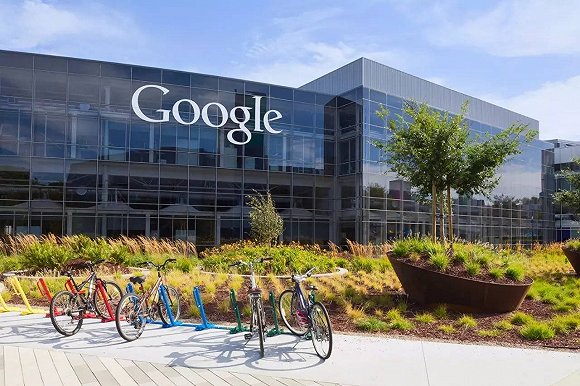
Ten years of career, in addition to happiness, there is also a sense of history. Especially in the past ten years of Google China, I have been fortunate enough to experience history, which can be regarded as a big storm in my life.
……
In general, I like a "slow life" that is not passive in nature. "Happiness" and "diversity" are the source of strength of this kind of life. After leaving Google, I firmly believed that this kind of life was my future.
I have more and more thoughts, and my body and mind are getting older. The next ten years, please come slower.
This article is reprinted by Interface News with the authorization of the author.