
Editor's Note:The Tsvetaeva we know undoubtedly possesses a certain kind of hardship and tragedy common to Russian writers of that era. In addition, her love and family hardships gave her a more unique and profound tragic color: her husband was drafted into the army, and there was no news from her for five years. The younger daughter starved to death in a nursery, and later reunited with her husband and went into exile in Europe. After returning to the motherland in the late 1930s, the eldest daughter Alia was arrested and then exiled, and her husband was shot. While she was engaged in poetry translation, she helped cook and clean in exchange for food rations and support her life. On August 31, 1941, in extreme isolation and pain, Tsvetaeva hanged herself. In her autobiography, Tsvetaeva wrote: "I love everything in my life only when I am leaving, not when I meet with it; I love everything when I am separated, not when I merge with it; I prefer death to life." This seems to be a prophecy, and it is also like a footnote to her life.
Nobel Prize winner Brodsky once declared at an international seminar: "Tsvetaeva is the greatest poet of the 20th century." Someone asked: "Is she the greatest poet in Russia?" He replied: "The greatest poet in the world." Someone asked again: "So, what about Rilke?" Brodsky said angrily: "In our century, there is no greater poet than Tsvetaeva."
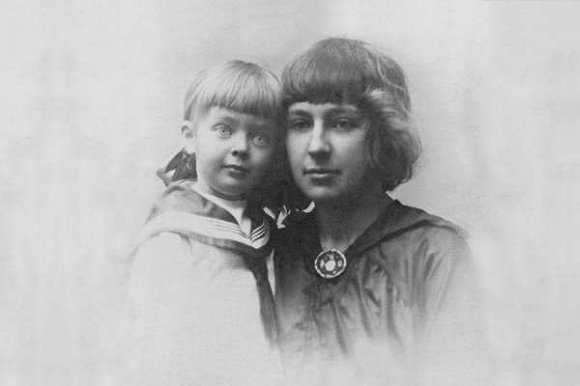
During the troubled times, her eldest daughter Alya stayed with her and inherited her poetry genes to a certain extent. Tsvetaeva once wrote a poem for the young Alya: "In the harsh future, you have to remember our past: I am your first poet, and you are my best poem." Tsvetaeva was sewing and writing poems on the same broken wooden table. During the writing process, she would turn to Alia and ask, "What do you think the last word of the script should be?" "Of course the last word should be - love!" The first reader was only seven years old at the time. They share a spiritual life. Alia does not call Tsvetaeva "mom", but "Marina". Alia was precocious and calm. She began to correspond with Aunt Akhmatova, Uncle Pasternak and others at a young age, just like old friends.
In Alia's book "Remembering Marina Tsvetaeva: Memories of a Daughter" (Guangxi Normal University Press, 2015), she recalls and describes her mother in overlapping short sentences, which are concise and powerful, like a printmaking knife, with only a few strokes and no empty strokes.
What kind of person is she?
My mother, Marina Ivanovna Tsvetaeva, is not tall, only 1.63 meters tall, and her body shape is similar to that of an Egyptian boy.Like, shoulders are broad, hips are narrow, and waist is slender. The roundness she had when she was a girl soon changed, becoming strong, thin, and aristocratic. Her ankle bones and ankles were hard and thin. She walked briskly, and her movements were very fast, but not violent. In front of people, when she feels that someone is looking at her, or even looking at her frequently, she will consciously slow down and try her best to appear gentler. At that time, her gestures would become cautious and measured, but never rigid.
Her posture has always been dignified and serious. Even when she sits at the desk and reads with her head down, her spine does not bend. "The spine is as if it is made of steel."
Her hair is between blonde and dark brown in color. When she was young, her hair was soft and wavy. Gray hair appeared very early. This once again shows that she often lives outdoors. Due to the light, her face is slightly darkened and looks a little pale due to lack of luster. Her eyes are green, like grapes, bright, and her brown eyelids rarely blink.
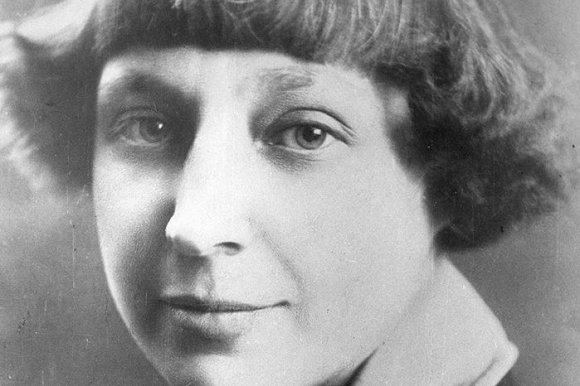
The contour lines of the facial features are accurate and clear; if it is compared to a sculpture, the sculptor has considered it thoroughly, without any oversight, without any erratic strokes of the knife, or anything that needs to be modified: the nose, the bridge of the nose is not wide, slightly raised, the tip of the nose is neither sharp nor warped, the nose is flat, the two movable nostrils below are as natural as wings, the mouth appears soft, and an invisible curve is formed between the lips.
There are two vertical wrinkles between the eyebrows, with light brown eyebrows on both sides.
The face may look lonely and calm at first, but it is actually full of inner changes, implying rich expressions, like the sky and water, ever-changing. Unfortunately, few people can read the expression on this face.
The hands are strong, capable, and accustomed to working. Two silver rings (one engraved with a small ship, a smooth ring with an image of Hermes carved on an onyx stone, which was a gift from her father), and an engagement ring - three rings that were always worn on the fingers and never taken off. The three rings were not eye-catching, not for decoration, and did not want to bind the hands, but naturally blended into the hands as a whole.
The voice is high, loud and flexible like a girl's.
Language - concise, dialogue - accurate.
Good at listening; never domineering or suppressing the other party when talking, but very scary when arguing: During debates, arguments, and discussions, the attitude is respectful and cold, and often kills the opponent with lightning attacks.
The story is extremely exciting.
Her poetry recitation is not like chamber music, but like facing a large audience.
The recitation is passionate and thoughtful, and does not "deliberately lower the voice". The tone is never lowered at the end of the poem; even the most complex content can be expressed clearly in an instant.
I like to recite actively and enthusiastically. As long as someone requests it, I will say it myself without even waiting for the request: "Do you want to hear me read poetry to you?" ”
I have an urgent need for readers and listeners all my life, and I am never satisfied with this. The finished work needs a quick and direct response.
Be kind and tolerant towards poets who are just starting out, as long as you find (or imagine) the "spark of genius" from them; always treat such people as brothers and heirs - not your own heirs! But the heir of poetry! However, once they realize the insignificance of the other person, they will cut off contact without mercy, whether they are in the beginning stage or have reached the peak of vanity.
She is indeed kind and generous: she is willing to help, support and relieve others, and would like to use all her strength; she can share the last urgently needed items with others, because she has nothing extra.
Good at giving, good at asking for things, and not polite; I have long believed that "what goes around comes around" and that there is endless great humanity between people.
Never weak, but lonely and helpless all his life.
Be humble towards outsiders, and be strict, even overly strict, with your relatives, friends, and children as you are with yourself.
She is not averse to fashion, unlike some superficial contemporaries who criticize her, but she does not have the material conditions to enjoy fashion and pursue fashion; she loves neatness and hates fake imitations of fashion. When she lived abroad, for the sake of dignity, she often wore clothes borrowed from others.
For items, the most important thing is their durability: I don’t like things that are easily broken or damaged. In a word, I don’t like “flashy items”.
Go to bed very late, read before going to bed, and get up very early.
Accustomed to Spartan simplicity, the diet is not very particular.
Smoking: In Russia - you roll your own cigarettes, abroad - you smoke the pungent cigarettes smoked by men, half a cigarette at a time, using ordinary cigarette holders carved from cherry wood.
Drink coffee without milk: Fry the light-colored coffee beans into dark brown, grind the coffee patiently, use an old-fashioned Turkish grinder, made of copper, shaped like a cylinder, with oriental patterns engraved on it.
Born to be closely connected with nature, she loves nature—mountains, cliffs, and forests—like a polytheistic believer who regards nature as her god. Nature has conquered her, with love from the heart without any intuition. Therefore, facing the sea, she doesn’t know what to do. She can neither walk across it nor swim in the water. She didn't like watching it blankly.
The dull scenery on the plains made her feel dull and bored, just like the feeling of seeing the gray reed fields in the swamp, or like the wet months of the year, when the ground under her feet became soft, as if it might sink in at any time, and the distant horizon was shaky.
In her memory, she will always feel familiar with Tarusa in her childhood and Koktebel in her youth. She has been searching for it and occasionally finds similar scenery, such as the rolling hills of the Morton Forest "Royal Hunting Park" and the rolling scenery and atmosphere of the mountains along the Mediterranean coast.
She is not too afraid of heat, but is particularly afraid of cold.
She has always been indifferent to cut flower branches and bouquets, as well as flowers blooming in vases or in ceramic pots on the windowsill; she prefers flowers growing in the garden, ivy, wild rhododendrons, wild grapevines, and shrubs, for their strong branches and long lifespan.
She cherishes man's wise intervention in nature and appreciates the products of cooperation between man and nature - parks, dams and roads.
She treats dogs and cats with consistent warmth, kindness, understanding (and even respect!), and dogs and cats return the same affection to her.
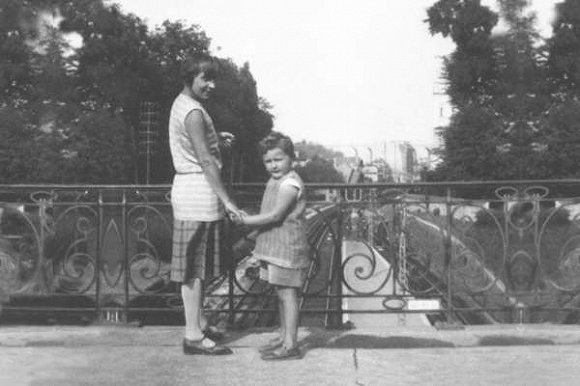
When we go out for a walk, we often set a goal in advance: such as walking to a certain place and climbing to a certain height; we are more happy to get the "hunt" than to see the things we bought: picking mushrooms and berries. Life was difficult when we were in the Czech Republic.
She often turns around in the city and sometimes goes the wrong way on familiar streets, which makes her often sulky, but once outside the city, her sense of direction is very good.
She is afraid of tall buildings, people (crowding), cars, elevators, and escalators. Among all urban means of transportation, I only dare to take buses and subways (going out alone without anyone accompanying me). If you can't find buses or subways, you'd rather walk.
Lacks mathematical ability and has no interest in any technology.
Hate daily housework - hate that it's endless, hard to get out of, hate that it's needlessly repetitive, worry about every day, hate that it takes up a lot of time and gets in the way of the serious things that need to be done. But to be patient, to suppress my revulsion, I still had to take care of the house - a lifetime of taking care of it.
Likes to socialize, is hospitable, likes to take the initiative to make friends, and does not like to cut off contact with acquaintances. Stay away from groups composed of "always right people" and prefer to stay close to circles formed by eccentrics. Besides, she herself is known as a "weird".
Whether they are friendly or hostile, they often go to extremes, and their attitudes of love and hate are not always consistent. “Make no idols for yourselves” is a common violation of this commandment.
Be considerate of young people and respect the elderly.
Two factors that influenced her childhood - the plastic arts (father's domain) and the musical arts (mother's domain) - she embraced music. Forms and colors,—impressions acquired by touch and sight, left her indifferent. The only thing that attracts her is the storyline, just like "a child looking at pictures." Therefore, compared with oil paintings, illustrations in books, especially prints, are closer to her appreciation taste.
She was obsessed with drama in her early years, partly due to the influence of her young husband and young friends. However, this obsession was limited to her youth in Russia. After going abroad, she no longer paid attention to drama as she matured.
Among all the art forms for people to watch, she likes movies the most. Interestingly, she prefers silent movies to sound movies. In her opinion, silent movies provide the audience with a greater space for imagination, which is conducive to creation and perception.
For those who are engaged in creation, she always has deep respect and the respect of her peers; idleness, parasitic eating, drinking and having fun disgust her the most. What also disgusts her are looseness, laziness and empty talk.
She is a person who is good at controlling language, good at taking action, and a person with a sense of responsibility.
Always be humble and know your own worth.
How does she write?
Get up early in the morning before dawn, with a clear mind and an empty stomach, and make a list of all the things that cannot be avoided. Fill your cup with boiling coffee without milk, put it on your desk, and sit at your desk every day for the rest of your life, like a worker guarding a machine tool - with a sense of responsibility, it is a habit, and it is difficult to change.
When facing the desk, all other things are superfluous and put aside, without any distractions, and the movements are mechanical., this place only has room for manuscripts and elbows.
Putting your palms on your forehead and inserting your fingers into your hair, you concentrated in an instant and concentrated all your attention.
Close your eyes and listen to everything, except the manuscript. Your thoughts and pen tip all seep into the manuscript.
She doesn't use scattered manuscript paper to write - if she wants to write, she writes on the manuscript, any kind of notebook - from a student's exercise book to an accounting book, as long as the ink doesn't smear. In the turbulent revolutionary years, the drafts were all made by her own hands and sewn together with thread.
She writes using an ordinary wooden dip pen with a small nib (used by students). She never used a fountain pen.
Light a cigarette with a lighter from time to time, smoke one, and occasionally drink coffee. Thinking about the appropriateness of words, often mumbling to himself or pronouncing sounds. Not jumping up suddenly in search of fleeting words, nor walking up and down the room, sitting in front of the desk, motionless, as if nailed there.
When writing important works, if inspiration comes and your thoughts flow smoothly, you will write extremely quickly; if you are writing a draft of a poem, looking for the most accurate words, adjectives, and rhymes, or revising and reviewing the first draft that has been written, and deleting long, wordy or unclear words, then stay still and think attentively.
In order to pursue precise expression and harmonious semantics and sound, page after page is filled with rhyming lines of poetry. Some lines have several or even dozens of plans. The lines to be deleted are usually not crossed out in one stroke, but lines are drawn underneath, and then new lines are found.
Before starting to create an important work, do your best to concretize the idea, write an outline, follow it, do not deviate at will, and do not let the development of the subject itself exceed the subjective will and become difficult to control.
Her writing style is very unique, the letters are round and small, and the handwriting is very clear. After the age of thirty-two or thirteen, her manuscripts use more and more abbreviations. Many words are represented by only the first letter, which is difficult to read; therefore, many drafts become manuscripts that only she can understand.
Personal style of writing has been established as early as childhood.
Generally speaking, she believes that sloppy handwriting is a sign that the writer is disrespectful to the readers and lacks respect for the recipients, editors, and typesetters.Heavy. Therefore, her handwriting was always clear and neat when she wrote letters, and the manuscripts she sent to the printing office were clearly transcribed in block letters.
Reply and never delay. If I receive a letter in the mail in the morning, I often immediately write a draft of the reply in my notebook, as if included in the creative process of the day. She treated writing letters as if they were creative works, and was almost as critical of them as she was of manuscripts.
I often interrupt writing several times throughout the day and then return to my notebook. Only when I was young did I write all night.
She can write under any environmental conditions. What I want to emphasize is: under any environmental conditions.
Hard work, inherent organizational skills and her poetic talent complement each other.
Close the notebook, open the door to your room - and bear all kinds of housework and daily chores.
Parents’ love
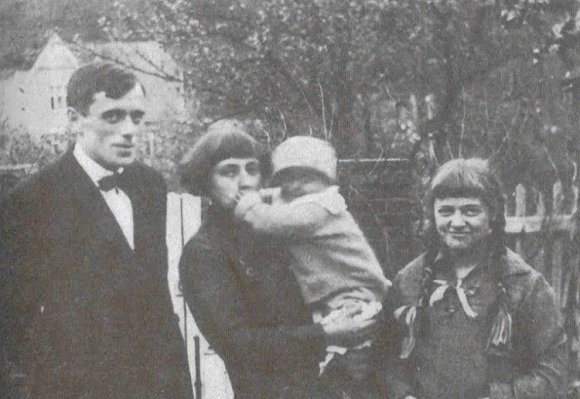
Marina Tsvetaeva's husband, Sergei Yakovlevich Evron, was one year younger than her. He was born in 1893. Their birthdays are on the same day - September 26 (old calendar).
On May 5, 1911, they met, Seryosha XVII and Marina XVIII. They met on the empty coast of Koktebel. The beach was covered with gravel, not far from where Voloshin lived. Marina collected beautiful little stones, and Seryosha helped her find them. The young man was like a big boy, melancholic and gentle, which made him even more handsome (Marina thought he was very happy, or rather - excited!). His eyes were surprisingly big. Seeing such eyes, it is inevitable to be fascinated by the future. Marina thought to herself: If he can find a carnelian gemstone, I will marry him! It was a coincidence that he found such a red agate immediately, groping for it with his hands, because his gray eyes had been staring at her bright green eyes. He put a large red agate gem in her hand. The pink agate was crystal clear. She carried it with her all her life. It has been passed down to this day, which is called magical...
1In January 912, Seryosha and Marina held their wedding. From the time they met by chance to the outbreak of World War I, these short few years were the only stable and happy days in their lives.
In 1914, Seryosha encountered war just after entering his first year at Moscow State University. He went to the front line as a male nurse on an ambulance train. He is eager to join the battle, but due to his health, it is difficult to participate in positional operations. He can only perform medical care tasks one shift after another. Later, he entered the officer school for training, which had a fatal impact on his future experiences. Infected by other officers' loyalty to the emperor, he sided with the White Guard camp after the civil war broke out. Keeping his oath and fighting spirit soon led him to embark on the path of the collapse of the "White Guard Movement" and the most difficult and tragic road of exile in the world. He passed through the Gallibolu Peninsula and Constantinople, drifted to the Czech Republic, and then to France. Like a ghost, he had no nationality or citizenship, shouldered the extremely heavy burden of the past, and would spend his whole life in pain and bleak future...
During the years of the civil war, my parents almost completely lost contact with each other; they could never communicate with each other, and the information they got by chance were oral messages or rumors brought by "messengers", which were very different from the real situation and may not be credible. The fate of the two people may have another ending, who can predict it! Thanks to their strong faith. Even though Marina couldn't get any news, she still wrote the poem "Swan Camp" that praised the "White Guard Movement". On the other side, her husband was heading towards the final defeat and escape step by step, day by day.
When she was convinced that Sergei Yakovlevich had fled to Turkey with the defeated White Army soldiers, Marina asked Ehrenburg, who was on a business trip abroad, to help her find her husband; Marina immediately decided to go abroad to reunite with her husband. Since he was an officer in the White Army, in those days, it was simply impossible to return to the motherland.
I remember a conversation between my mother and my father just after they went abroad:
Listening to my mother reciting several poems from the poem "Swan Camp", my father's big eyes were filled with infinite pain. He said: "...Marinochka, but in fact it is not like this at all." "What on earth is going on?" "This is fratricide, a suicidal war. We fight without the support of the people; we lack understanding of the people, and we feel as if we are fighting for the people. No‘We’re fighting for the people – it’s the elites among us who are fighting for the people. Others fight simply to recapture what has been lost from the hands of the people, to regain what the majority has given to them - that is their whole purpose. There were indeed fights 'for the Faith, for the Tsar, and for the Fatherland', but those people were shot, hanged and plundered. "Aren't there still heroes?" "There are indeed heroes." It's a pity that the people don't recognize them as heroes. Not to mention the sacrifices we have made..."
"Selyozhenka, what's wrong with you? ..." "That's right, you might as well think about the scene at a station during the war - this is a large hub station, and the platform is crowded with soldiers, vendors carrying cloth bags, women, and children. It's a panic and chaos. They are crowded around, pushing and pulling each other, scrambling to squeeze into the carriage... You are also wrapped in the crowd, the third bell rings, the train has started - suddenly feel a sense of relief, God bless! You finally got on the train, but unexpectedly, you realized in an instant that you, along with many others, got on the wrong train in a panic, and you were scared to death in an instant... Your team was heading in another direction, and it was absolutely impossible to go back - they were two different routes. Marinotchka, if you want to go back, you can only walk - walk along the sleepers for a lifetime..."
After this conversation, Marina wrote the lyric poem "Dawn on the Rails."
My father's entire life since then was to walk back along the sleepers towards Russia. After countless ups and downs, hardships, dangers and sacrifices, he finally returned to his motherland. He was a son of the motherland, not a homeless abandoned child.
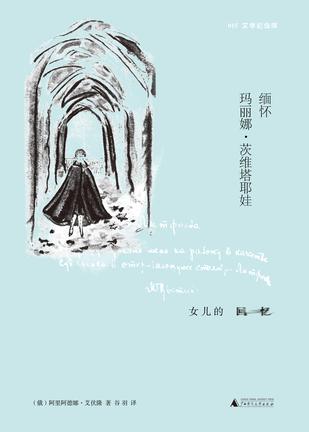
The book excerpt is excerpted from "Memory of Tsvetaeva: Daughter's Memories" ([Russian] Ariadna Evron, translated by Gu Yu, Guangxi Normal University Press, June 2015), released with the authorization of the publisher.