
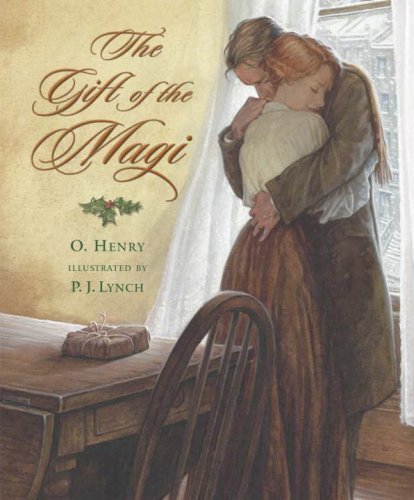
Do you still remember "The Gift of the Magi" which was included in the textbook? This humorous story full of love and coincidence tells the story of a poor young couple who only had one dollar and eighty-seven cents before Christmas. They still struggled to fulfill each other's wishes. Later, they gave up their cherished things for each other. Although they did not get what they wanted, they gained the most expensive love. With a realistic writing style, he touches the daily conditions of the middle and lower class people, and extracts the humorous and witty side of poor life; he makes good use of various dramatic coincidences and ends in an unexpected way. This is the typical style of the American short story writer O. Henry.
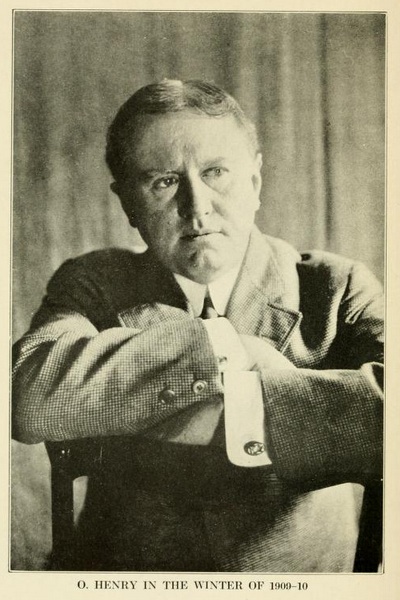
O. Henry, whose original name was William Sidney Porter, was born in the United States on September 11, 1862. Like many writers, his early career path was quite tortuous. After several iterations and even several years in prison, he finally became a short story writer.
Porter is not the learned type of writer. His mother died young and his father was an alcoholic. He grew up with his grandparents, attended school only briefly, and became an apprentice in his uncle's pharmacy at the age of 15. At that time, pharmacies were not only pharmacies, but also cigarette shops, newsstands, and social centers of local towns. Therefore, Porter's earliest artistic expression was sketching the customers passing by in the pharmacies.
It was also there that he gradually contracted a cough. In order to avoid deteriorating into tuberculosis, at the age of 20, he moved to sunny Texas and settled on a sheep farm. He learned to herd sheep, cook, take care of children, and learn a little Spanish and German. Later, Porter changed from a farm boy to a bank employee, but was fired for "misappropriation of public funds." He also joined the journalism world and founded a humor magazine "Rolling Stone" that only had a lifespan of one year and later proved to be a huge failure. At the same time, he also became a columnist for the "Houston Post". It is said that he often wanders in the hotel lobby, collecting inspiration by observing and chatting with others. The income from writing column stories was US$25 per month, which was almost the per capita income level in the United States at that time.
However, the good times did not last long. In 1896, he was accused of embezzling bank funds and was imprisoned in 1898. He spent five years in the Columbus Federal Prison in Ohio, during which he returned to his old profession as a pharmacist. He also published the short story "Whistle King Dick's Christmas Stocking" under the pen name "O. Henry" in the Christmas issue of McClure's magazine. It is worth mentioning that the pen name "O. Henry" is the mark of his career as a pharmacist, because it is the abbreviation of the name of the outstanding French pharmacist Etienne Ossian Henry. He sent the novel to his friend in New Orleans who was not in jail, and his friend forwarded it to the magazine so that no one would suspect that the real author was in jail. (There is also a more interesting theory that O. Henry came from the name of the cat at home in Texas. He always called the cat "Oh, Henry".)
After Porter was released from prison in 1902, he moved to New York and wroteZuo finally got on the right track and became an extremely prolific short story writer. He published about 300 short stories in ten years. His success was closely related to the prosperity of the newspaper industry at that time. It was "Saturday Night" that published his "Red Chief's Ransom", and it was also the "New York World" that signed a contract with him, agreeing that he would write a story every week.
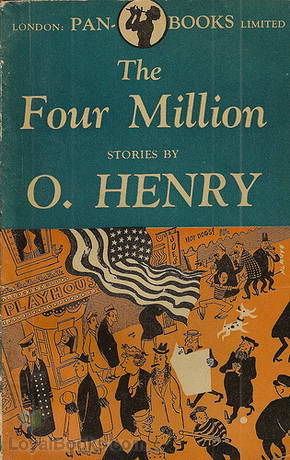
Among the collections of short stories he published, the most representative one is "Four Millions", both the title and content of which ironically responded to the snobbish statement of a social elite at the time - "There are only four hundred people worth noting in New York."
However, critics have different evaluations of O. Henry's achievements in short story writing. For example, critic Bryllion believes that O. Henry is coincidentally documentary-like, shallow and exaggerated, or "perfectly flipped and exquisitely structured" like a contemporary "women's magazine", and generally represents the style of the middle-class Middle Brow; Harold Bloom, a critic from the Yale School in the United States, spoke highly of him, "Although he is not the creator of short stories, O. Henry's reputation is almost equivalent to that of short stories."
In the book "Short Story Writers and Works", Bloom concisely and profoundly analyzes the fragments of "The Gift of the Magi", "City Report" and "A Furnished Room for Rent", and proposes that O. Henry not only describes ordinary little people with humor and warmth, but also has a complex side like a depressive symbolist poet. This is what people who often emphasize that O. Henry's stories are perfect, pure and easy to understand are most likely to overlook.
Today is the 154th birthday of the American short story writer O. Henry. Let us rediscover O. Henry, a civilian writer full of warmth, through Bloom's interpretation.

O. Henry
William Sidney Porter is a central figure in American popular literature. He enjoys a large and long-term readership, and his reputation is almost equal to that of the short story, although he cannot be said to be one of the creators of this genre, or one of its main innovators. His comedic talents were outstanding, albeit limited; his delicate naturalistic brushwork was almost always influenced by the aura of his predecessor, Frank Norris. For O. Henry, the most important thing is that he retained an audience for a century: ordinary readers saw themselves in his stories,Not more real or weirder, but like their own past and present.
O. Henry's most famous story, "The Gift of the Magi," has an obvious sentimentality that has endured for a long time. The author takes great affection and interest in the characters, and because it is based on his wife and himself, he portrays them with grace and sympathy. Dr. Samuel Johnson said that love is the wisdom of a fool and the folly of a wise man. This is an admirable criticism of Shakespeare's "King Lear," but it is a bit too broad and too strong a comment on the tender "The Gift of the Magi," where love's folly actually appears as a kind of wisdom.
A fuller vision emerges in one of O. Henry's most complex novels, "The City Report": humorous, paradoxical, and even Borgesian in the character description of Azalia Adair, a survivor of the Old South. Although the author tried to maintain a cool demeanor, he was clearly delighted to find Azalea Adair's oppressor, Major Winster Carswell, dead in the dark streets, and so were we.
The good citizens who knew him stood and racked their brains to say a kind word or two for him, if possible. A kind-looking man thought for a long time and said:
"Cass was the best at spelling in school when he was about fourteen."
O. Henry's late work "A Furnished Room for Rent" may be the most depressing of his stories. Coincidence is almost always used too much by authors, and here it becomes like fate. The decay and filth of the city make the lovers' suicide believable. One memorable line about a stair carpet captures the stench of a rented room where a couple of lovers are dead, or dying.
It seems to have become a plant, and has degenerated into emerald green lichen or spreading moss in this stinky, dark air. It has grown up to the stairs in patches, and is as slimy as organic matter under your feet.
This description falls somewhere between the lush exuberance of Tennyson's Maud and some of the Tennysonian descriptions of earlier T.S. Eliot and Faulkner. As a pop artist, O. Henry suppressed the Symbolist poet side of his heart, and this ghostly scene helps to reconcile the accidental descriptions that are all too obvious in his works.
(The book excerpt is selected from the book "Short Story Writers and Short Stories", author: Harold Bloom, version: Yilin Press, May 2016)