
One
Like many of my peers, my enlightenment in foreign literature began with Balzac and Romain Rolland. When I was about twelve years old, I often recited the last page of "Eugenie Grandet": "She marched towards the kingdom of heaven with a series of good deeds and righteous deeds. The greatness of her soul offset her poor education and early habits. This is the story of Eugenie. She was a monk when she was alive, a born good wife and mother, but she had no husband, no children, and no family..." However, the more exciting one is "John Christophe". I sometimes think that about music and love, maybe a whole generation got their first intimate contact from this novel. Romain Rolland won the Nobel Prize for Literature for this novel. Although it seems now that the grand narrative and passionate "Johan Christophe" belongs more to the 19th century than a great novel of the 20th century, the Nobel Prize for Literature has mostly been awarded to less great works and writers for more than a hundred years.
The reason why "Johan Christophe" has fascinated everyone is largely due to Mr. Fu Lei's translation. His translation is so outstanding that the Chinese version of "Johan Christophe" is full of aphorisms: "The pendulum of life always swings between two poles, and happiness is also one of the poles. To stop the pendulum at one pole, you can only break the pendulum." A few years ago, I saw a young translator who claimed to be an outstanding person saying that Mr. Fu Lei and others "by today's standards, their foreign language skills are very limited." I don't know how good this gentleman is at foreign languages, and how he can tell, but by reading his words, you can tell how good his Chinese is. He probably doesn't understand Mr. Fu Lei's profound Chinese foundation and the beauty and power of his writing. I still remember the dedication of the Chinese version of Mr. Fu Lei's "John Christophe": "The true light is never a time of darkness, but it is never obscured by darkness; the real hero is never a humble sentiment, but it is never succumbed to a humble sentiment".
When I was a teenager, I read "Johan Christophe" at least three times, and I was deeply moved every time. So when I later read Romain Rolland's "The Life of Beethoven," I saw more of John Christophe in Beethoven. What I remember more clearly now is the book "The Biography of Beethoven" itself. It was a vertical traditional Chinese book published during the Republic of China. When it was passed to me, the book was already quite old, and many of the corners of the pages were curled. It was in the translator's preface of this book that I read Mr. Fu Lei's sad and powerful words: "Medium and modesty, small wisdom and small wisdom are our fatal wounds." In the years that followed, there were always moments that reminded me of this unforgettable sentence.
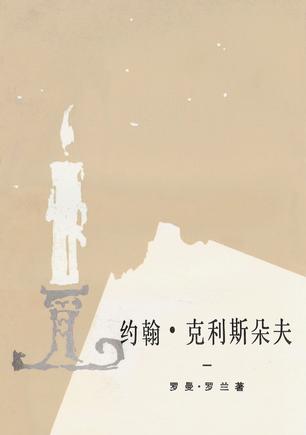
1957 version of "John Christopher"
In the era of confinement, books circulating underground were even more mysterious and alluring. Later, when I read history, I realized that the charm of banned books has existed since ancient times. The Ming and Qing dynasties and the Victorian era in the UK were all times when moral books were strictly banned. However, erotic literature and love novels survived tenaciously, leaving behind many works. During my boyhood, most of the literary and artistic works became poisonous weeds. Only eight model plays were being played, and several novels such as "Golden Avenue", "Sunny Sky", and "The Battle of the Nameless River" were placed in bookstores. As a result, a generation grew up either in a cultural desert or studying underground. The more distant a book comes from, or the more difficult it is to obtain, the more unforgettable it is. Decades later, when people of the same age look back on their reading histories, they will all think of the novels and biographies translated by Mr. Fu Lei. Probably in the memory of many people, European classics are the most impressive, followed by Soviet literature, then Lu Xun, Mao Dun, Ba Jin, Lao She, and finally the so-called "Seventeen Years Literature". This ranking also unintentionally shows that the value of literature, like some other important values in the world, is in people's hearts, has no far reach, and will last forever.
On a rainy spring night, I carried an old schoolbag, which contained "Auntie Betsy" wrapped with a folio page from "People's Pictorial" and "The Headless Horseman" whose cover had disappeared. The most exciting thing is that the first volume of "The Count of Monte Cristo" was published in the 1940s. Not only was it a vertical version, but the title was not "The Count of Monte Cristo" as it was later changed in the second edition. It was agreed that this book would only stay in my house for 24 hours before being passed on to the next family. For this reason, I stayed up all night reading a novel for the first time. The joy of walking through most of Beijing to pick up books is gone forever, along with the streets of that era. What is left is a trace of regret and a feeling of admiration for Mr. Fu Lei and the older generation of translators.
Soon after reading "The Biography of Beethoven", I heard about the suicide of both him and his wife. The adults told me: "The only way to survive through the ages is to die." It is not easy to refuse humiliation by death.
two
For those who love reading, a person's youth reading history often affects his life, and it also reflects the times he experienced to some extent. I didn't go to school when I was a child, so my literacy started when my father read me "The Romance of the Three Kingdoms" from a children's book, and I muddleheadedly recited it. Later, I began to read the various Red Guard tabloids at that time. By the time of the Ninth National Congress in 1969, I could easily read the conference communique. Although the books at home were not confiscated, a large "X" seal was affixed to the bookcase during the confiscation, and I did not dare to open it. Books were so scarce that I read "Baby Raising Common Sense" and "The Barefoot Doctor's Handbook" with gusto. My earliest physiological knowledge came from these two books.
The roofs of the three red buildings in the courtyard of No. 1 Tieshizi Hutong are huge platforms. The platforms are surrounded by 1-meter-high walls, and the five units have corridors leading to the roofs. Watch the stars in the summer, watch the fireworks on May Day and National Day; on ordinary days, children run up and down, playing hide and seek, or officers and soldiers catch thieves. However, that winter 50 years ago, all unit doors were suddenly nailed tightly with pine boards. It is said that someone escaped across the platform, and it is also said that someone committed suicide by jumping from the roof. What is the reason? My six-year-old intelligence was not enough to understand what death was, let alone what suicide was, but that year I not only heard these two words often, but there was also a scene that lingered in my memory, lingering, but I didn't know if it was true.What happened: In the open space between two buildings, a man who jumped from the rooftop platform was lying there, with a group of adults and children watching. I seemed to be one of the onlookers, but I was short and couldn’t see, so I couldn’t squeeze in front, and I felt very anxious. Then an adult grabbed her by the collar from behind and took her home.
Later, I and several elderly people living in the Iron No. 1 compound confirmed who committed suicide at that time and how they died. Everyone's story was somewhat different. Whether there was a person who jumped from the roof and his brains exploded in the open space, who he was, etc., there is no final conclusion. However, I also learned from this that there were many suicides in the compound in those years. Famous people include Mr. Jiang Yinen, the director of the Journalism Department of Yenching University, the professor of the Chinese Department of Peking University, and the deputy director of the Journalism Department of Renmin University. The professional strength of the Journalism Department of the National People's Congress is mainly due to the team of the Journalism Department of Yenching University. The leader is Mr. Jiang, who was also a famous reporter for Ta Kung Pao when he was young. I have no impression of Mr. Jiang at all, but I have been to the home of Professor Luo Lie, the chairman of the journalism department, and Professor Gan Xifen with my father many times. They were both revolutionary journalists, and they were younger. They withstood the storm, but Mr. Jiang did not.
A few years ago, an alumnus committed suicide. He had just arrived in this city alone and had no relatives. I helped with his funeral, from issuing the death certificate to finally pushing his body into the cremator. Naturally, there are times when my heart is turbulent, but if I can do everything calmly, it seems that I can really face death without any worries. Maybe this is just because I am older and have become more indifferent, so I am naturally much calmer. Of course, this may also be due to reduced hormone levels, or people becoming numb and indifferent after experiencing too much. People's sensitivity to the abyss of life is roughly inversely proportional to age; most of the seemingly free and peaceful attitude has nothing to do with wisdom, but more to do with sophistication. I still clearly remember that when I walked into the darkness of memory more than thirty years ago, I couldn't control my excitement. I told my girlfriend that she had heard of people dying from time to time in her childhood memories. How could she have the imagination and interest to read fairy tales by Andersen or Grimm?
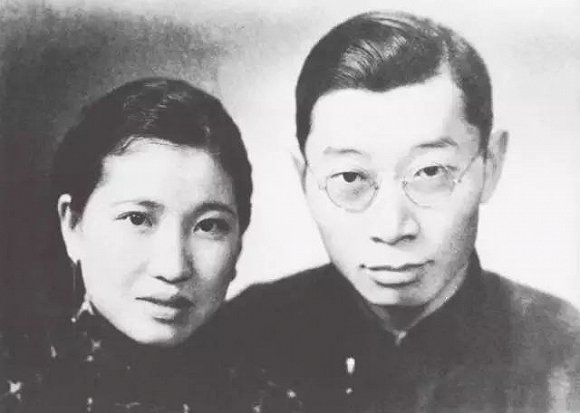
However, stories about death are not just horror and sadness, but sometimes have a glow of warmth. Half a century ago, on September 3, Mr. Fu Lei committed suicide together with his wife, Ms. Zhu Meifu, at the age of 58. For people who were considered to have "cut themselves off from the Party and the people" at the time, the funeral parlors did not keep the ashes, and often no bones were left. What's more, Mr. Fu Lei's two sons are not in Shanghai: Fu Cong has "treason", and Fu Min is far away in Beijing and has no personal freedom. The ashes of Mr. and Mrs. Fu Lei were preserved because of a girl they had never met. To put it in current language, she is a fan of Mr. Fu Lei. After hearing that they committed suicide, she wore a mask and claimed to be Mr. Fu Lei's goddaughter to receive their ashes regardless of the risk. She also wrote a letter to Premier Zhou to defend Fu Lei, but the letter was intercepted in Shanghai. As a result, she was almost arrested and labeled as a "current counterrevolutionary element." In 1958, she was unable to go to college because she refused to expose a teacher who was labeled a "rightist". She stayed at home for 15 years and later worked in a street factory to make a living. She never married. Always stay away from people. Live an ordinary life.
In 2013, the ashes of Fu Lei and his wife were buried in Shanghai. Fu Lei’s words were engraved on the tombstone: “When a child is alone, he will create a world."
Three
Probably because Mr. Fu Lei has read too many texts translated by him, the diary of the 14-year-old is full of sentences that look like mottos, such as "Love and death are the eternal destiny of life." If you think about it carefully, it may be paradoxical. I didn't understand at all at that time that love is as fragile as life and is mostly vulnerable to harsh reality. There was a sensational novel "When the Sunset Disappears" in the early 1980s. I didn't like this novel, but a very similar story once happened around me. In an era when politics was paramount, the son of a high-ranking Communist Party official fell in love with the daughter of a defeated Kuomintang general. The outcome was doomed from the beginning: it was impossible for two people from different camps to come together. Perhaps the one who was more hurt was the girl. I had seen her photos and Juanxiu’s handwriting, and then I heard that she had left haggardly and never wanted to come back. I told this story to my girlfriend that day, and the love destroyed in the difficult years made me cry sadly. My girlfriend was somewhat puzzled: "None of this happened to you."
What she said was certainly correct. Later, I realized that most of the people and things that attracted my attention or moved me in my life had nothing to do with me; most of the skills I learned in my life were unrealistic. This hobby of irrelevant things and useless learning may be the most unreliable thing about me. After all, whether it is half a century ago when material scarcity and survival came first, or in the past two decades when the economy has taken off and the pursuit of wealth has taken off; whether it is behind the revolutionary discourse in childhood or behind all the current self-justifications, considerations of interests and the pursuit of interests are often decisive. More and more people care less and less about things that have nothing to do with them. What they have learned throughout their lives is mainly about application and self-management. This is the trend of the times, and it cannot be changed or judged. What I care about is: how to keep the distance between the inner world and the real world, and continue the unreliable parts.
Also in the Bingwu year half a century ago, it seems that the "Three Reds" faction of Renmin University set up a radio station in a bungalow next to the Red Building, and started broadcasting through loudspeakers at six o'clock every morning. When I was a child, I was familiar with various supreme directives and revolutionary slogans, and there was a reason for them. For a while, I heard "You should care about national affairs..." every morning. I heard it so many times that sometimes it made people think about it, is this really the case? Ever since I was young, I have had an instinctive fear of grand narratives, not only because it makes my ears tingle when I hear them, but also because I have seen too many people care about national affairs while living a miserable life. Having the world in mind and being utilitarian go hand in hand, and maintaining a delicate inner balance is a characteristic of the Chinese spiritual world. I don’t know if this tendency has been present since Neo-Confucianism in the Song and Ming Dynasties. In modern times, split personality has become more and more severe. There is nothing new under the sun. As time passes, things change. Revolutionary words have turned into feelings, and the pursuit of changing the world has turned into poetry and distance. In essence, it is still just a temporary fad.
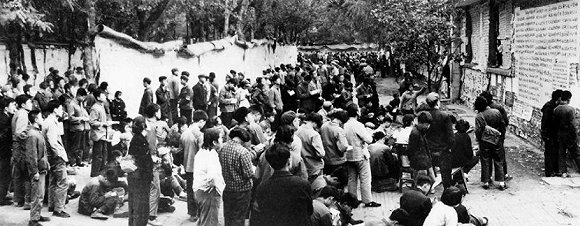
Red Guards at Peking University in 1966
In my opinion, individuality and self-interest are two completely different concepts. In our tradition, due to the lack ofThe former, so many people still can't tell the difference. The former requires the passion of doubt and the search for truth, while the latter requires precise calculation and the ability to assess the situation. Whether it is living as an individual or paying attention to history and the current personal destiny, a kind of self-awareness is needed. Compared with big history, I pay more attention to the specific experiences of each person in the changing situation. Whether it is a paradigm, a context, or an inflection point, it is more of a narrative method close to history. Only in those stories that have been dusted by time, in the words left by the deceased and the narratives about them, can people feel the pain of love, hatred and the shock of death in the past. Reading Mr. Fu Lei's words, one can already imagine that he lacks the ability to compromise with reality. When the storm comes, he cannot live in contentment, which is natural.
No one knows how many people died in the year when Mr. Fu Lei left. Approximately everyone has a way of dying and a reason or reason for it. Compared with celebrities like Mr. Fu Lei, most people disappeared silently. A few weeks ago, I was chatting with an old classmate at the Poetic Dwelling Cafe in Nanchizi. I could see the turrets of the Forbidden City in the distance. Although we have known each other for a long time, we actually did not know each other well. It was not until today, more than thirty years later, that we learned about each other's lives. He told me that he lived with his grandma when he was a child. When he was four years old, he went door-to-door in the alley and found out that his grandma was a landlord and was deported back to his place of origin. There are no relatives in her hometown, only some clan members, who are unwilling or afraid to take her in. She was placed in an abandoned adobe house and her health deteriorated after one winter. His mother was an only child. She was participating in sports in other places and did not dare to leave. When she rushed back to her hometown, her grandmother had passed away. Mother returned to Beijing holding the ashes. From then on, I would cry loudly every year on his death anniversary.
We have actually heard many similar stories at that time and later. However, after listening to him tell it, we were silent for a long time. Walking out of the cafe onto Chang'an Street, the lights are starting to turn on, and Beijing in the sunset is slowly moving towards the glory in neon lights.
The author is a writer, currently living in Chicago, USA