
In "The Kite Runner", Amir betrayed Hassan, who was loyal to him, because of his cowardice.
What is betrayal? Lenin said, "Forgetting the past means betrayal"; Indian politician Singh believed that when you betray others, you also betray yourself. In historical records, the word "betrayal" is closely related to human beings. There may be 10,000 kinds of "betrayal" behaviors among 10,000 people. For the sake of beauty, Lu Bu could betray and even kill his adoptive father Dong Zhuo, while Judas only betrayed Jesus for a bag of money.
Betrayal and rebellion have similar meanings, but the emotional colors are opposite. What is regarded as betrayal by one party is nothing but rebellion in the eyes of the other party.
In early September, the online world was abuzz with smoke due to the fight between Guo Degang and Cao Yunjin. This pair of former masters and disciples are now accusing each other and exposing each other, and they have become like fire and water. One party invokes the old rules of the industry and angrily accuses the apprentice of betraying the teacher; the other party holds high the market ethics of contract and contract. Isn't it normal and reasonable to change jobs if you are dissatisfied with the treatment? Why is there such moral kidnapping?
Obviously, in a society that values righteousness, rank, oaths and loyalty, relationships between people are connected or tied together by various names (such as the three cardinal principles and five constant principles). Betrayal is often a serious sin, spurned by others, and a moral stain. When one person accuses another person of "you betrayed XXX", he often looks sad and angry, and consciously takes the moral high ground. A society dominated by market ethics emphasizes individual freedom and is more tolerant and far-reaching in morality: there is a clear agreement on how to be punished for violating a contract, and there is no betrayal; modern people are also more tolerant of cheating in marriage, and they will analyze it in detail and further reflect on the relationship between the two parties and even the marriage system, rather than simply and crudely conducting moral judgments.
In our increasingly open and globalized society, the freedoms and rights individuals have and the boundaries between individuals and others will become increasingly clear. It is conceivable that betrayal based on status will become less and less common. People will still continue to break with others, but it will rarely be called betrayal. But one type of betrayal probably never changes: one person betraying another person's secrets, interests, or security.
The following 8 books describe betrayal and breakup in various senses.
Mishima Yukio, "Forbidden Colors"

Introduction: The old writer Hinoki Shunsuke despises morality and vulgarity, and advocates extreme aestheticism. Because he was born ugly, Hinoki Shunsuke was abandoned and betrayed by three wives. After he met the handsome gay young man Minami Yuichi, he decided to shape Yuichi into a work of art and take revenge on the women he could not get. Yuichi agreed to his request, married Yasuko, and dealt with women, one after another about betrayal.
Reason for recommendation: After Yuichi married Yasuko, he not only had relationships with people of the same sex, but also had ambiguous relationships with three other women. In the marriage, Yuichi was a betrayer. He never even had feelings for Yasuko;During the work, he often disobeys his orders. It can be said that Yuichi is the central character in this story full of betrayal, and all fateful encounters are caused by him. He has also become the character that Mishima Yukio has written the most about in this book and has created the most successfully. From being "unconscious" at the beginning to controlling the overall situation later, Yuichi gradually showed his own "desire": he wanted to get money, rights and other things he wanted. Unlike "Confessions of a Mask", which still retains some youthful astringency, "Forbidden Colors" has completely put aside the "youth", showing a naked "bitterness". Things that should sound beautiful, such as love, marriage, and family, have no beautiful appearance at all in this story. What is left is only unbearable reality and false illusions. But it is this "bitterness" that makes this novel so addictive to read.
One-sentence book excerpt: The two of them enjoyed every happiness in the ordinary city and walked briskly on the street drunkenly. Yuichi held Shunsuke's bag, and Shunsuke panted and strode forward like a young man. They each reveled in the freedom of "nowhere to go home tonight".
Siegfried Lenz, "The Renegade"

In the summer of 1944, the eastern battlefield became increasingly tense. Walter Proska, a young soldier from Luc in the Masurian region, took a train to the front line and survived the explosion. On the railway line from southern Belarus to northwestern Ukraine, the army guards endured repeated attacks from mosquitoes and guerrillas in an isolated and helpless situation, and their morale was extremely low. Under the moral inspiration of Wolfgang, an intellectual comrade nicknamed "Bun", Proska resolutely surrendered to the enemy.
Reason for recommendation: This is a story about a traitor. The protagonist Proska defected to the enemy when her will was shaken, but betrayed again because she could not gain the trust of the new regime. During the first betrayal, he discovered that in East Germany under Soviet occupation, people were treated as screws that could be replaced at any time and disappeared during the political purges. This allowed Proska to see clearly the nature of the new regime and carry out a second betrayal, that is, betrayal.
Sixty-five years ago, Siegfried Lenz, known for his novels reflecting on the responsibilities of citizens during the Nazi era, wrote this politically extremely dangerous novel, but it has been shelved due to the tense political situation. It was not until February this year, a year and a half after the author's death, that it was accidentally discovered and published, causing a sensation. In "The Renegade", Lenz used Kafka's method to describe office life in the Soviet-occupied area. While exploring the classic proposition of "the conflict between duty and conscience that people face in war times," he also conducted existential thinking about life. "Der Spiegel" commented on this book - "The critics were caught off guard, but overjoyed. It allows us to see a new Lenz, and a particularly good Lenz.With the freshness of the early years. ”
One sentence book excerpt: “But somehow, nationalist resentment remains contagious. "Bundle said, "This kind of resentment is the root of German pride and the source of the German people's consciousness of being the pride of heaven. ”
Hosseini, "The Kite Runner"

Introduction: Amir, a 12-year-old young man from a wealthy Afghan family, and his servant Hassan are brothers and sisters, but they refuse to save Hassan after a terrible incident in a kite competition. Amir felt remorse and pain for his cowardice, and used various means to force Hassan away. Soon, he followed his father and fled to the United States. As an adult, Amir has never been able to forgive his betrayal of Hassan. In order to atone for his sins, Amir once again set foot on his hometown where he had stayed for more than 20 years, only to discover a shocking lie.
Reason for recommendation: The sentence "A thousand times for you" has moved many readers because of Hassan's loyalty to Amir, but what we cannot ignore is that the damage caused by Amir to Hassan cannot be erased. After the kite competition, Amir's refusal to save his life and his use of all means to get rid of Hassan proved how excessive Amir's betrayal of Hassan was. But the valuable thing about "The Kite Runner" is that Hosseini focuses more on writing "redemption", which also makes the story more warm - it may be difficult for us to change the pain caused by the past, but at least we can make up for it. On the other hand, "The Kite Runner"'s description of Afghanistan and the war not only allows people to understand more about this country, but also sees the suffering that the war brings to people's lives. In 2007, the release of the movie of the same name also made the book more widely known.
One sentence book excerpt: Many years have passed, people say that old things can be buried, but I (Amir) finally understand that this is wrong, because the past will crawl up on its own. Looking back, I realize that for the past twenty-six years I have been peering down that deserted trail.
Graham Green, The End of Love
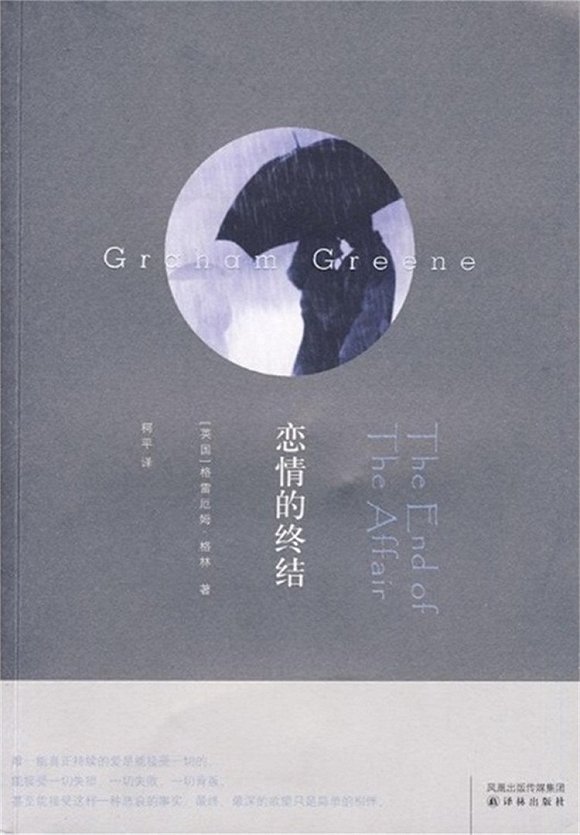
Introduction: In London, England during World War II, writer Morris and his wife Sarah, a civil servant, were an extramarital lover. One day, a flying shell knocked Morris unconscious and activated the latent Catholic faith in Sarah's heart. Sarah prayed to God to avoid sin by staying away from her lover, so as to save Maurice's life. Sara left without saying goodbye. Maurice didn't know the reason. After spending two years filled with jealousy and hatred, he asked a private detective to investigate Sara, but found out that he didn't expect it.The result...
Reason for recommendation: "The End of Love" is the most autobiographical novel by British writer Graham Greene. Different from ordinary love novels, this novel is not just about the love between men and women, but explores the three simple and basic emotions of love for yourself, love for others and love of faith during Morris's investigation of Sarah. Maurice and Sara's extramarital affair betrayed both their first wives, and after Sara left, Maurice thought he had been betrayed by Sara. However, the plot development of this story of multiple betrayals is unexpected: Sarah left Maurice only out of her commitment and fear of God, rejected the elopement proposal, eventually converted to Catholicism, and died of illness soon after. In the 1950s, Green wrote a rich story using a technique that still seems very contemporary today. In "The End of Love", you can truly experience Morris's tangled emotions: jealousy, suspicion, resentment, reluctance, etc. At the same time, Green abandoned the straightforward writing technique and instead used methods such as the perspective of memory to tell the story. This also corresponds to the character's "lost" mood.
One sentence book excerpt: She said to me - "You don't have to be so afraid. Love will not end. It won't just because we don't see each other...". She had already made her decision when she said this, but I didn't know it until the next day. She said: "Dear, dear, people cannot see God, but don't they love Him all their lives?"
George Orwell, "1984"
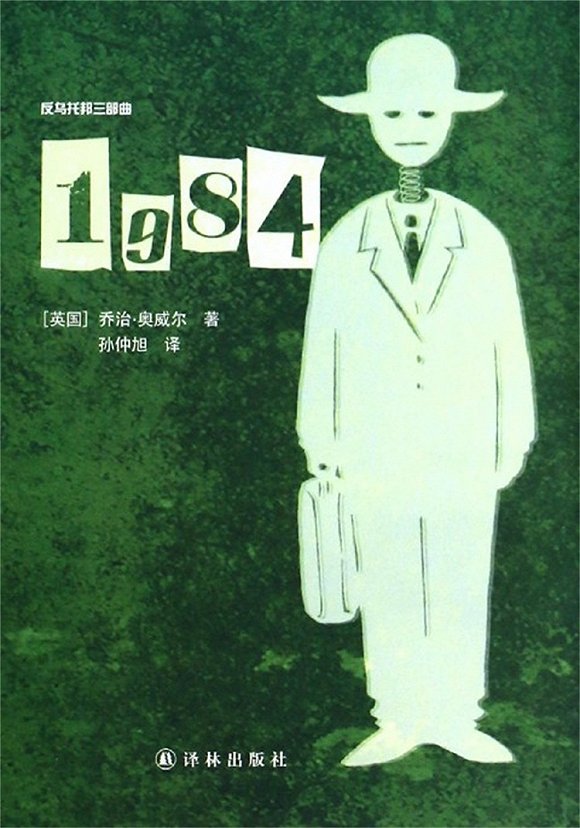
Introduction: In Oceania in 1984, power was highly concentrated in the hands of the "party" Ingsoc. Portraits of Big Brother, the party leader, were posted everywhere, telescreens were almost everywhere, and the Thought Police was everywhere. People in the country, especially party members, are being watched and monitored all the time, and even their thoughts are a crime. The protagonist Winston is engaged in the work of tampering with history in the Ministry of Truth. He gradually becomes suspicious of the society and Big Brother he lives in. After secretly falling in love with another party member Julia, he gradually becomes a thought criminal and is arrested by the Thought Police...
Reason for recommendation: In "1984", Winston did not betray the party and the country in his actions. On the contrary, he had an "impure" change in his thoughts. His doubts about the party and the country and his love with members of the outer party all made Winston wear the label of "thought prisoner". This cannot be tolerated in a highly centralized country. The novel ends with Winston being brainwashed and becoming a "pure-minded person" again. There is no doubt that this ending is extremely reasonable and extremely ironic.
"1984" was once rated as "one of the 100 best English novels" by Time Magazine. It and Huxley's "Brave New World", ZamiyaJing's "Us" is also called the "trilogy of dystopian novels". In this book, George Orwell used cold writing to describe a terrifying and suffocating world: people's minds are highly controlled and they are using all their strength to pursue power. As I read this prophetic book, I feared and sighed for freedom and for tomorrow.
One sentence book excerpt: There is such a special kind of portrait, the eyes of the person in the painting will follow you wherever you go. This poster is of this type. The slogan under the poster reads: Big Brother is watching you.
Janet Winterson, "Oranges Are Not the Only Fruit"

Introduction: In a remote town in England, the girl Janet grew up in a family that believed in evangelical Protestantism. Her mother was a paranoid and devout Christian. Under her education, church activities became everything in Janet's daily life. Growing up, Janet found herself at odds with her town and her mother's bigotry. So, when she fell in love with another girl, and this love beyond the norm was discovered, the conflict between the two broke out.
Reason for recommendation: Had she not found herself in love with a girl, Janet might have become the best missionary. But from the moment she fell in love with the girl and left her home town, it meant that she had betrayed everything in her past years: family, faith, studies, and safety. This is an escape with a "betrayal" color, and it is full of courage to grow.
The simple sentence "Here, eat an orange" actually contains a lot of hidden things. The orange in the novel is actually an intention. It has become her mother’s command and teaching, something that Janet had to accept in her early days. However, Janet’s later betrayal and escape also fit in with the title of the novel: oranges are not the only fruit, and Janet is not unchanged. It is worth mentioning that the author intersperses many stories in the text. These seemingly random and fleeting fragments hint at and promote the development of the plot of the novel. Writer Zhang Yueran said that this book "is undoubtedly the entrance to Winterson's novel world. It is a smart and interesting novel."
One sentence book excerpt: "Why don't I go to school?" I (Jenny) asked her. I was curious about the school because my mother always called it a "breeding farm." I didn't know what a farm meant, but I knew it was a bad thing, along with "abnormal passion." "They will lead you astray." That was the only explanation I was given.
Timothy Garden Ash, "Archives: A Personal History"

Introduction: In the late 1970s and early 1980s, in order to study Germany under Hitler's rule, young Timothy Garden Ash stayed in East and West Berlin for several years to collect information. Unexpectedly, his whereabouts in East Germany were considered espionage activities, and he was tracked by the secret police and informants, leaving behind a 325-page secret file. After the reunification of the two Germanys, the author revisited East Germany. Based on the files established for him by the East German Security Ministry and his own diary, he searched for those who monitored him one by one and reconstructed a memory of his youth.
Reason for recommendation: Due to its poignant description of betrayal and compromise, "Archives: A Personal History" was called "a priceless record of modernity and the present" by John Le Carré, a 20th-century spy novelist. This is a fun, yet creepy book. The subject of surveillance, the author Gaton Ash, is surrounded by informers, which means that he is surrounded by betrayals. In this book written with real experiences, we can get a glimpse of the horror of Germany in that era. Everyone under surveillance seems to confirm the phrase "Big Brother is watching you" in "1984". What is valuable is that in the book, Garden Ash does not stop at simply blaming those who do evil, but emphasizes the courage to reflect on and face one's own history. This is also what Germany has done by opening up its archives.
One-sentence book excerpt: "Good morning," said the energetic Ms. Schulz, "your file is very interesting." With that, she handed me a vellum-colored dossier. The file was a full two inches thick, and a rubber stamp stamped the words: OPK-Akte, MfS, XV2889/81. Below, neatly written in handwriting: "Romeo". "Romeo?" "Yes, your code name." Ms. Schultz chuckled.
Maugham, "The Blade"
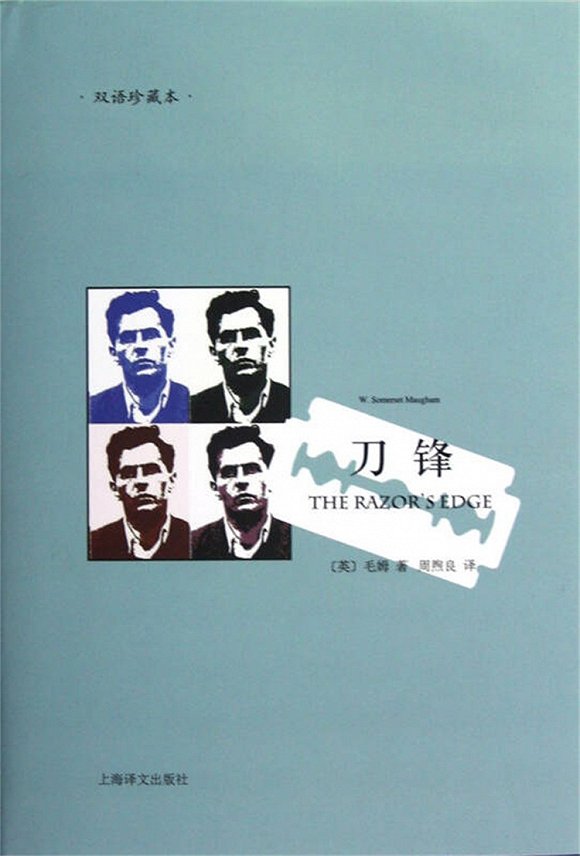
Introduction: Larry Darrell, a young American pilot who participated in World War I, met an Irish friend in the army. This friend is usually such a lively pilot who puts his life and death at risk, but in an encounter, he was shot and died while saving Larry. This incident dealt a heavy blow to Larry and made him feel confused about life and why there was evil and misfortune in the world. Larry began his incredible transformation...
Reason for recommendation: After Larry came back from the war, he did not marry his fiancée Isabel immediately, nor did he go to work. Seemed to have a bright future, he instead went to Paris to study Latin and Greek.He went to coal mines, farms, and monasteries to find his answers. Finally, Larry took a boat to India to study the theory of reincarnation, and realized the truth of life during asceticism. He said he was "very satisfied with the idea that people can reach the highest reality through knowledge." Larry's behavior seems to be a search for himself on the one hand, and a betrayal of the past and a break with the past on the other. He gave up worldly things such as "marriage, family and work" in people's eyes, and constantly searched for the ultimate truth. For Larry, he doesn't know what happiness is, but he is trying to get close to it. This character, who appears to be extremely gentle and elegant in Maugham's works, is unexpectedly calm and calm, and his introspection and epiphany about the world are also touching. If you feel confused and disappointed in life, this book "Blade" may give you some courage or open-mindedness.
One sentence book excerpt: Dr. Nelson believes that Larry's lingering fear of the war has not been eliminated and he needs to rest for a few days until he completely returns to normal. However, weeks and months dragged on, and now it has been more than a year since he was discharged from the army. He seemed to be doing well in the Air Force and was very talkative in Chicago. Therefore, several business people wanted to win over him. He thanked them but declined.