The 21st century is an era of unprecedented scale of urbanization and migration. A United Nations study predicts that 70% of the world's population will live in cities by 2050. How to achieve sustainable development, livability and adaptability of cities will be an important social issue facing mankind in the 21st century.
In Asia, some cities have a more ambitious goal - to become global cities. “Like early modern states, cities in emerging countries have begun to carry national ambitions of wealth, power, and fame. Major cities in developing countries have become centers of massive political investment, economic growth, and cultural vitality, and thus they have become sites for those countries to strive for global influence.” Aihwa Ong, professor of sociocultural anthropology at the University of California, Berkeley, writes in Worlding Cities: Asian Experiments and the Art of Being Global.
Shanghai and Singapore are two such cities. They have established their own place on the map of global cities. However, in terms of urban development, they also face some common challenges in addition to their own unique practices: traffic congestion, housing shortage, environmental pollution... How to build a high-density city with long-term sustainable development and livability is an urgent problem that these two cities need to solve.
As residents and observers of these two cities, how would Shanghai artists and Singaporean artists talk about the cities they live in?
On September 9, "City·Art·Development: Urban Temperature" China-Singapore Contemporary Art Exchange Exhibition opened at Shanghai Dayuntang Art Museum. The exhibition was launched based on the Singapore International Foundation's "Art for Public Welfare" project concept, which aims to use art to raise people's attention to social issues and share practical experience, thereby bringing a positive impact to society.
For this China-New Zealand contemporary art exchange event, China and New Zealand each selected four artists to launch a Chinese artist visit to New Zealand in March 2016, kicking off a six-month art exchange event with the theme of "City Temperature". During the period, Chinese artists visited a number of institutions and organizations that showcase Singapore's culture, life and innovative development, such as the National Gallery of Singapore, Chu Zun Food Court, OH! Open House and the Urban Redevelopment Authority of Singapore.
Following the new trip, Singaporean artists came to Shanghai for a return visit in June. They visited the Shanghai Dayuntang Art Museum, the Animation and Public Art Department of the University of Shanghai for Science and Technology, the Shanghai Public Art Collaborative Innovation Center and the Shanghai Urban Planning Exhibition Hall, and held artistic discussions and exchanges with various art communities in Shanghai. In addition, the participation of community volunteer groups in China and New Zealand has become an important part of the artists' creations and a focus of this exchange activity.
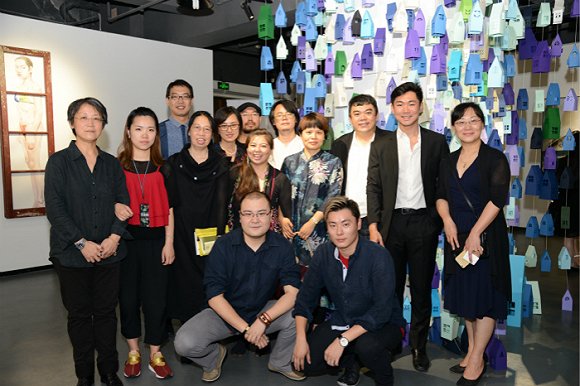
What different perspectives do artists have when observing urban problems? Lin Yiqian pointed out that Singaporean society is facing many challenges such as the aging of the population, declining social inclusiveness and the crisis of globalization, and artists tend to observe these phenomena more keenly. He noticed that both Singaporean and Chinese artists were very sensitive to factors affecting citizens' lives and were able to express their observations in their own words.
"I think this is the beauty of art - artists use their talents to express different themes in beautiful ways. By doing so, they encourage people to change their actions. I think this is what every city needs, not just Singapore and Shanghai, but also cities in India, Indonesia, and even cities in the United States. Every city has similar problems, and what artists have to do is express these problems." He said in an interview with Interface Culture.
Fu Jun admitted that artists cannot bear the burden of solving real-life problems, but they are the most sensitive group in society. What they have to do is to raise questions, stimulate public thinking, and call on everyone to provide wisdom for urban development. “If art is done well enough, it will mobilize everyone’s self-discipline and consciousness,” she said.
During the exchanges between artists from the two countries, Fu Jun noticed the different emphases of the artists of the two countries: Chinese artists basically use painting as the main form of creation, paying attention to the urban environment, urban history and urban residents, while Singaporean artists invariably adopt the form of installation art to create, and place great emphasis on public participation and interaction, through this method to promote the participation of ordinary people and disadvantaged groups.
“Singaporean artists mentioned during the exchange, why do Chinese artists pay so much attention to history and inheritance?” Fu Jun said, “Because Singapore has a relatively short history, they have no historical baggage and are a young island nation, so Singaporean artists want to use art to mobilize the people to participate in reform. Let’s change the status quo and think about urban development together.” The so-called historical baggage is both framed by art forms (for example, Mao Donghua and Zong Xitao use ink painting to create works) and the influence of tradition on the present. However, Fu Jun believes that Shanghai artists can quickly absorb the advantages of others while looking for differences.
“City temperature, the temperature mentioned here does not refer to the hot or cold degree of objects in the physical sense, but specifically refers to the humanistic temperature of a city.” This is how Fu Jun explained the theme of this art exhibition. This is exactly what artists from both countries want to tell us.
"City·Art·Development: Urban Temperature" China-Singapore Contemporary Art Exchange Exhibition will be on display in Shanghai from September 9th to 25th, and will be exhibited in Singapore in 2017.
[New] Chen Shufang Commitment 2016
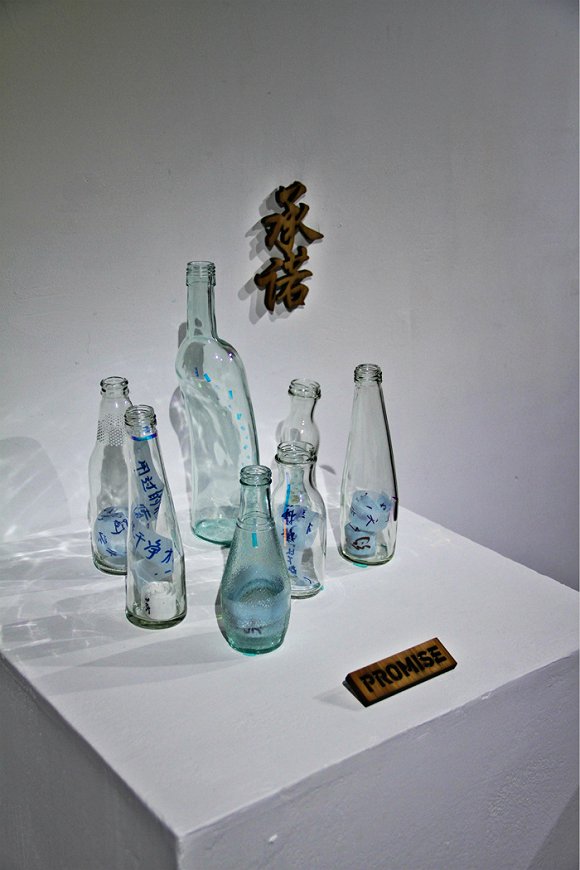
When we pray in a drift bottle, have we thought about what we need to do? Singaporean visual artist Chen Shufang designed a series of strangely shaped glass bottles using the concept of drift bottles, inviting viewers to write down their own commitments on slips of paper, pledging to create a sustainable urban environment through daily actions. These commitments are then placed into glass bottles and become part of the artwork.
[Chinese] Mao Donghua Ink Research Series 2015
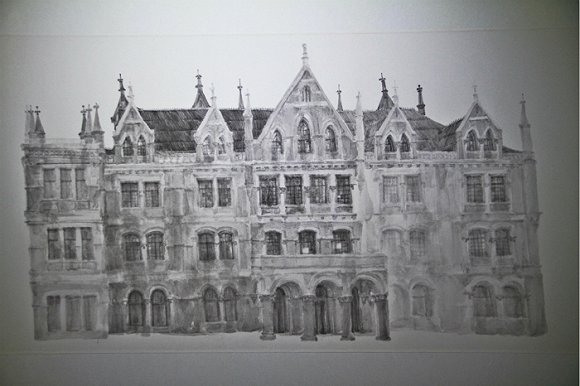
Mao Donghua's innovation in traditional ink painting techniques is most vividly demonstrated in the Shanghai Bund architectural series exhibited this time. The Western-style architecture in dense ink and wash presents a special kind of dignified and majestic realism, reflecting the aesthetic experience of contemporary life.
【New】Huang Weiqi Drinking Water Remembers Its Source 2016
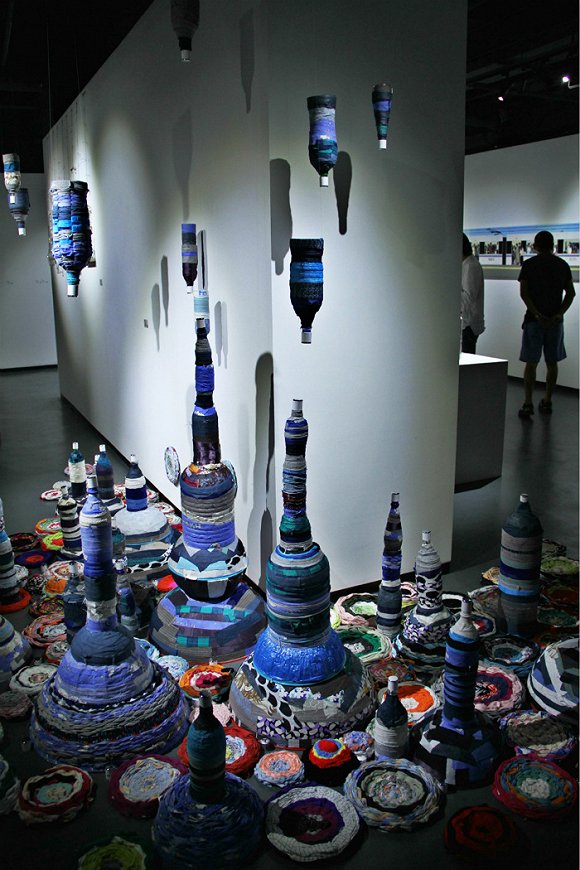
Huang Weiqi advocates the green and environmentally friendly "recycling art" and integrates this concept into his works and daily life. The work "Drinking Water Thinking of Its Source" on display this time was produced by students from Shanghai Feiye Art Special Children's Education and Shanghai Star Language Intelligent Training Center, as well as residents of the Ang Mo Kio area in Singapore. It uses discarded cloth and plastic garbage to form stalactite and stalagmite-shaped installations, which means "If you don't accumulate steps, you can't reach a thousand miles, and if you don't accumulate small streams, you can't build a river." It calls on the public to pay attention to the issue of waste recycling and reuse.
【middle】Du Haijun City Subway Series 2016
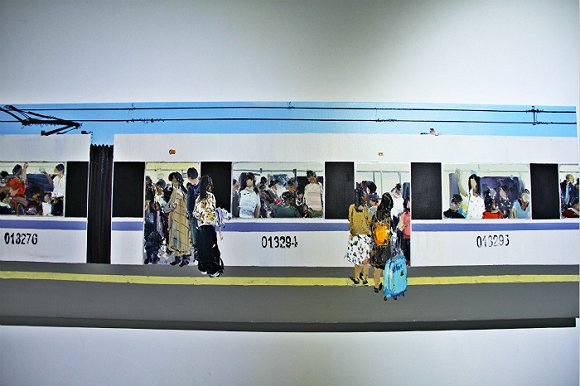
Du Haijun started creatingthe "Urban Subway Series" in 2015. The freehand techniques of Chinese painting are used to depict the scenes in the carriage and tell the story of group portraits in the metropolis.
[New] Li Zhiqiang Drying Clothes 2016
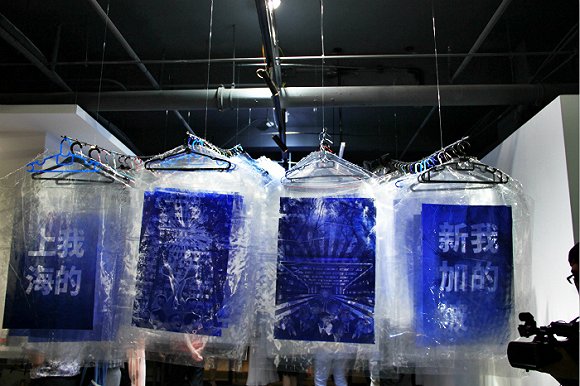
Singaporean young artist Li Zhiqiang noticed that residents in Singapore and Shanghai like to hang their washed clothes outdoors, and got inspiration from this to study people's cultural identity concepts, consumerism concepts, and ecological footprints and impacts. The work is made from discarded plastics from clothing, and hangs in the air like a mountain of clean clothes wrapped in plastic covers after being cleaned in a dry cleaning shop.
【middle】Zhang Yue City Memory Series 2016
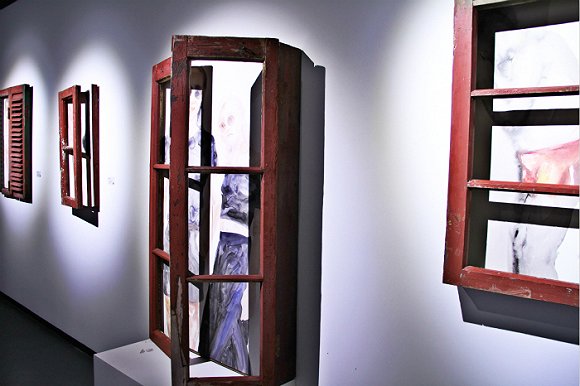
Zhang Yue collected the remains of doors and windows from the ruins of Shanghai city and used them as picture frames. The ink characters in her paintings are superimposed with these old doors and windows, forming a strange tension.
[New] Xie Zhengying Life Station 2016
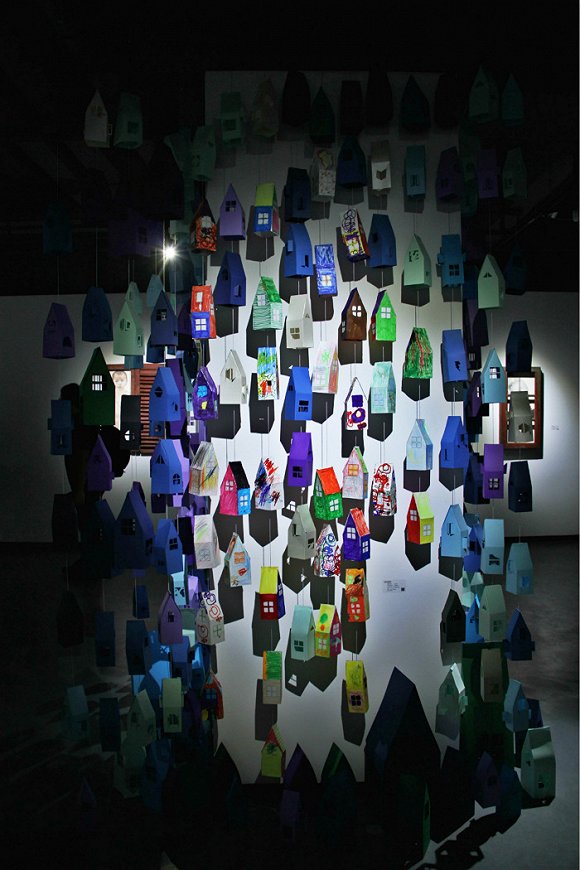
As the smallest unit of urban living, houses carry the lives and dreams of urban residents. The work consists of different models of houses that do not represent a specific city, but resemble a child's drawing of a dream house. A small part of the work wasdecorated by students from Shanghai Feiye Art Special Children Education.
【middle】Zong Xitao Insect Series 2012
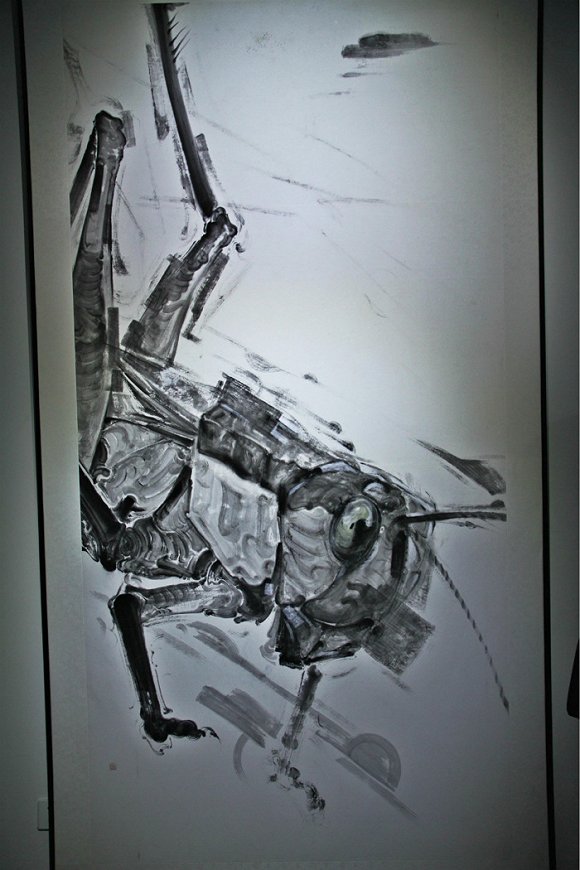
Grass and insects have always been one of the important themes in traditional Chinese literati paintings. Zong Xitao uses large formats to depict various details of crickets, vividly displaying this creature submerged in the hustle and bustle of the city and the huge scale in front of the audience. He intends to make the audience think about the current urban environmental protection through the grand treatment of microscopic insects.