
On the evening of August 24, 1966, Lao She threw himself into Taiping Lake wearing a white shirt and blue trousers, holding a book of "Mao Zedong's Poems" in his hand. That book of poems has always been floating on the water, but Lao She, a writer who was once loved by many people, sank.
According to the recollection of Lao She's wife, Hu Qingqing, an old man at the fish farm told her that during the day, there was an old man who sat on a chair and read "Chairman Mao's Poems" for a whole day. After nightfall, when there was no one around, the old man stood on the bank with two legs, dipped his head and threw himself into the river. This old man is none other than Lao She.
In the blink of an eye, 50 years have passed, and there are still different opinions about Lao She's death. From "self-isolation from the people" to "having some kind of mission", people who hold these views all have their own explanations. Perhaps the only consensus that can be reached is that the departure of this writer, who calls himself an "ordinary Beijing citizen," is directly related to what he experienced on August 23.
On August 23, Lao She refused to listen to the persuasion of his wife Hu Qingqing and insisted on going to the Beijing Federation of Literary and Art Circles (referred to as the "Beijing Federation of Literary and Art Circles") to study "the great principles", but he met the Red Guards. According to Yang Mo, who stayed with Lao She that day, Lao She originally planned to leave at noon, but he didn't expect that the bus driver was on strike and refused to take him home, so he didn't go back. At 3 o'clock in the afternoon, a group of female Red Guards with small brushes on their heads and wide belts around their waists walked into the Beijing Federation of Literary and Art Circles aggressively, pulled out Xiao Jun and others, and beat him with belts. Later, the female Red Guards also called out Lao She's name, which made Yang Mo startled: Can this old man withstand a beating with a belt? At four o'clock in the afternoon, Lao She and the others were put on a large truck and transported to the Confucius Temple. They did not return until about seven o'clock. At this time, Lao She's head was covered with a white handkerchief and stained with blood.
While at the Confucius Temple, according to Ge Xianting, deputy director of the Preparatory Committee of the Cultural Affairs Bureau who was present at the time, Lao She's head was broken and bleeding continued. He felt that Lao She could not die here, so he said to the Red Guards: "Lao She's crime is very great. You can't beat him to death. If you beat him to death, you will have no confession." After that, he asked Lao She if he knew he was guilty, and Lao She replied, "I know he is guilty." Ge Xianting asked people to take Lao She back. This was the only way he could save Lao She.
According to Haoran from the Beijing Federation of Literary and Art Circles who was present, after Lao She returned to the Federation of Literary and Art Circles by car, he caught up with Red Guards from all over the country to "join forces" and gathered in the compound of the Federation of Literary and Art Circles, where he was criticized and beaten again. At this time, the writer suddenly said, "Lao She received copyright fees from the United States." In addition, because Lao She was hurt when taking off the sign, he threw the sign at the Red Guards, which made Lao She beaten even more fiercely. In order to protect him, the nervous Haoran had no choice but to ask people from the police station to take Lao She over on the grounds that "he beat the Red Guards and was a counter-revolutionary". Later, it was Lao She's wife, Hu Qingqing, who took him back.
"I know very well that Lao She's death is no longer just a suicide incident in which a famous scholar died abnormally during the Cultural Revolution."Fu Guangming said: "Although Taiping Lake where Lao She committed suicide has long since been filled in, and a Beijing subway repair shop has been built on its site, I always keep a small piece of the old traces of Taiping Lake in my heart." Since 1993, Fu Guangming began to prepare materials for the study of the heavy topic of "Lao She's death", and subsequently wrote works such as "Memories of Taiping Lake - Lao She's Death", "Lao She's Death in Oral History", and "The Oral Record of Lao She's Death". In "The Oral Record of the Death of Lao She", Fu Guangming and Zheng Shi recorded this period of history and their views on "the death of Lao She" through conversations with Lao She's wife Hu Qingqing, son Shu Yi, "whistleblower" Cao Ming, witnesses of the "8.23 Incident" Duanmu Hongliang, Lin Jinlan, Cao Feiya, writer Bing Xin, scholar Qian Liqun and others.
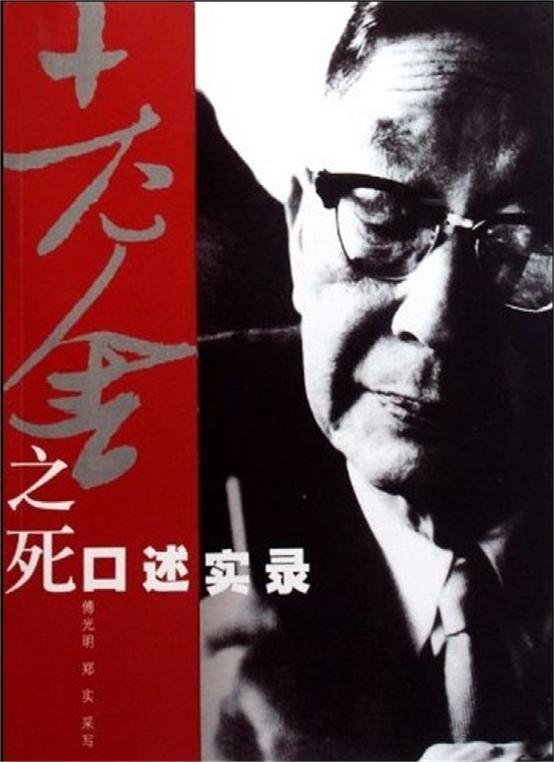
The following content is excerpted from Fu Guangming and Zheng Shi's "Interview on Lao She's Death" 2009 edition
Shu Yi: I pity my father
Looking back now, I mainly felt pity for my father. It is really unacceptable for a person like him to end up like this. I think he is very, very pitiful. I have an uncontrollable sadness.
During the Anti-Japanese War, at such a critical moment of national survival, he once wrote an article called "Poet". He said that as a poet or a literati, if he suffered a huge disaster, he would die in the line of duty, that is, he would use his own body to be buried in the water. Later I found this article ("Poet").
Sitting here (Babaoshan) at that time, I thought that his death was conscious and a choice of his own. His death must have some kind of mission. Later I found this sentence (referring to "Poet"), and it became clear what this mission was. Being buried and dying in the line of duty became a very positive thing. Nowadays, there are many things thinking about Lao She's death. I think the core part should be this, which proves that he thought deeply.
"Whistleblower" Cao Ming: Many people commit suicide, but he is famous
Fu Guangming: What do you think of his suicide?
Cao Ming: I never thought that they would doubt me, because he was not the only one fighting against him at that time. I just said that, and that is the truth.
Fu Guangming: Some people say that your words at that time caused the Red Guards to criticize Lao She and beat him so severely that he committed suicide by throwing himself into a lake. Next year will be the 30th anniversary of the Cultural Revolution. When you think about it today, do you feel guilty about what you said at that time?
Cao Ming: It was in the early days of the Cultural Revolution. Who knew it would expand to what it was later, and who knew he wouldn’t be able to stand it anymore. Many people commit suicide, but because he is famous, everyone takes him seriously. As a writer or artist, you are famous for both good and bad things.
Duanmu Hongliang: Lao She’s death was a sad episode in the “Cultural Revolution”
A writer's main contribution to the people is through his works. He was still writing "Under the Red Flag" at the time, which he couldn't finish. Before that, he also wrote a lot of things to match the mission. His life is not so short, he has many things to do,There is a lot to write about. His death is a great loss to China. No one else can write for him. This was an unpleasant episode in the Cultural Revolution. Of course, the only thing about the Cultural Revolution was the unpleasantness. I am extremely sad. Later, when I could write again, I wrote about him. Someone asked me to write an article recalling Lao She. I was still ill at the time, so I could only say one paragraph, and others would memorize another paragraph, and then I connected them together, and the writing was still fluent.
Lin Jinlan: I guess Lao She will be fine as long as he procrastinates for about ten days
In that period, writers were beaten too many times, some of them were more aristocratic, such as Mr. Bing Xin. I personally saw Mr. Bing Xin smashing coal in the yard and being punished with hard labor. Bing Xin was born in a noble family and was the wife of the ambassador to Japan before liberation. But why was Lao She the one who chose suicide? No one else has a choice. At that time, there were many more people than just Lao She.
I guess as long as Lao She drags his feet for about ten days, he will be fine, and others will ignore him. Why did he want to die? Is it because he has a strong personality? No, he is definitely not. He is the kind of person in Beijing who can deal with troubles well, so there are some factors involved in his suicide. "Sciences can be killed but not humiliated" is a common belief among Chinese intellectuals, not an individual one. Mr. Lao She does not appear to be more outstanding than others in this aspect.
Cao Feiya: He is a very strong person, he would rather be broken into pieces than completely destroyed
For me, it was very sad. I felt a little silly and shed tears. A good man suffered such a fate. Moreover, this movement has gone so far and even Lao She was tortured to death, so what else is there to say? I feel that this country has no rule of law and is in chaos. I think many people feel like me. No one dares to show off, because they are committing a right deviation, right? This is sympathy, this is human nature, if you do this, it is sympathy. Because most of the comrades in the Federation of Literary and Art Circles are good comrades and have a close relationship with Mr. Lao She. Those who have no feelings also think that Lao She’s behavior and behavior were forced to death and that he must die. He is a very strong person and would rather be broken into pieces than destroyed. He is very kind and humble, but has a stubborn personality. It is difficult for such a person to bow his head easily. In the face of such disorderly violence, if he was asked to lower his noble head, he would probably rather die than surrender.
Bing Xin: I think he will definitely dive to death
I think it is very possible (Lao She committed suicide) because he had a very tough temper. I always felt that he would definitely die by diving. Almost all the people who died in his novels died by diving. I think he can't stand much grievance. When he is popular, he hears only compliments and he is used to it. He can't stand being beaten. So when I heard he died, I wasn't surprised at all. His temper is different from other people's, and he can't stand a little grievance. Also, many people praised him at that time, and no one ever said anything bad about him. He is a very optimistic person. He usually does things like playing with cats and planting flowers. He is very casual. He couldn't stand it when someone suddenly criticized him like that. He felt that there was nothing to miss.
Qian Liqun: "Burning books and entrapping Confucians" drove Lao She to a dead end
There are many intellectuals, including liberal intellectuals. By 1948, the politically liberal Lao She had given up, but Lao She had a final bottom line, that is, he must keep what he lives for. I think the fire in the Confucius Temple and the scene of burning books may have stimulated him the most, which made him feel the destruction of culture. from his heartAnalyzing it, he will feel that this is an obvious "burning books and entrapping Confucianism". The burning of books and the entrapment of Confucians is an indelible memory for Chinese intellectuals. I think he at least felt that the era of "burning books and humiliating scholars" was coming.
His death cannot be interpreted as a protest because he could not have been a heretic. His behavior was not heresy, and his death did not lead to a fight, but it meant that he had nowhere to retreat. He must maintain his innocence and hold on to the last point. He cannot give in anymore. My compromise, accommodation and concession have reached the end. He couldn't cross this step no matter what. This factor combined with other factors led him to throw himself into the lake. I believe more in the effect of combined force. Sometimes a person will not die even if he misses a little bit. Just like a person was hit by a car and died. In fact, there were many factors. If someone had said a word to him before, he would have avoided it. This means that the combined force has reached a point, and even one factor cannot be missing. If we talk about fighting with death, then we must die no matter what the factors are. If he was fighting with death, other factors would not matter. He had already made up his mind to die. I think Lao She is not like this in terms of personality. He is not the kind of strong person who would rather break than bend. He is still round on the outside and square on the inside.