"Today, social education has become the primary function of museums. Our slogan today is to enter from the Palace Museum into a part of people's social life." Shan Jixiang, director of the Palace Museum, said at the strategic cooperation ceremony between the Palace Museum and Phoenix TV held recently. In the next five years, the Palace Museum plans to take advantage of Phoenix TV's omni-media advantages and use newer technological means to display its exhibits, including "Along the River During the Qingming Festival."
AR and MR technology recreate “Along the River During Qingming Festival”
At the cooperation release ceremony, Liu Changle, Chairman and Chief Executive Officer of Phoenix TV Group, said that this cooperation adheres to Dean Shan’s concept of “bringing the Forbidden City home” and uses electroacoustic, digital, and multimedia means to connect the long history reflected in the Forbidden City’s collection, animate static images and text, and make their buildings and cultural relics come alive. “With this cooperation, the Forbidden City will be presented to people in a youthful, all-media manner.”
The relevant person in charge of Phoenix Satellite TV told Jiemian Culture that this strategic cooperation mainly includes the "Five Ones Plan": a series of "Thoughts Without Borders" cross-field forums; a set of high-tech IP development and global touring exhibitions of the Forbidden City's national treasures; a set of global artist residency programs; a "tribute to cultural heritage" grand ceremony brand; and a series of Chinese Culture Forbidden City training courses and promotions.
The currently popular "IP" industry and "VR" technology are undoubtedly powerful forms of disseminating the profound history and culture of the Forbidden City. The Forbidden City has a history of more than 600 years, and the collection of the Palace Museum contains the cultural essence of Chinese civilization for thousands of years, which itself is a super "IP". Experts from the Palace Museum will work with the leading culture and digital technology team of Phoenix TV Group to use high-tech methods such as augmented reality (AR), interactive immersion (MR), and 3D to artistically recreate collections such as the "Twelve Beauties", "A Thousand Miles of Rivers and Mountains", and "Along the River During the Qingming Festival", turning them into high-tech IPs with intrinsic context. The audience will be able to experience the charm of the works in a three-dimensional way, as well as the rich historical background and cultural stories behind the works. In the next five years, the research and development of at least three large-scale works will be completed, and they will be toured across the country. Later, they will go abroad and launch a global touring exhibition.
"Cross-border" is also a way to rejuvenate traditional culture. In the autumn of 2016, the first "Thoughts Without Boundaries - Sino-British Art Aesthetics Forum and Sino-British Art and Fashion Ceremony" will be launched, inviting cultural guests from various countries to conduct aesthetic dialogues on the topics of tradition and contemporary, East and West, art and fashion. Artists from around the world will be invited to create "Chinese style" cross-border creations based on the collections of the Forbidden City. In the future, the "Global Cultural Heritage Sharing Forum" and "One Belt and One Road Cultural Summit Forum" will be held at the Palace Museum.
In addition, awards for film, television, entertainment, fashion, and finance can often be seen on the screen.Ceremony, but there are few social awards activities for art and cultural heritage. Awards for art and cultural heritage are often limited to narrow professional fields. To this end, the Palace Museum and Phoenix TV plan to jointly launch a cultural inheritance award for the public, so that more people can pay attention to cultural inheritance and pay tribute to artists and inheritors.
The "Forbidden City Heritage Hospital" will be unveiled at the end of the year, and two major Hong Kong exhibitions will be held next year
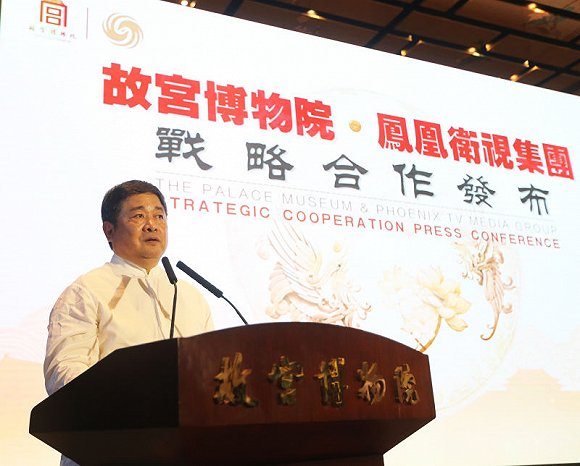
Shan Jixiang, Director of the Palace Museum, revealed a series of plans for the Palace Museum in the near future. In recent years, the Palace Museum has been adhering to the threshold of 15 million visitors for a better visitor experience and the safety of cultural heritage. However, the number of visitors has exceeded 12 million so far this year, and may exceed 15 million this year. Therefore, the Forbidden City is constantly expanding its opening. Last year, 65% of the open area was opened, and this year it will reach 76%. The reception capacity will be even stronger.
After three years of environmental improvement, the Forbidden City will complete the demolition of all color steel room-style buildings on October 10 this year, leaving only ancient buildings and parts of ancient buildings that have been restored with approval from the State Administration of Cultural Heritage and UNESCO in the entire Forbidden City. In September this year, we will start to repair a wall of the Forbidden City. This is the first time that the Palace Museum has systematically repaired the wall.
Before the end of this year, the Forbidden City will also build a "Forbidden City Cultural Relics Hospital" open to the public. A documentary called "I Repaired Cultural Relics in the Forbidden City" made many people pay attention to the restoration of cultural relics in the Forbidden City. Now there are indeed millions of cultural relics in the Forbidden City that need to be repaired and maintained. The concept of the Forbidden City today is that "cultural relics are alive". After a cultural relic enters the "hospital", its health status must first be diagnosed, its "disease" must be scientifically judged, its material analysis and the superimposed information from all aspects must be clearly recorded, and then it must be assigned to more than 20 different restoration rooms, and finally a publicly published report must be given to the society. This report is like a medical record. When people restore this cultural relic hundreds of years later, they can look at the "medical record" to know what methods, techniques, processes, and materials were used in the past, so that the life history of the cultural relic can be presented very clearly.
In addition, the Forbidden City will hold two large-scale exhibitions at the Hong Kong Heritage Museum and the Hong Kong Museum of History next year, among which the "Palace of Nourishing Heart" exhibition will be publicly displayed for the first time. Yangxin Hall is the most important palace in the Forbidden City. It was used by 10 emperors in the Qing Dynasty, lived in by 8 emperors, and experienced countless important historical events. In the past, due to the small indoor space of Yangxin Hall, the audience could not walk in to visit. This time, the Forbidden City has selected the most important parts from the more than 1,980 collections in the Yangxin Hall to be exhibited in Hong Kong. This is the first time for the audience to visit its space up close. Another major exhibition, the "Universal Celebration of Longevity Ceremony Exhibition" is a collection selected by the National Palace Museum for its own celebration. This time, the best of the 540 collections were selected and brought to Hong Kong for display. Two major exhibitions will return to Hong KongGrand opening the day before the 20th anniversary.