We have discussed education topics with many outstanding people - from policymakers to teachers, from activists to parents - including but not limited to relevant laws, policies, funding, etc. We also imagined what the best education system in our dreams would look like. We have compiled these conversations for readers to take a look at.
This time the topic is about evaluating a school: What kind of school is a good school? Who will be responsible for the evaluation?
U.S. Secretary of Education John King described his ideal school to us:
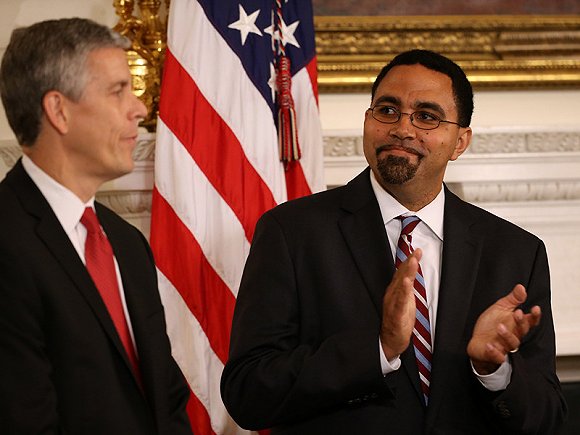
An ideal school does not need to be magnificent, but it does need to be clean and tidy, with painted walls, polished floors, and clean and bright windows. Adults will regard this kind of school as a palace of learning, a place where students, teachers, parents and members of society communicate. The efforts of all members of the community are extremely important and will make this school a success. School leaders will teach students in person and spend considerable time observing classes and providing clear and actionable feedback on the work of colleagues to make improvements.
Teachers will develop the school's curriculum with the goal of enabling all students to achieve success in high school, college, or even in their careers.
They also assign their students to do worthwhile things: read meaningful literary works, solve profound and difficult mathematical problems, conduct original social research, and teach students scientific knowledge through experiments. The content in the curriculum should include music, art, dance and psychological education. In this ideal school, students come from diverse cultural backgrounds, speak different languages, and believe in different religions.
Students from wealthy families will study alongside those from modest means. The teachers responsible for teaching them will also come from different cultural backgrounds, and the school’s authority figures will include people of different skin colors.
In addition, the school will also have a clinic, a social worker, and a psychologist, who will be responsible for both students and parents. An ideal school is one where students want to come to school every day, and their parents need to be involved in teaching and have confidence in the school's management; at the same time, parents are also confident in their children's education, setting examples for their children while making contributions to the school within their capabilities.
Nicholson Baker, bestselling author of Substitute: Going to School With a Thousand Kids:
When I was younger, I loved taking the Iowa Test of Basic Skills, but at that time, the test was just a standard test. But today’s kids don’t like this test because it requires mandatory participation and the test itself tends toOften they are hastily developed and children usually have little interest in them. Large numbers of parents are also turned off by these tests, which are available across the state, because the results are often misused.
For me, being local, authentic and relaxed are the most important qualities of a test. Schools just need to make sure that all fourth-grade students can express themselves correctly. In this regard, perhaps schools should provide some helpful spelling tips - as English is a phonetic language. Human knowledge is vast and beautiful, and it is impossible to cover everything. In today’s blossoming culture, schools need to test students in ways that go beyond the “basics”—because we only remember what we want to know.
Carol Burris, Executive Director, Network for Public Education:
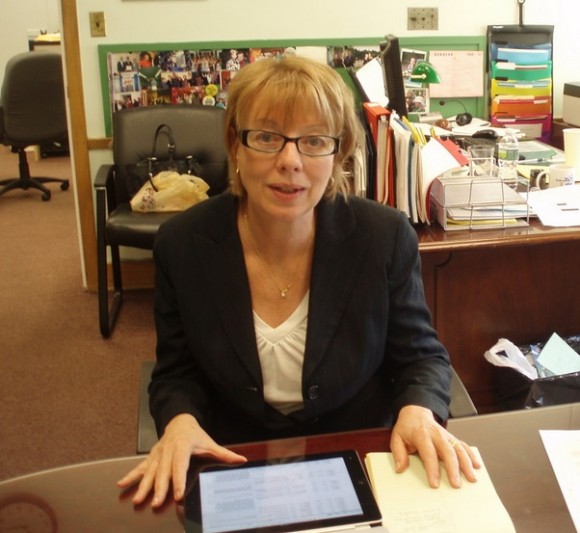
In my 25 years as a teacher, there has never been a day when I didn’t feel a responsibility to my students or my community. We are responsible for students' physical safety, academic progress, and social-emotional growth. Which of the items listed above do parents particularly hope schools will not pay too much attention to? That is students' grades, but our schools only use grades to measure people.
Currently,education in our country is plagued by scores, and people want to judge schools by the scores their students receive. This solution is not only of no practical value, in fact, they will make the public education system fall apart. For fifteen years, we have been stagnant because of this, and this situation should be changed.
The most important function of a school is to help its community grow. Ironically, as privatization and "accountability" of schools become more popular, schools themselves become increasingly disconnected from the community. If we could come to a school in a community and ask our community what they value, maybe we could figure out what the school's true role is and do something about it.
Countries with high academic standards such as Finland do not use standardized tests or "compulsory tests" to evaluate students or schools. They will pay more attention to the progress of the school, the equality of the teaching environment and helping minorities to close the opportunity gap. We should learn from them.
Catherine Cushinberry, Executive Director, Parents for Public Schools:
Whether it is state-led or national-led standardized testing, nor the so-called "public standardized testing" program should be implemented. Students learn in different ways, and they need to be evaluated in different ways: some students like and are good at expressing themselves through singing or art.discover themselves, but other students may like to create or build something to illustrate what they have learned. Testing to evaluate students should be a collaborative effort between families, teachers, leaders in the community, and the students themselves. After a school or a district's "standards" are set, they need to be reconsidered three to five years later.
The society we live in is a globalized society. We need to consciously compare what we do with other things: how should we make things more in line with national trends and at the same time integrate with international trends. We often use a variety of metrics to measure education on a state, national, or global scale, but now this evaluation should be combined with the ideas of various groups in the community, because their cooperation can better promote success.
McRae Horn, co-founder of Clayton Christensen Institute:
The education students receive is largely funded by taxpayer contributions. Therefore, taxpayers also need to have a certain say in the public education system. Although "full school responsibility" has its merits, if taxpayers can be involved, things will become more different.
The current education is almost "wantonly" painting the educational process that students cannot understand. What we really need is to allow each student to grow as an independent individual. In the educational evaluation system, we should not let rough and rigid standards take over everything for the sake of statistical convenience; ability is everything. In an education system with ability assessment at its core, all evaluation should focus on students' ability to learn - unless they master this ability, it will be difficult for them to move forward - this will also allow educators and students to understand what they have to do next, which is the biggest goal in the current education system.
School evaluation should not interrupt students' learning rhythm; in fact, we need to try our best to use objective evaluation standards and introduce diverse evaluation elements. After students receive a rich basic education, they need to demonstrate what they have learned in a feasible way. This is an effective way of evaluation.
Nationally standardized testing should certainly be cancelled. We will work with each education system, using comprehensive public assessment systems such as the National Assessment of Educational Progress. Students do not need to participate in all exams under this evaluation method. They can get a rough evaluation report in several basic tests. In addition, they can also take other small tests to add more specific content to their evaluation.
Richard Kahlenberg, Senior Staff, The Century Foundation:
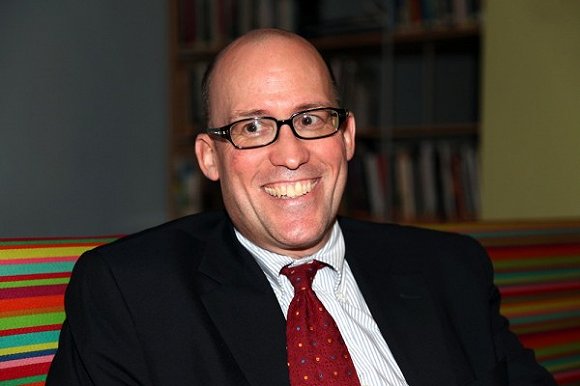
The eventual collapse of the ill-fated No Child Left Behind Act revealed the importance of accountability. Albert Shank, former president of the American Federation of Teachers, once said of the above plan: “In this plan, teachers are responsible for almost everything, but the students themselves actually just have to muddle along. "This situation creates a serious problem. Students know that if they fail on a test or other area, they will not be punished in any way, but their teachers will be punished for the student's failure. Shank also mentioned that each state's standards are different, so this plan will cause problems for those families who often move between states.
A better education system will make education truly a matter for both students and teachers, and it will also allow schools to focus on more than just asking students to do math problems or get high reading scores. Schools should encourage young students to become better, healthier, and smarter people:A qualified student should have compassion and enthusiasm, which are as important as being literate in mathematics. More importantly, schools should prepare citizens for a democratic society and embed them in an increasingly diverse society.
Lack of ability is not necessarily a serious problem in the workplace, but not knowing how to work well with people (from different backgrounds) can often lead to an employee being fired. Making students aware of their responsibilities in school and in society will make public education more meaningful.
Michelle Rhee, founder of StudentsFirst, former principal of Washington Public Schools
Future teachers and schools have a responsibility to create a school for children that completely ignores their background. Such schools have an obligation to provide all kinds of children with the high standards of education they deserve, and the standards for evaluating such education need to be sound and stable and of extremely high quality; in this case, each student's efforts can be fairly described. Schools, principals, teachers and parents need to work together to ensure that children are supported to achieve their goals and achieve their potential.
Randi Weingarten, President, American Federation of Teachers:
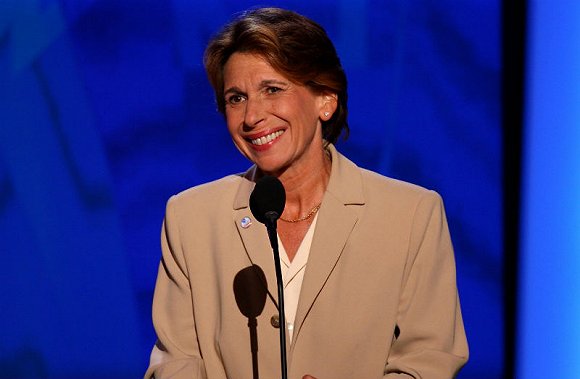
Do our current schools allow children to thrive? If the answer is yes, how did we get there? If not, then why not? What do we need to do to get on a better path?
For the United States, no standard can fully adapt to the different development contexts across the country. The math/English literacy tests we’re used to actuallyThe effect has mostly been to close schools, fire teachers, and ultimately discourage students who want to pursue their dreams.
If you look at pure testing, I think standardized testing should be a component of education, not its purpose. If we want data from standardized tests to measure our progress, we already have a gold standard—the National System of Educational Assessment tests, which are randomly sampled across the country and provide educators with a clear picture of the gains and losses in what we are doing so far.
But we need to hold both schools and educators accountable, not hold them accountable to us. The responsibility of schools is to provide students with the resources they need -Can every student get the books they need? Are school buildings strong and safe? Is drinking water in schools safe? If something happens to their family, can they get other assistance? Can music, art, and mental health-related content be consistently implemented in students’ education? Is the library always open? Can the facility be used regularly?
If when we answer these questions, the answer is not an unequivocal "yes", how can we judge those front-line educators? If an educator does not receive basic support and the resources needed to create a good educational environment during his or her work, how can we have the face to fire teachers or decide on a teacher's promotion?
(Translation: Liu Yanqi)