
For the question "What is hometown", the answer will not become better during the festival - hometown, is it the place where we were born or the place where we live, the place where we miss or the place where we are buried, the physical place or the spiritual place?
As for the geometry of hometown, the people who have answered this question most earth-shatteringly in the vast history are probably the Jews. Thousands of years of artillery wars and displacement have not changed or shaken the Israelis' firm belief and incomparable love for their homeland. Just like the big world reflected by the small people in the work "Village" by the Gesher Theater in Israel, they have struggled all their lives and suffered in the flames of war to find and finally reach the place where their souls have a home and a safe attachment, which is the "hometown".
A few days ago, starting from the Israeli drama "Village", the performance artist Lan Tianye, the famous contemporary Chinese playwright and Mr. Cao Yu's daughter Wan Fang and the French-Jewish professional photographer Anaïs Martin started a dialogue with the theme "Where is my hometown?" This is not only a conversation about dramatic art, but also a review that touches everyone’s deepest emotions and family memories
About "Where is my hometown"
Lan Tianye: The stage is the resting place of the soul
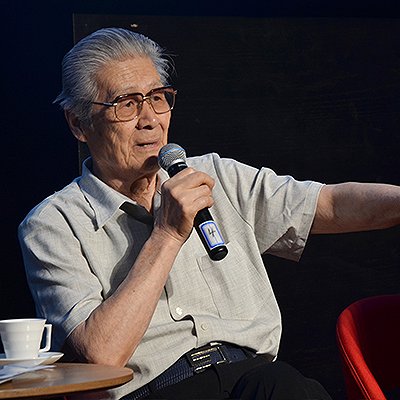
I was born in Rao County, Hebei Province, but I left this hometown when I was just one month old. When I returned there when I was 70 years old, the locals said that the place was completely different from the original one.
In 1949, when Peiping was liberated, our art team entered Beijing from Xizhimen. At that time, the People's Liberation Army and the Nationalist Army were still fighting at the city gate. Because I grew up in Beijing, it was like returning to my childhood hometown. It was so familiar, but it was also very fresh, because it was not the old Beijing. From that day on, it was a new Beijing, and I had to start a new life. It felt like there had been earth-shaking changes in my home, and my mood was also different.
I have lived on the stage of Beijing People's Art Theater for 64 years, so the stage is my spiritual hometown. But the homeland of my soul is the earth. There are two sayings in China: we are home all over the world. In fact, IWe have performed in many countries around the world. The world is too big, but also too small.
Wan Fang: Everything I have experienced has become my hometown
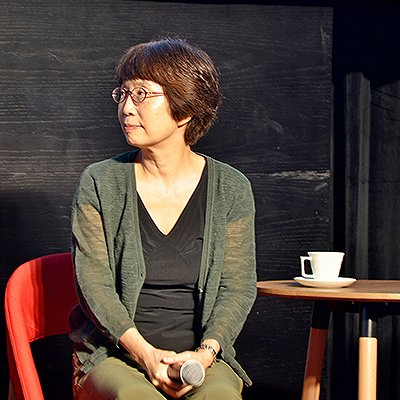
I was born and raised in Beijing. When I was 4 years old, my father (Cao Yu) took me to see a play and I was so frightened that I cried.
In 1969, I went to the Northeast to jump in line. The whole train car was full of children from Beijing, who had to go far away from their hometown to farm. My father came to see me off, and at that time he was knocked down and tied with a white towel. The train station was crowded with people bidding farewell, and there was a lot of crying when the train was about to leave. At that time, when I was young and leaving home, I felt that there was a new world waiting for you. It was unknown and actually very bitter. After jumping in the queue, I went to work as a soldier in rural Jilin for 8 years. It seems now that everything I have experienced has become my hometown.
Walking outside, I often miss Beijing. I think of a bungalow or building in Beijing with a light on in the window. That is my home, and that is my biggest dream. Buying a popsicle for 5 cents is also very exciting. For me, Beijing is my concrete hometown and cannot be replaced by anything else. In 1980, I went to the United States to visit my sister for the first time. I stayed there for three months and I felt very homesick. At that time, my home was in Houmenqiao Hutong, which was very dirty. I especially missed that dirty and dilapidated alley in the United States.
As I grow older, my hometown becomes larger and less fixed. I think my hometown is an intangible thing, an experience and feeling in my life, so my hometown is getting bigger and bigger.
Teacher Lan Tianye is a part of my hometown, the Capital Theater is a part of my hometown, and even "Village" is a part of my hometown. Because my hometown is the softest, the deepest, the most vital, and the easiest to be inspired in my heart. It is my hometown.
Annaïse Martin: I have several hometowns, sad and happy
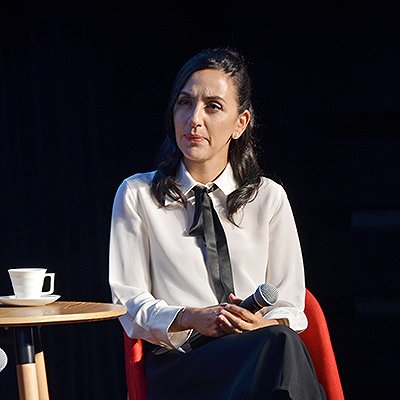
I was born and raised in France, but my parents grew up in North Africa. They left at the same time as some Jews during the Algerian War. Starting in the 1950s, my mother's brother and sister decided to go to Israel. My parents did not choose this path, but chose to go to France. They never went back after that, until now. I think every Jewish family has different feelings about their hometown. My mother sometimes cries when I mention it.
When you talk about "returning to your hometown", I have no concept of "returning". I have several hometowns, both sad and happy at the same time.
Annaïse Martin once wrote in the book:"Accept that we are destined to be short-lived in this world. Six years in Shanghai, three hundred years in Morocco, or a thousand years in Poland...Exile, refuge... A dilemma? Is this necessarily the dilemma of the Jews? Constantly adapting to a new environment, and then being forced to leave, carrying the fate of the present, the past, and the future. Where will I be tomorrow? "
About Israel Gesher Theater "The Village"
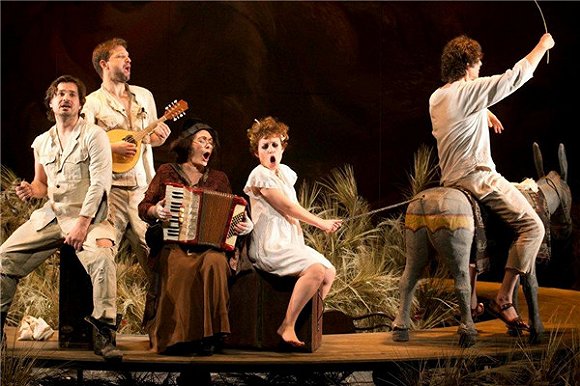
"The Village" won the Israeli Theater Awards for Best Director, Best Actor and Best Play in 1996. It uses trivial life details and strong family affection to describe the subtle inner world of the characters against the backdrop of war. The protagonist Yossi is an innocent boy who experiences love, anxiety and joy. Compared with national issues, he pays more attention to the lives of relatives and friends around him. He and the people in the countryside experienced World War II, and also experienced the unique Jewish history of exile and the establishment of the State of Israel. "Village" will be performed at Wuhan Qintai Grand Theater (October 29th and 30th), Shanghai Oriental Art Center (November 4th and 5th), Guangdong Performing Arts Center Grand Theater (November 12th and 13th), and Beijing Poly Theater (November 18th and 19th) starting from October 29th.
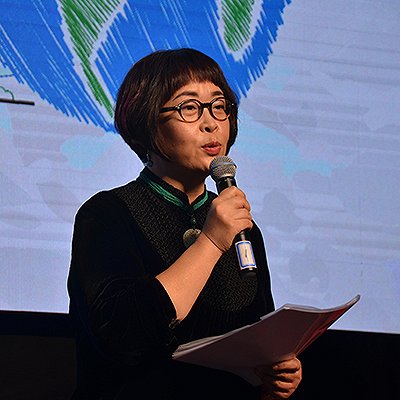
Zhang Yue: That cemetery is their stage
When it comes to feelings for hometown, some love it, some hate it, and some yearn for itSome people can't escape even if they want to, and some can't go back home even if they want to. If we answer today’s question, the most earth-shattering answer to this question is the Jews.
Jews have been living in the land of today’s Israel more than 4,000 years ago. The Bible says that it was the land of milk and honey. But over these 4,000 years, the hometown was destroyed and occupied, and the people were expelled and dispersed throughout the world. They lose their hometown again and again, and try to return to their hometown again and again. The worst and longest of them happened more than 2,000 years ago. This country was almost flattened, the world's earliest temple was destroyed and turned into a wailing wall, and the vast majority of the people in this country went to work as slaves in various countries around the world.
Slowly, the Jews who dispersed to various countries around the world became the British, French, Austrians, and Russians, but they had one thought in their hearts: In fact, I am a Jew, and sooner or later I will go back there. This vague idea that had been hidden in my heart for two thousand years became particularly clear and urgent in the 1940s. Because the entire Jewish population was being hunted in Europe, they clearly realized at that time that they had to return to their home and establish their own country there. Only then would they be safe.
This is the story "Country" tells. This is a very classic drama that describes the lives of ordinary people in the countryside during World War II. These people seem to live a peaceful life, but they are not peaceful inside. While they watch their compatriots and relatives being killed in distant places, they are always worried about the situation of the war because their land will also be lost. They want to take out their guns to protect their homeland, but they also know that they will make people living in Palestine lose their homeland. Even so, it does not prevent rural people from living, working, singing, and loving each other. That village is their hometown, and that cemetery is their stage.
Speaking of the creation of the play "Village", it is also very dramatic: for almost a hundred years, Jews scattered around the world wanted to return to their own country. In the early 1960s, Russian artists, who were Jewish, returned to Israel. After returning to their homeland, the Gulf War broke out, and they created this play while avoiding the war. They did not expect that this play would become a classic play, touring more than 800 shows around the world and winning numerous awards.
There are many actors in this play, because it was their fathers who first created this play, and they started acting first. After decades, the fathers have passed away, or they can no longer perform, and their children will act in this play next. Therefore, the birth and touring process of this play is a piece of history of the Jewish nation. The search for hometown he mentioned is a common issue for people from all over the world. This is the firstMetropolitan Theater introduced this play to China for the first time.
Lan Tianye: The combination of tradition and innovation is very attractive
Beijing People's Art Theater invites several foreign dramas to perform every year. There are Israeli dramas every year, and they are all very good, extremely good. But the one that moved me the most was "Country". Until now, it's really hard for me to express my feelings about this drama. We have good traditional craftsmanship, as well as innovation, fashion, and avant-garde. We feel that tradition is just the same old thing, and avant-garde is incomprehensible. However, how should tradition and fashion be combined? The form of expression in "Village" is very novel, even strange. The combination of tradition and innovation in this play makes me feel very charming. Its performance is so unique, and it is a goal or form that no one can imagine. However, it is not the form that impresses the audience, but the connotation behind the form and the human spiritual world. Its real charm lies in the connotation of the play.
Wan Fang: The life in "Village" infiltrates us
As a screenwriter, I have watched many dramas from all over the world. I think that good-looking should be the first priority. This drama is absolutely beautiful. What makes it unique? This play starts from the perspective of a 10-year-old mentally retarded child, observing the people and things around him through his eyes, and letting you experience everything around him through his pure heart. You would think that this drama is very lively and interesting, with all kinds of love affairs, trivial matters between families and couples, including Palestinians of different nationalities, etc. When you see the end, you will feel that life is like this. This kind of life infiltrates you. This is life itself.
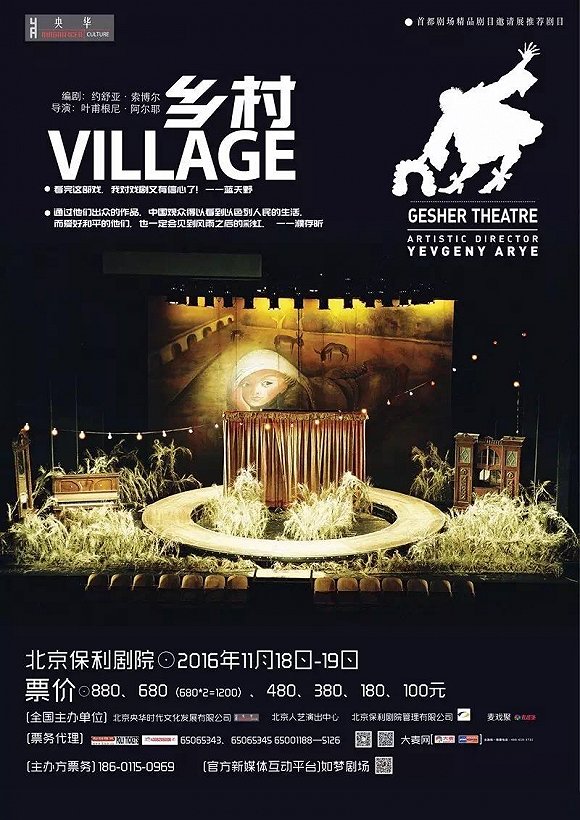
Beijing Yanghua Times Culture’s annual drama—Israel Gesher Theater’s “Village” performance information:
Wuhan Qintai Grand Theater (October 29-30)
Shanghai Oriental Art Center (November 4-5)
Guangdong Performing Arts Center Grand Theater (November 12-13)
Beijing Poly Theater (November 18-19)