
Editor's note: From the summer of 1942 to the spring of 1943, Henan suffered a severe drought, followed by a locust plague, and famine spread throughout the province. From the end of February to the beginning of March 1943, the American "New York Times" reporter Foreman and "Time" reporter Bai Xiude went to the Henan disaster area to conduct on-site interviews. The article said, "We made a rough estimate based on interviews and figures that we considered to be the most reliable. Among the 30 million people in Henan, about two to three million people escaped from the province, and two to three million died of hunger and disease. This is one of the biggest famines in China's war and one of the biggest famines in the world."
“Sometimes hunger burns away the most basic human emotions. A crazy couple once tied their six children to a tree so that they could leave home to find food so that the children could not follow them... In a panic, the parents of the two children killed the children and did not want to listen to their clamoring for food. Some families sold all their belongings in exchange for one last meal, and then committed suicide."
Pictures were taken by Forman and Bai Xiude. Subtitles added by the editor.
Translation: Duanna
Famine and floods are a source of worry for China. Since the ancient times, Chinese chronicles have been recording these recurring disasters in a touching, stubborn and helpless tone. In their history books, Chinese history has always evaluated the great dynasties of the past based on the emperors' ability to cope with and control such tragic emergencies. Such a famine ravaged the North during the final years of the war against Japan and tested Chiang Kai-shek's government. The story of the great famine in Henan rolled into Chongqing, like catkins blown in by the wind. Once you catch some facts, these facts will break into pieces of gossip: "I heard a person from Henan say..." "I saw a letter from Luoyang..." "In Xi'an, they said...". But there is no definite information - just the ominous tone of Chinese language before the catastrophe, which seems to be the darkness before the great storm. In February 1943, Ta Kung Pao, Chongqing's independent newspaper, published the first true report on the almost unbearable suffering suffered by the people of Henan during one of the worst famines in Chinese history. The government responded by suspending publication for three days.
The order to suspend publication of "Ta Kung Pao" had a thorn-like impact on foreign journalists. I decided to go to Henan, and Mr. Foreman of The Times of London also made the same decision at the same time. Five days after the plane lifted us out of Chongqing's foggy airport, we arrived at the stump of the Xi'an-Henan railway line on a very cold dawn in North China. At the end of the railway, dozens of restaurants are crowded together, each one emitting the tangy aroma of fried food, and the green flames blown by the bellows' charcoal fire blow from time to time into the darkness of the night.
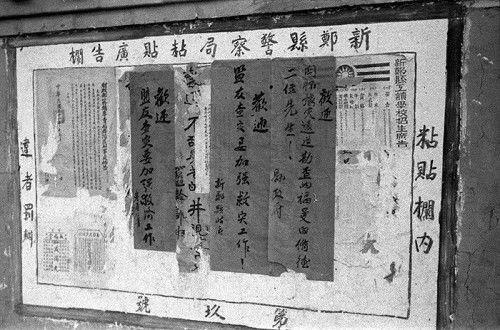
Welcome to American journalists Forman and Bethune to investigate the disaster area
Escape
Dawn comes slowly, like a dark stage slowlyIt seemed to light up slowly. Farmers were camped out within a few miles of the station, waiting for the next truck to take them west to bring food. The train most of them came on had been attacked by Japanese artillery shells in the dark. Gondolas, covered trains, and dilapidated coaches were filled with people; some people were leaning together and sitting nervously on the roofs of the cars. In the icy cold, as the train rushed through the dangerous zone, the fingers holding on to the roof became numb; the weaker ones fell under the steel wheels of the train. That afternoon, when we walked the way they came, we saw their shattered and bleeding limbs lying beside the tracks. However, most of the farmers came here on foot, by mule carts, or by pushing carts under their own power. The station was the grand exit from Henan Province, a narrow fountain between the Japanese troops to the north and the mountains to the south, where refugees gathered until they could continue toward relief agencies in the west.
The crowd was filled with a strong stench, dried sweat, urine and the common human odor, infecting the morning. The farmers were shivering in the cold, their gray and blue rags fluttering in the new wind. Occasionally the red remnants of sweat-spotted wedding clothes worn by wrinkled women broke up the general monotony of color; a wailing baby occasionally drew attention to its foul-smelling scarlet robes. People's breaths merged into steamy smoke; their noses oozed clear water; their eyes seemed to be dark wounds on their shrunken faces, their feet were wrapped in rags, and their heads were wrapped in faded, dirty handkerchiefs.
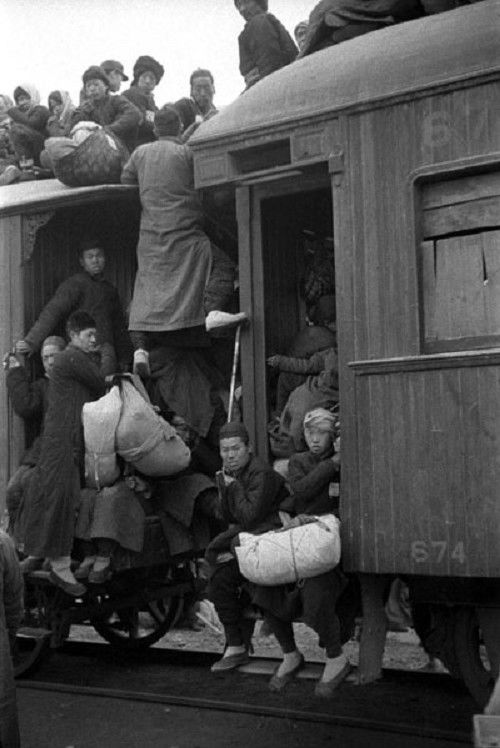
There is no regular train traffic for the next fifty miles. This section of track was fine, and handcarts could traverse it at high speeds during the day, but enemy artillery controlled the road. To the north, on the north bank of the Yellow River, the Japanese army occupied the peaks; to the south, the zigzag peaks of the famous Huashan Mountains in southern Shaanxi towered into the sky. There is a place in the middle that is as flat as a threshing floor, with a railway passing through it. That area is about thirty or forty miles from east to west, covered with gray sunless clouds and mist, making it indescribably desolate. Balls of people, like long strings of rosary beads, passed through the plain. This endless procession appears on the horizon, winding along the field road, walking quietly into the gray distance. Chinese crowds are usually chattering and cheerful, flowing like mercury, with fits and starts of laughter and curses. But sorrow and frost have frozen these people into a silent group, like animals, they walked hard into the distance. In ancient times, primitive humans may have migrated from the prehistoric land of cold and hunger to the land of food and warmth.
Small groups of people dotted the road, repeating the same thing. Dozens of times every hour, several fathers pushed the carts past, and the mothers pulled the carts with a rope in front. The children sitting on the scattered objects sometimes made no sound, sometimes cried; sometimes the women sat on the mules, holding the children in their hands, like unhappy angels, while the father drove the mules with a stick from behind. The old woman stumbled along on her little feet, tripping and falling again, and no one helped her up. Some old women were carried by their sons on their strong shoulders, staring at the hostile sky with coal-black eyes. The young man walked alone, walking faster, wrapping all his belongings in bundles and carrying them on his shoulders. The simple graves on the roadside illustrateAged people have fallen here; sometimes several members of the family stand, staring at an entity in silent embarrassment. The children were holding crutches like old people; some children were carrying burdens as big as themselves; some children seemed to be sleepwalkers, and their eyes that could not see anything seemed to have been suffering for a thousand years. Behind all these people, the cold wind blew from the desolate area, raising dust and chasing them across the yellow plain. The flight has been going on for weeks and will continue for many more weeks.
Five hours later, we arrived at a place where trains often pass. The railway authorities had prepared a special train for us and took us to Luoyang, the provincial capital of Henan. We arrived in Luoyang in the morning. The bishop of the Catholic Church in Luoyang was a kind-hearted American named Megan. He had received reports from all sides and knew more about the famine than anyone else in the north. Megan entertained us graciously, gave us hot meals, and, two days later, set off with us in a carriage. Our destination was Zhengzhou, a three-day journey - one day by truck, and the next two days on horseback.
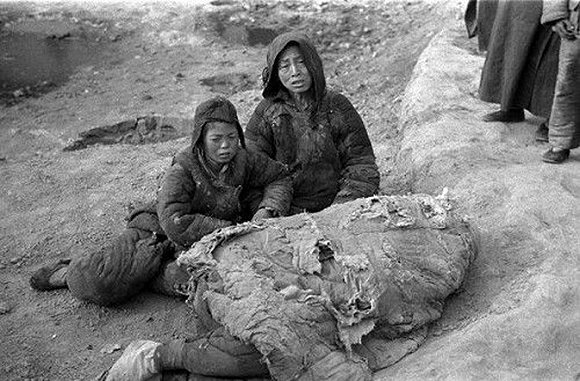
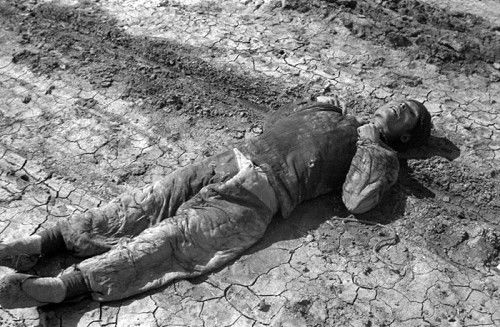
Victims, dead bodies on the road and cannibalism
Every big city on the road has at least one restaurant open, supplying people with full wallets. Once, we ordered a meal from such a restaurant, but the food was tasteless to us. Hungry people stood by the stove, smelling the aroma of food with trembling greed; their eyes followed every mouthful of steaming rice, from mouth to bowl, and from bowl to mouth. When we walked to the street, the children followed us and shouted, "Poor, poor!" If we took out some peanuts or dried dates from our pockets, the little beggars gathered nearby would snatch them from our fingers. Their tear-stained, jet-black faces, verging on despair in the cold, made us feel ashamed. Chinese children are beautiful when they are healthy; when they are healthy their hair has a beautiful natural oily shine and their eyes sparkle like almonds. But for these shabby people, the holes where their eyes should be are filled with thick water; lack of nutrition has made their hair dry; hunger has made their bellies bulge; and the weather has cracked their skin. Their voices have degenerated into whines for food.
Small villages are worse than towns. The silence was scary. People fled from the mindless cruelty of famine as if a savage army were pursuing them. The villages echoed hollowly, the streets were neglected heaps of dung, the doors and windows were nailed shut, and the uninhabited houses amplified the smallest sounds. In a hidden part of the village, a baby's cry was louder than the sound of our horses' hooves. Two lonely women quarreled in a ghost-infested street, their shrill voices louder than the noise at a country party.
There are dead bodies on the road. There was a girl not yet seventeen years old, thin and beautiful, lying on the wet mud. Her lips were deathly green, her eyes were open, and the rain was falling on them. People peeled the bark of the trees and chopped them for food by the roadside; vendors sold the leaves for a dollar a handful. The dogs digging the graves dug up the human corpses. Ghost-like people were fishing for moss from the stagnant water in the pond to eat. We galloped and managed to reach Zhengzhou on the evening of the third day. When the mist comes, it starts to fall lightly and powderyThe same snow. Once our horses were jolting in a field, swerving sharply away from two people, who lay close together in the night, crying loudly in their desolation. When we entered Zhengzhou City, the snow had fallen enough to wrap up the sound of our horses' hooves.
When we woke up in the morning, the city of Zhengzhou was a white wasteland, and the residents seemed like gray wandering souls. Death rules Zhengzhou. Because the famine is concentrated there. Before the war the city had 120,000 inhabitants, but now there are less than 40,000. The city was bombed, shelled and occupied by the Japanese army, so it has the air of a semi-destroyed frontline city. Rubble piled in ditches, large houses without roofs, gaping toward the sky. Heavy snow lay on the rubble and ruins, like a coat that silenced any sound. We stood at the mouth of the street, looking out over the desolate road - we couldn't see anything. Occasionally, a man, wearing shabby clothes that were shaking in the wind, stumbled in front of a house. Those who noticed us surrounded us, spread their hands in supplication, and cried, "Poor, poor!" until our ears were deafened.
The rapidity and death of the famine bewilders us. A man was pushing a cart on a side street, with a helpless man on board. This frail body was dressed in blue rags, and its bare feet were covered with sores; the body was trembling as if it were alive, but the slight shaking of the head was just a reflection of the bumps on the road. He is dead. Others were lying in the ditch. We shook one or two to see if they were indeed dead. One of them moved slightly, and we put a large note in his hand. His numb fingers held the note, but it was only a reflex action; his fingers slowly opened, and the note trembled in his open palm. Another man lay there groaning, and we shook him, trying to get him up. So we asked a woman next to us to help us move this person to a refugee shelter. This woman was wearing ragged clothes and holding a baby tightly. To strengthen the request, we gave her a ticket. When she reached out her hand, the child fell down and fell into the snow, crying pitifully. When we finally sent these three people to the refugee camp, the Catholic priest who accompanied us said, "At least let them die like human beings."
Jesusian and Catholic priests jointly manage relief funds in the United States, and ordinary people hear their stories from them. The strong ones escaped earlier; all the people who are currently staying here are the old, the weak, and a very small number of people who live and watch over the wheat that will grow into the next spring. The common people peel off the bark of the elm tree and crush it as food. Some people uprooted the new wheat; in other villages, people pounded peanut shells to eat. On the road, you could see refugees stuffing dirt into their mouths to fill their stomachs. Mission hospitals were full of patients with terrible gastrointestinal diseases caused by the dirty things they ate.
The letters of the Jesuit priests record the early stages of the famine, as the migrations began in the fall. Starving peasants, their women and children, once gathered together to force their way into the homes of wealthy people and take whatever they could carry. They rushed into the wheat fields and robbed the grains. Sometimes hunger burns away the most basic human emotions. A crazy couple once tied their six children to a tree so that they could leave home to find food so that the children could not follow them.Watching them. There was a mother who took a baby and two older children and walked a long way to find food. She was very tired. The mother asked the two older children to go to the next village to find food. When the children came back, the mother was dead and the baby was still sucking the dead man's milk. In the panic, the parents of the two children killed the children rather than listen to their screams for food. Some families sell all their belongings in exchange for one last meal, and then commit suicide. Armed raids and plunder were like contagious diseases in the countryside. Church personnel tried their best to pick up abandoned children on the road, but they had to do so secretly because if word got out that the church was caring for starving children, there would be so many orphans left on their doorstep that they would have nothing to do.
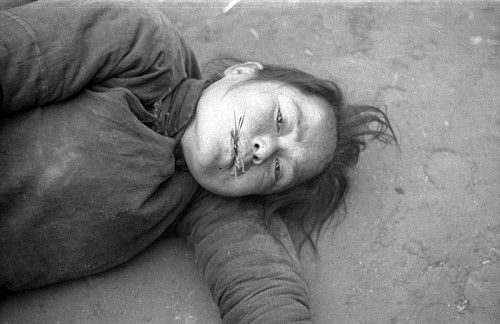
By the spring, when we arrived, the more violent and disruptive elements had already fled to the west, where food was available. Those who remained simply eroded away in despair without violence. Now church reports talk of something even worse - cannibalism. A doctor told us that a woman was arrested while cooking her baby. She was not upset because she insisted that the baby was dead before she started cooking it. Another woman was arrested while cutting off the legs of her dead husband, which was justified on the grounds that the man was already dead. In the mountains, there are even worse stories of people catching refugees on remote roads, killing them and eating their flesh. How much of this is nothing more than horrific rumors and how much is fact, we cannot tell. But we have heard too many of the same stories, and the area where the stories took place is also very vast, forcing us to admit the fact: in Henan, humans eat humans.
Disaster relief work is characterized by stupidity and inefficiency
Henan is a fertile provincial capital. Before the war, the province maintained about 30 million residents. They worked hard to cultivate the fertile loess. The ratio of land to population was pressed to the Malthusian limit. The main harvest is spring wheat, which farmers sow in late autumn and harvest in mid-May; their secondary cereals are millet and corn, which are sown immediately after the wheat is received and harvested in the fall. In 1940 and 1941, the harvest was poor and the harvest was poor. In the spring of 1942, the wheat did not grow due to lack of rain. The government collected the spring wheat as usual, which means that in this season, almost all the wheat was harvested. The provincial authorities happily assured the people that the rain would definitely fall, and they left the farmers with some wheat and corn to fill their hungry bellies, but the rain did not fall. Throughout the summer of 1942, the weather was cloudy and dry, the grains withered on the stalks, and by autumn the province was depleted.
People in the West have vast modern transportation institutions and are fully dependent on the world economy. For decades, they have forgotten the meaning of disasters and famines. But in the East, where millions of people still relied on what they could produce within a day's walk, famine remained a recurring threat to life. There are only two ways to deal with famine. Both are simple, but both require great determination and rapid execution. One way is to transport a large amount of grain to the disaster-stricken area as quickly as possible; the other way is to transport a large number of people out of the disaster-stricken area as quickly as possible. It does not require great wisdom to encounter a famine. If there is no rain, there will be no harvest. If no grain grows, people will die..
The Chinese government failed to foresee the famine, and failed to take timely action after the famine struck. As early as October, reports of the disaster had reached Chongqing. In November, the government sent two inspectors to Henan. They visited two major motor roads and came back saying that the crisis was serious and something had to be done immediately. In order to deal with this problem, the government allocated 20 million yuan in banknotes as relief funds and ordered the provincial authorities to reduce taxes. The bank in Chongqing loaded bundles of banknotes on trucks and ordered a fleet of trucks to transport the banknotes to the disaster area, but no food was transported. It is indeed hopeless to transport large amounts of grain from central China to North China and Henan through the broken and mountainous transportation lines. But outside the boundaries of Henan Province is Shaanxi Province, and Shaanxi's grain reserves are very sufficient. In order to avoid disaster, a strong government should order Shaanxi to immediately transport food to the neighboring province of Henan. But forcing Shaanxi for the sake of Henan would destroy the delicate balance of power that the government considers indispensable. Grain can also be transported from Hubei to Henan, but the theater commander in Hubei does not allow it.
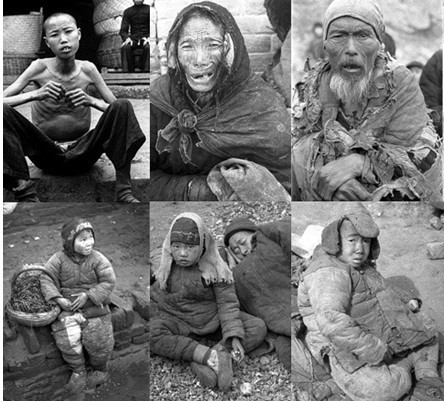
Henan's relief funds arrived very slowly. When we arrived in Henan in March, only 80 million yuan of the allocated 20 million yuan had been disbursed to the provincial government. Even this money was mishandled. Government officials left the money in the provincial bank to earn interest while noisily debating what to do with it. In some areas, when arrears were distributed to starving villages, local officials received the money and withheld the taxes owed by the farmers, and even the national bank withheld relief payments. The relief funds issued by the central government are all in bills with a face value of 100 yuan - because a pound of wheat only costs 16 to 18 yuan, so the face value is not large. However, local hoarders refused to allow people to buy grain with large bills. If farmers wanted to buy grain, they had to exchange hundred-yuan bills into five-yuan and ten-yuan bills. This means that you have to go to the National Bank to exchange, but the National Bank offers a huge discount and charges 17% for exchanging large bills for small bills. What the people of Henan want is food. As of March, the government had supplied 10,000 bags of rice and 20,000 bags of miscellaneous grains. On average, each of the 10 million people who have been hungry since autumn only has about one pound.
Relief work is characterized by ignorance and inefficiency. But the horrific tragedy was compounded by the actions of officials everywhere. As we have seen, farmers are dying. They are dying on the road, in the mountains, beside the train station, in their mud huts, and in the fields. The tax that the farmer had to pay was not much. The basic tax was a real tax, which was a portion of the grain he harvested. Even with Chongqing's sweet-sounding decision to reduce taxes, the military and local authorities have indeed tried every means they could to extort taxes. County governments required farmers to pay more grain than their fields actually produced. Moreover, the expropriation was carried out vigorously, and farmers who ate elm bark and dry leaves were forced to hand over their last bags of grain to the tax bureau. Farmers who were so hungry that it was difficult to walk had to pay horse feed to the army, which was much more nutritious than the dirt they stuffed in their mouths. Peasants who couldn't pay were forced into desperation; they sold their livestock, furniture, and land to get money to pay the taxes. The most terrifying trend is the hurricane of land speculation. Businessmen from Xi'an and Zhengzhou, petty government officials, military officers, and wealthy landowners who still owned food worked hard to sell the land passed down by farmers' ancestors at the most viciously low prices. The concentration and sale of land went on simultaneously, in direct proportion to the incentive of famine.
By our American standards, the Chinese governmentThe officials did not live a luxurious life, but their dining tables were steaming with steamed buns and fresh meat. The lowest-level employees of the Kuomintang party bureaucracy took about four pounds of wheat out of taxes every day. When we returned to Chongqing and talked about this, we denied everything. Smart people tell us how gullible foreigners in China are in general. Even the chairman of Henan Province, when we visited his comfortable office, said I was exaggerating. He said, "Only the rich have to pay all taxes. For the poor, we will never collect more than what the land can produce." The actual barbarity and insult when collecting taxes is sad and tragic, but the corruption that occurs at the same time as tax collection is even worse. Officers and local officials who collected grain viewed the tax as a way to supplement their salary and a privilege to rob. After the taxes were distributed every month, senior military officers divided the excess grain and sold it on the market, pocketing the proceeds. This illegally extracted grain is actually the only source of grain that reaches the market, and the hoarders who control it drive up the price to sky-high prices. Even the American relief authorities, working with American money, were forced to ask military officers to purchase their privately hoarded grain and redistribute it to the peasants from whom the grain had been extorted. The officers who sold grain would never make any concessions for the sake of humanity; according to the exchange rate at that time and the price of the famine in Henan, the relief money that could buy sixty bushels of wheat in the United States could only buy one bushel in China.
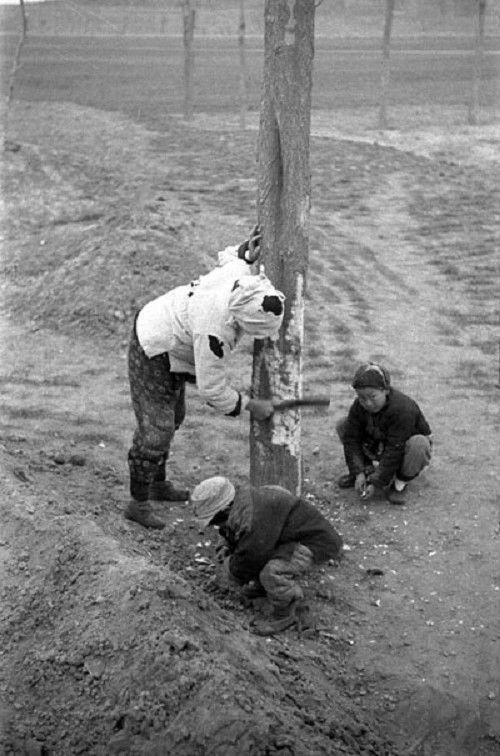
People peeled the bark of trees and chopped them for food on the side of the road; vendors sold the leaves for a dollar a handful.
These facts were not collected from newspapers, but from the mouths of farmers. We once managed to talk to some ordinary people, and one night when we were staying at a military headquarters, a group of middle-aged people came to visit us and said that they represented the local society. They drafted a policy and a report and hoped that we would take it to Chongqing. The report said that of the 150,000 people in the county, 110,000 people had nothing to eat. About 700 people were dying every day, and about 700 people were dying every day. Since the famine began, the government's relief package has been 10,000 pounds of bran. We spoke to the leader of the group. Does he own land? Yes, twenty acres. How much grain did he harvest? Fifteen pounds per acre, how much tax will be collected? Thirteen pounds per acre.
The commander and some officers and soldiers listened attentively. The commander, a general, suddenly became furious and called the man aside. We heard him scolding the peasant in a loud whisper. So the farmer came back to us and said that he had made a mistake and that the tax collected was actually only five pounds per acre. The general asked us to return to them the written report the peasants had just given us; we returned one copy, but the general insisted that the other copy must be returned. We were relatively unaware, and in the dimness, we could see the old man trembling. We knew that when we were gone all the blame would be laid on him, and we ourselves were afraid; we returned the report.
After that, we tried our best to talk to the people without any officials present. Everywhere the same words repeated the same appeal: "Stop taxing. We can bear the famine, but we can't bear the taxes. We can survive on tree bark and peanut shells if they stop taxing."quo;We once talked to an officer from a certain district. He was ordered to collect 400,000 jins of grain this year, but the total harvest in the area was only 350,000 jins. Where did he get the other 50,000 jins? In a lonely village we saw a man eating a mixture of wheat bran, leaves and bark. He harvested 500 kilograms of wheat from his own land last year, but the government confiscated all of it and said it was not enough, so he sold his cattle and donkeys to make up for the shortfall.
Traveling on horseback for two weeks, we talked every day with farmers and petty officials. The snow that fell during our travels nourished the land, and the next spring seemed to grow tall and green. Maizi taunted the farmers with the promise of food in two months. An old man said, "Yes, very good, but who knows whether we will still be alive when we eat it!"
I still have a menu next to me, which is the name of the dishes at the banquet hosted by the government officials in Zhengzhou the night before we left. They treated us to lotus seed soup, spicy chicken, chestnut stewed beef, fried spring rolls, hot steamed buns, rice, fried fish with tofu, etc. There were also two soups and three stuffed cakes sprinkled with sugar. This is the most beautiful and most disgusting dish I have ever eaten in my life.
No one in Chongqing believes in us
We made a rough estimate based on visits and numbers we thought were most reliable. Of the 30 million people in Henan, about two to three million people fled the province, and another two to three million died of hunger and disease. This was one of the biggest famines in China's war and one of the biggest famines in the world. We returned to Chongqing with angry hearts. The capital's gentle tranquility remains unabated. Taxes were nominally reduced, despite the farmers' testimony to the contrary. Dead person? That's lying. Do wild dogs dig graves? That is a figment of our imagination. We know that in the hearts of farmers in Henan, there is a kind of rage that is more violent than death itself. We also know that the government's extortion has made the farmers' loyalty disappear. But no one in Chongqing believed us. It was not until a year later that the Japanese army added a historic scene to the whole episode.
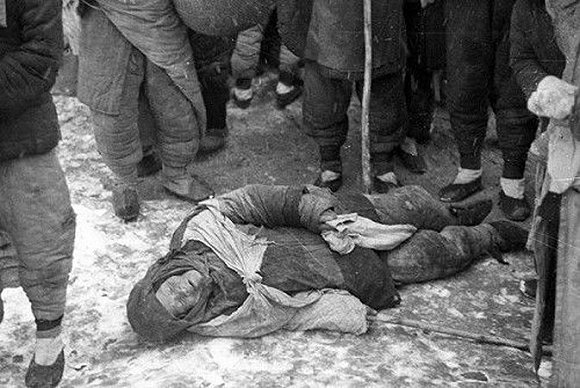
In the spring of 1944, the Japanese army decided to raid Henan Province in preparation for a greater leap forward in the south. China's theater commander in Henan Province is a bright-eyed figure named Jiang Dingwen. Jiang Dingwen has been the commander of Henan for many years. The first thing he did after taking office was to build a moat to strengthen Luoyang City, where his headquarters was located. He considered the final strategy to be just that. He also arrested every Communist and suspected Communist he could find in the war zone. He was best known in the province for his ability to use his officers and soldiers to intimidate civil officials. He scolded the Henan provincial chairman, causing him to panic and co-operate with him on a plan that deprived farmers of their last grain. The real commander of the Henan Theater was General Tang Enbo, Chiang's nominal deputy. Tang Enbo was much higher than his superior in terms of army and power. Tang Bowen is one of the leaders of the Huangpu Clique and a favorite of the Chairman. He was a relatively jovial man, free-spirited, with a sense of humor and full of energy. He tried his best to alleviate the horrors of the famine without affecting the army. However, due to his prominent authority in Henan, farmers and ordinary people believed that he was the cause of pain, not Jiang Dingwen. They ridiculed: "Henan has two evils: the Yellow River and Tang Enbo." SoupEnbo and Jiang Dingwen commanded an army of half a million people.
The Japanese attacked with about 60,000 troops. They attacked in mid-April and cut through the Chinese defense line like a sharp knife cutting through butter. When the Japanese army attacked, Tang Enbo was not at the headquarters, and he was never able to return to command the war. The Japanese army, with a team of 500 men, occupied the mountain passes and intersections guarded by tens of thousands of Chinese troops. The personnel of a certain headquarters were playing basketball in the sun when the enemy troops came to cover them. The armies that ravaged the peasants in times of famine were themselves demoralized and sick from years of indolence. They were poorly trained, had poor guns, and lacked ammunition. Under attack, they scattered and fled. China's high command collapsed and it could no longer control the situation. The Chinese 12th Army and the 13th Army fought each other as they fled. In Luoyang, the center of the war zone, the headquarters was filled with panic. There were 700 to 800 military trucks injured in the Henan army, with varying degrees of dilapidation. One hundred of them were used to transport reinforcements to support the collapsing front line; the remaining trucks were used by officers to move personal property. These officers all brought their wives, children and relatives to their posts. Now their luggage, furniture and belongings are loaded on military trucks and rushed to the safety of the rear in Xi'an. Officers began to requisition cattle from farmers in order to supplement military supplies and their own use. Henan is a place where wheat is grown, and farmers’ main capital is cattle. The military's requisition of cattle is intolerable.
Farmers have been waiting for this opportunity for a long time. They have suffered enough from long periods of famine and ruthless military extortion. Now they turned around and armed themselves with shotguns, knives and rakes. They began by disarming individual soldiers and later whole companies. It would be really incredible if the Chinese army could support it for three months. When the countryside is in a state of armed rebellion, the war of resistance is hopeless. Within three stars, the Japanese army captured all the targets; Pinghan Road fell into the hands of the Japanese army, and the 300,000 Chinese army ceased to exist.
This article is excerpted from "Thunder Out of China" (Thunder Out of China), published by Hong Kong Feng Yu Bookstore in 1946