
What specific impact did the industry's self-disciplined censorship system have on the development of films at that time? This may be a more complicated question.
The success of the development of the film industry is affected by many factors. The impact of the censorship system is presented in twists and turns, and it is actually difficult to make a particularly specific quantitative consideration. However, the film industry requires the maintenance of stable production and reproduction, especially the need to maintain the overall stable reproduction cycle of the industry. On the premise of maintaining stable reproduction, the concern is to make the specific film have a basic balance of payments and the possibility of making profits as much as possible. Of course, many films have great commercial risks, but these risks must be within the foreseeable range. Risks may be anticipated and controlled, that is, they can be borne. In actual operation, the "Hayes Office" (Editor's note: When Will Hayes presided over the "American Motion Picture Association," the association was called the "Hayes Office") did not replace the censorship agencies of the states. State governments can still order the ban on a specific film that has been reviewed by the "Hayes Office". At this time, the office will explain and smooth things over on behalf of the interests of the producer. Being a fellow reviewer can sometimes make communication more productive. For example, during the Great Crisis, someone wanted to make a film about Billy the Kid, the famous cowboy gangster in American history. This aroused fierce opposition, and some states said they would ban the film once it was released. Officials from the "Hayes Office" explained that the story of the film shows that Billy the Kid repented because of love and received the punishment he deserved, so the film has a persuasive effect on society, allowing the film to be released smoothly.
Of course, apart from the industry perspective, it will have different meanings from the perspective of the film itself or the creator. Movies are indeed such an industry. From an industry perspective, it is never purely from the perspective of the creator. Because the medium of film is different from low-cost, personal creations such as painting and music. Those arts are measured in each individual product. A painter can paint a bunch of paintings, and as long as one painting is sold for money, all the costs can be recovered. But movies do not operate in this way. From the perspective of the entire industry, it must have an average profit and a relatively short-term return guarantee. The interests of the studio and the interests of the creator or a specific producer are not always aligned in this regard. In actual film production, review is accomplished at several levels. When concrete producers and creators work together on a film, the conflict between money and creative expression manifests itself as a conflict between the creator and the producer. But as a video creator for hire, meeting the needs of investors is part of his professional ethics. The completion of the film actually shows that the creators and producers have reached a consensus on the performance of its content. The censorship of films is actually not a battle between creators and censors, but a game between specific producers and the American Film Producers and Distributors Association on another level. Often what specific producers and creators of a film believe audiences can or should accept does not go over well with censors because the censors believe the film, if released, would affect the film industry's overall social image. But againIt comes to personal versus personal conflict. As a specific reviewer, your opinions may not always be accurate and correct, and may sometimes be absurd. This is the fundamental reason why censorship inevitably comes under fire. But because censorship is implemented by industrial organizations, the existence of this system pushes Hollywood to develop its representation system within the scope of smaller social risks. Creations that touch the edge of content restrictions are not institutionally encouraged in this system. As an institutional existence, this prompted creators to find ways to express their wishes within this boundary, thus promoting the formation of an ideological expression system in Hollywood films, especially the formation of genre discourse.
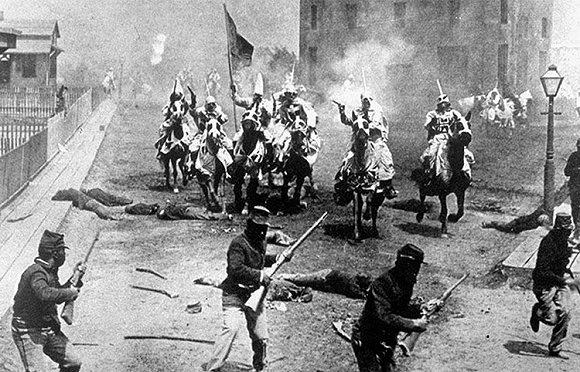
For the general audience, he does not care about the movie industry and wants to get what he wants from the cinema. So, the American film industry under censorship caters to and builds audience expectations by creating genres. This involves an interesting aesthetic topic about the relationship between content and form. In fact, the existence of film censorship not only affects the direct expression of content, but also plays a large role in the formation of the expression of film in artistic form. It really promotes the formation of genre films and genre film discourse. As far as a specific film is concerned, the direct manifestation we can see is the conflict between censorship and anti-censorship. Of course, movies need to satisfy certain cathartic needs of the audience, including political, social, and moral cathartic needs. However, how to integrate these needs for catharsis into an industrial operation system that cannot be resisted by others through censorship requires that this system has the ability to continuously adjust. In the early years of the Hays Office before 1928, many politically marginal films were not approved for distribution or ordered to be revised. Many of these films, which deal with labor relations, racial issues and some socially sensitive issues, have suffered various misfortunes. In the subsequent development process, direct expression of these sensitive topics was gradually replaced by a type of discourse. Subversive political and social themes are transformed into a form of catharsis within the genre system. Genre movies include image style, display and control of character charm, Hollywood with villains being punished, happy endings, etc. are all means to display, control or eliminate subversive connotations. The operational success of this method has promoted people's new understanding and awareness of the laws of film expression, and it has helped form the entire set of ideological discourse methods in Hollywood until now.
Genre films have become a kind of body armor, converting and hiding certain ideological connotations under the cloak of genre rules during the bargaining process.The formation of many narrative conventions in the classic Hollywood genre is related to this. Being unable to express directly does not mean being unable to express at all. Institutionalized restrictions have become a driving force that forces people to find new creative ways. For example, the aforementioned film about Billy the Kid was the beginning of the classic gangster film genre. This kind of representation of gangsters was acceptable, which promoted the formation of the urban gangster film genre in the 1930s. However, the establishment of the classic gangster film narrative is largely inseparable from the repeated debates over film censorship and banning. Important early gangster film masterpieces such as "I am a Fugitive from a Chain Gang" (1932), "Scarface" (1932), "Little Caesar" (Little Caesar) Caesar, 1933) and others almost all encountered trouble during censorship.In the process of constant debate and revision, people gradually found a path to establish a delicate balance between the expression of subversive content such as violent crimes and charismatic gangster images, and the expression of positive values such as love, family affection, friendship, and endings in which good is rewarded and evil is punished. This allows gangster films to satisfy the audience's cathartic needs without becoming a socially subversive force. Others, such as the sexual innuendo in musicals and crazy comedies, the image of sluts in love and ethics films, the formation of the expression mechanism of voyeurism, violence and fear in thrillers and horror films, and the method of focusing social problems on specific bad guys and finally punishing them, etc., are all created in this game to create a set of genre discourse methods that not only satisfy the need for catharsis, but also carry out moral construction. In fact, wherever there is censorship, there is counter-censorship, and things that have been suppressed will not disappear easily. This is a common phenomenon in film expressions.
This article is excerpted from "Movie Censorship: Things You've Always Wanted to Know But Nowhere to Ask" (written by Mei Feng, Li Ershi and Zhong Dafeng, Beijing United Publishing Company/Houlang Publishing Company, October 2016 edition), and is published with the authorization of the publisher.