
In ancient times, "combination of men and women" was the main personnel activity after the autumn harvest. The child praying ceremony in the ancient autumn society was the time standard for this activity. After the Mid-Autumn Festival appeared, the custom of men and women meeting each other and praying for children was gradually transferred and merged into the Mid-Autumn Festival customs. Women's prayers to the moon and travel under the moon are mostly related to marriage and children. Playing with the moon on the Mid-Autumn Festival night has been popular in the Song Dynasty and also flourished in the Ming Dynasty, especially in the Suzhou-Hangzhou area in the south of the Yangtze River. "On the West Lake in Hangzhou, singing together on the embankment is just like the daytime". The grand night tour in Suzhou can be seen from the description in "Mid-Autumn Night in Tiger Hill" by Zhang Dai of the Ming Dynasty: "In the middle of August in Tiger Hill, indigenous people, homeless people, scholars, family members, female musicians, singers, famous prostitutes in music, opera women, young folk women, good girls, bastards, prostitutes and evil young men, purgers, helpers, sex boys, and idle people all gathered together. ”
After the Qing Dynasty, it was commonly known as "walking on the moon." On the night of the Mid-Autumn Festival, women could dress up and go out, visit relatives on the moon, or stay in a nunnery and not return late at night. Cai Yun's "Wu Xi" says: "The mignonette ball presses the hair on the temples and the silk is fragrant. Sisters go together in twos, twos, threes and threes." The sleeves are not too thin when walking in the cold, and the embroidered skirt is too long when the road is far away. ”"Walking on the Moon" is a day for folk women to lift the ban. Behind "walking together" implies the meaning of praying for reproduction. According to Tongzhi's "Jiangxia County Chronicle", the Ziyang Bridge in Jiangxia City was particularly lively on the night of the Mid-Autumn Festival. The stone dragon heads on the bridge became the object of travel among young women to caress them in order to get the favor of the matchmaker. The meaning of praying for children is very obvious. In modern Nanjing, those who were looking forward to having an heir would first visit the Confucius Temple and then cross the bridge, saying that their wish would come true. In Xiangtan area in modern times, the custom of visiting the pagoda during the Mid-Autumn Festival is the same as "walking on the moon", praying for human reproduction and health. There is a local song: "Visit the pagoda on August 15th, bring incense and candles to worship the Bodhisattva." The old man has green hair, the young man will have wealth, the hall guests will have a fat baby, and the girl will go to a good family. ”
"Touching the Autumn" or "stealing melons to give children" is a common Mid-Autumn Festival custom in southern China. On the night of the Mid-Autumn Festival, people go to the fields to "steal" melons, and then they blow and beat winter melons or pumpkins painted in the shape of babies and give them to couples who have been infertile for several years in order to keep them healthy. In Xi'an County, Zhejiang Province, people "stealingly pick melons and taros and send them to the bride's family in the lapel bag of her clothes, saying that she is "offering her son." In Lujiang, Anhui, "men and women go out at night and steal melons and gourds to pray for children, which is called "touching the autumn." "On the night of the Mid-Autumn Festival in Nanchang, Jiangxi, women secretly counted the pillars of high bridges, Yi Zi." Women teamed up to go into the garden to steal vegetables and melons, and they called them "touching the green", which was a good sign for their children. In some places, what is groped at night is not fruits and tiles, but tiles and stones. For example, in Huaining, Anhui, "It was evening, and the women in the city went to the Songyang Gate, groping for gravel in front of Baizi'an and by the Lue Bridge. The stones were for men and the tiles were for women." The custom of going to the fields to "steal" melons on the night of the Mid-Autumn Festival is also popular in the Lianghu area. Young men and women of ethnic minority groups in the south dance on the moon and sing antiphonal songs during the Mid-Autumn Festival, which preserves the original nature of activities under the moonlight of the Mid-Autumn Festival. The Dong people in western Hunan and eastern Guizhou have a popular custom of "stealing moon vegetables" during the Mid-Autumn Festival. It is said that on this night, the fairies from the heavenly palace descend to earth and spread nectar all over the world. People can gain happiness by "stealing" fruits and vegetables sprinkled with nectar under the moonlight. Young men and women each have their own choice of where to steal vegetables. They usually go to the garden of the person they love to "steal", laugh and play while stealing, attract their lovers, and share the happy fruits of "stealing" (Wu Rui's "Southern Traditional Festivals and Chu Culture" pages 190-192).
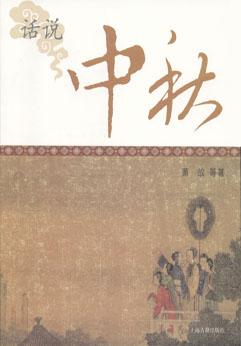
This article is excerpted from "Talking about the Mid-Autumn Festival" (written by Xiao Fang, Shanghai Ancient Books Publishing House, September 2008), and is published with the authorization of the publishing house.