For thousands of years, humans have believed that their rights come from God. As humanity progressed into modern society, humanism replaced this idea. In his 1762 work Emile, Rousseau summed up the characteristics of humanism when he wrote: “Torturing my innermost self, which no one could influence or erase, I found that I had only to act according to my ideas; that which I thought good was good. Yes, I think bad things are bad." Later humanists also adhered to this view. Like Rousseau, they believed that people's thoughts and desires are the highest laws of existence, and human free will is therefore one of people's most important rights.
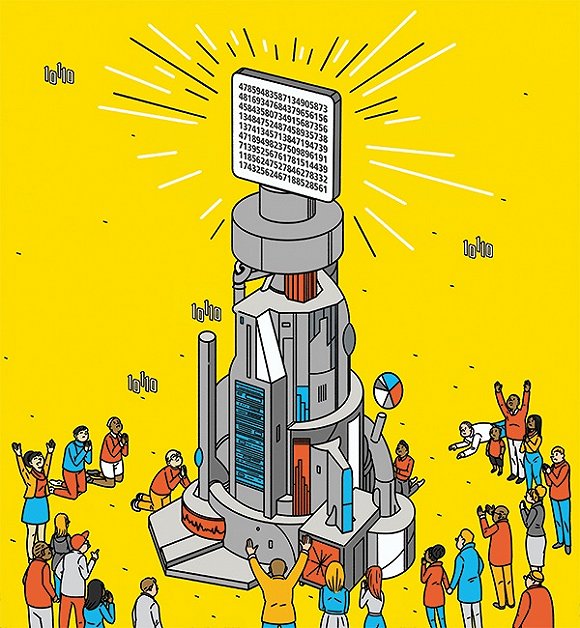
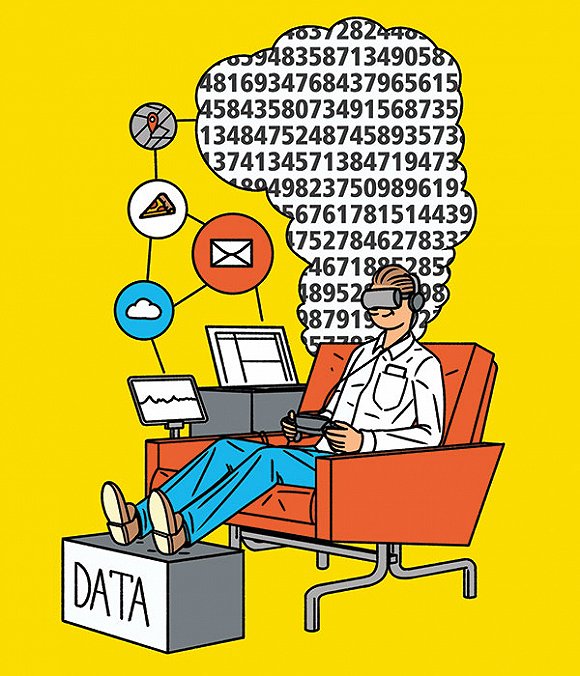
But this idea was gradually challenged by new doctrines. Just as the theory of divine right of kings provides a theoretical basis for religious intervention in the secular world, and humanists make natural human rights a consensus, Silicon Valley and high-tech giants have begun to bring a new worldview narrative to people and try to give algorithms and big data a higher status. This new "doctrine" is named dataism. Fundamental dataists firmly believe that the universe we live in is constructed by data flows, that organic life is just a further manifestation of bioelectric reactions, and that the mission of mankind is to create a data processing system and eventually integrate into it.
In a sense, each of us has become a chip in a giant chipset system that no one can understand. Every day we get a lot of data from emails, phone calls, and online articles, and deliver that data in the form of more emails, phone calls, and online posts. I had no idea how humans fit perfectly into this data system, let alone how the data I created connected to billions of people and computers around the world—I didn’t even have time to explore that question because I had so many emails to read every day. The creation and destruction of things are completed in the flow of data. No one can plan or control how they operate, and no one can understand it.
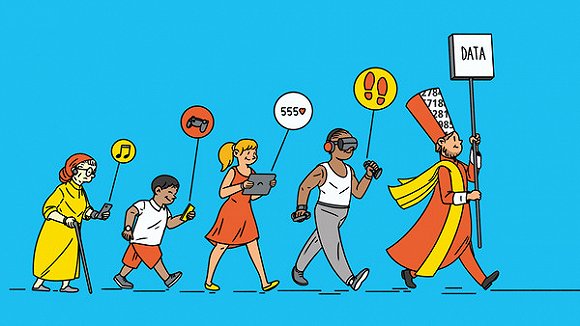
But in fact no one needs to understand these things, all we need to do is respond to emails or messages faster. Just like capitalists who believe that free markets are regulated by an “invisible hand,” dataists believe that an equally invisible “hand” controls the flow of data. As the global information delivery system becomes larger and more complete, connection with this system becomes the top priority. A new buzzword goes like this: "If you experience something, quickly record it; if you record something, quickly upload it to the Internet; if you upload something to the Internet, quickly share it with your friends."
Data scientists also believe that if there is enough storage space and powerful enough computing power, this system will eventually be able to understand humans—even better than humans themselves. At that time, human beings will give up their throne as the spirit of all things, and humanistic practices such as democratic elections willLike the rain dance or the flint knife, it will disappear from the stage of history.
In June, when the Brexit referendum had just begun, Michael Gough Gove announced that he would run for the leadership of the Conservative Party. He said in his campaign statement: "In my political career, every time I have to make a major decision, I always ask myself, what is the right thing to do at this moment, and what answer is given to me in my heart." If this is true, his inner self has allowed him to be a champion for leaving the European Union, and also prompted him to betray his former political ally Boris Johnson, hoping to use this to gain power.
Goff is certainly not the first person to claim to "follow his heart at critical moments." Over the past few centuries, humanists have believed that swearing by one's heart is the highest form of expressing one's position, not just in politics but in all fields. From the time we are babblers, our lives are bombarded with humanist slogans—“Listen to your heart,” “Be true to yourself, trust yourself,” “Follow your heart,” or “Do what you want to do.”
In the political field, we believe that the power of politicians comes from the votes of voters; under the principles of free market, we believe that consumers are always right. Humanists also believe that beauty comes from having the eyes to see beauty; humanistic education allows us to agree that we should consider ourselves; humanistic concepts teach us that as long as something makes us happy, we should just do it.
But the paradox of the humanistic concept is that what makes someone happy is likely to make someone else unhappy. In such situations, humanistic values often hit a brick wall. For example, in the past few years, the Israeli LGBT community has held annual gay parades on the streets of Jerusalem. On this day, the several incompatible religions that exist in Jerusalem - Christianity, Judaism and Islam - will always express their anger at the gay parade because their teachings do not allow the existence of homosexuality.
Interestingly, in recent years, religious figures, when voicing their opinions on sexual minorities, have refrained from stating outright that "fags shouldn't march through the streets of the Holy City because God doesn't like homosexuals." They would say something like: "It hurts our feelings to see fellow gays and lesbians walking through Jerusalem's sacred streets. Fellow gays and lesbians want us to respect their feelings, but I also want fellow gays and lesbians to respect our feelings."
It doesn't matter what your opinion is on this issue. But this issue is of great significance to understanding humanism: in humanist societies, disputes in politics, morality, and society itself are mainly related to the different feelings of human beings, and this problem is more obvious in religious precepts.
But humanism is currently facing its greatest threat ever, "freedom"The same is true for "will". Recently, some studies on the human brain and body have found that human "feelings" are not unique mental attributes of humans. Biological research has found that mammals and birds mainly use bioelectric response mechanisms to help them make decisions: they subconsciously calculate the success rates of different actions, and use this to make decisions that affect their own survival and reproduction.
Contrary to what most people think, "feeling" is not the antonym of "rationality". Feeling is the representation of the human body after rational analysis. Suppose a baboon, a giraffe or an ordinary person sees a lion, and the body will calculate that "the probability of death is increasing", and "trembling with fear" is the embodiment of this calculation.
Similarly, love at first sight between two sexes is most likely due to the human body's own calculations that it is more likely that the other person will be compatible with itself, and then it will show up. During millions of years of evolution, human beings' bioelectric calculations have been strengthened and evolved. If our ancestors made mistakes due to a certain feeling, this feeling will not be passed down to the next generation by genes.
Humanists mistakenly attribute the emergence of feelings to "free will", but this does not affect the operation of human society in maintaining humanistic ideas. Human beings currently have no better way of making decisions than "free will", and there is no external object that can help us better understand ourselves. Even if the KGB monitors me 24/7, they cannot accurately locate my desires and choices through one of my actions - because they have neither biological knowledge nor sufficient computing power.
Therefore, there is no problem with the saying "follow your heart". To put it bluntly, when it comes to major life matters, "listening to your inner voice" is much more reliable than "listening to the teachings of the Bible." The reason is simple: human feelings are shaped by millions of years of evolution, and the views of the Bible are primarily a collection of the feelings and opinions of some Jerusalem clergy thousands of years ago. To non-believers, which of the two is more convincing requires no further explanation.
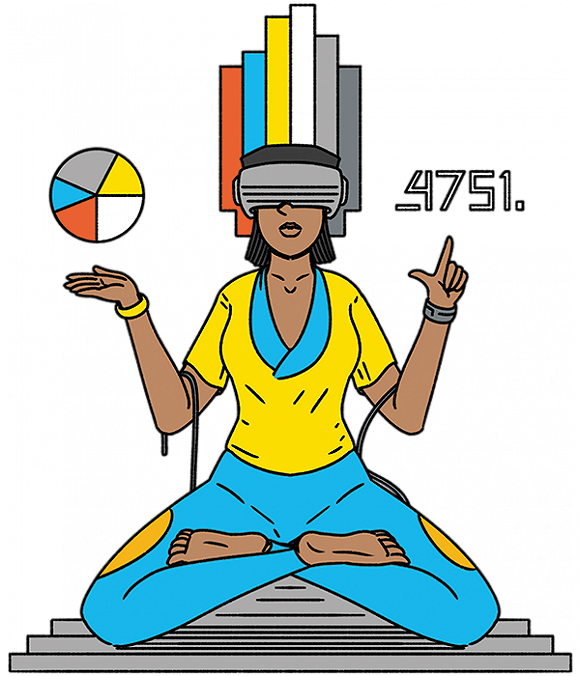
However, when the church or the KGB decline and those who control human destiny become Google and Facebook, the practical advantages of humanistic thinking will soon disappear. At present, we are living in two waves of science: biologists are currently deciphering the mysteries of the human body, especially the study of the human brain and perception, which has entered a new stage; at the same time, computer scientists have provided humans with unprecedented data transmission and retention capabilities. When the two are combined, you have a powerful tool that can interpret human feelings. Machines understand humans better than humans have ever done before. And once big data’s interpretation of humans becomes more authentic and credible than humans’ interpretation of themselves, human free will will give way to data calculations. To some extent, big data is about to become “Big Brother”.
In the medical field this hashas become a fait accompli. At present, the decision to treat a patient no longer depends on the patient's own feelings about the disease, or even on the doctor's prediction and inference of the disease. Because it is more accurate and stable, computer calculations replace people's judgment on themselves. A famous example from actress Angelina Jolie can support this. In 2013, Angelina Jolie discovered during genetic testing that she carried a high-risk gene mutation, BRCA1. According to medical data, about 87% of women with this gene mutation will develop breast cancer. At the time, Angelina Jolie did not have cancer, but she still decided to have both of her breasts removed to avoid the risk. Angelina chose to trust the computer's calculations: "Although you don't feel sick at the moment, there is a time bomb buried in your DNA. You have to make a choice quickly now."
In more areas, data is also beginning to play a role. The act of choosing books is an example. How does a typical humanist choose the books he buys? They will walk into the bookstore, stroll among the bookshelves, glance quickly across the spines of the books, and occasionally pick out a book to read a few pages. This behavior will last for an indefinite period of time, but in short, readers will eventually find the book that matches their souls, check out and leave. But Amazon has made more people become some kind of data scientists. When I open the Amazon website, a message will automatically pop up on the webpage telling me "You have read these books before. Readers who have read these books will like the following works more."
And this is just the beginning. In addition to websites, e-reading devices like the Kindle also collect data - even data about readers' reading habits. They will discover which parts the reader spends a long time on and which parts they skim over in a hurry; which sentences they pause for a moment and which pages they reach and then abandon the book and never read again. If the future Kindle device is equipped with a facial recognition system and a heart rate testing system, this device can even collect the changes in the reader's facial expressions and heartbeat speed while reading the work, and then summarize the emotional tone of reading a certain part of the book. More importantly, we often forget a book after a few days, but computer programs will not forget the data. This data can help Amazon better select specific books that are suitable for a certain reader--and even help Amazon truly understand who you are and how you evoke emotions.
Under this logic, people may gradually let data and algorithms guide their lives, and use these things to make decisions for themselves - for example, looking for a marriage partner. In medieval Europe, priests and parents often had the power to choose a person's marriage partner. In a modern humanistic society, our solution to this problem is often to "listen to your heart." In a society where data is king, people may open Google and ask: "Hello Google, now both John and Paul want to date me, and I hate neither of them. I don't know what to do now. Please tell me everything you know about this problem and give me some feasible suggestions."
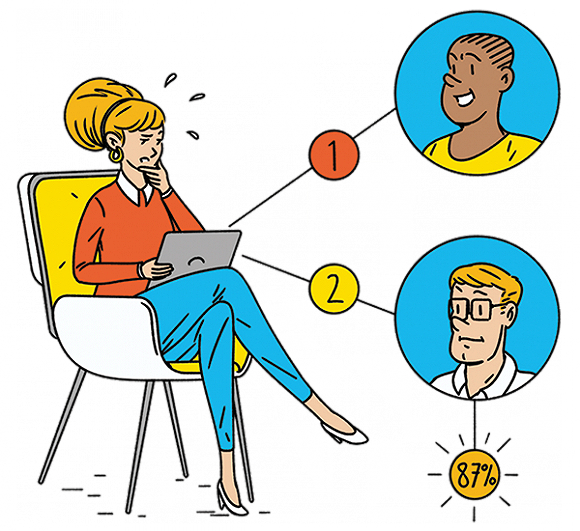
And Google’s answer might be something like this: “I’ve known you since the day you were born, I’ve read all of your emails, I’ve recorded all of your phone calls, I know all of your favorite movies, your DNA traits, and your physical condition every moment of your life. I understand the situation of each of your previous meetings with the two men, and I can also show you the changes in your heart rate, blood sugar, and other body indicators during each meeting. Of course, thanks to my incredibly powerful database and algorithms, I know John and Paul as well as you do. Based on my calculations on various marital relationships over the past decades, I recommend that you choose John, because you have an 87% chance of having a long-term love relationship with him. ”
"Of course, I know you very well and I know you don't like this answer. Paul is more handsome than John, and you are always worried about your weight. Of course you want my answer to be "Paul." But the appearance issue is different from what you think. Based on your own evaluation of yourself-this has been the case since humans originated on the Savannah prairie. Weight factors account for 35% of your judgment of human beauty and ugliness. But by my calculations, appearance only accounts for 14% of the success of a long-term relationship. So even though I factored in Paul's appearance, I still think John is better than Paul. ”
Google doesn’t need to be perfect, or even right every time. As long as its success rate in making decisions is higher than that of humans making decisions on their own, it can become a life guide for most people - for most people, not only do they not understand themselves, but when they encounter major problems in life and need to make decisions, they often make a mess of their lives.
For politicians, businessmen and ordinary people, seeing the world from the perspective of data being king naturally has its own unique appeal. This technological practice is extremely innovative, and the results are extremely touching: people are often afraid of their privacy being invaded and their freedom being restricted, but for most mediocre people, if they are asked to choose between health and privacy, they will often choose health.
For think tanks and scholars, the emergence of dataism seems to have revealed the position of scientific laurels - data can be used to explain problems in almost all disciplines, from music to economics, from economics to biology, and so on. According to the dataist point of view, Beethoven's Fifth Symphony, the bond trading bubble, and the influenza virus are just three ways of presenting data streams, and one can even use the same tools and analytical models to analyze them. Dataism provides scientists with a real "lingua franca." Using data, they can easily extend their research fields to other disciplines and explore across disciplinary barriers more conveniently.
But like all the demagogic theories before it, dataism orIt may be based on people's misunderstanding of life. For example, dataism cannot answer an age-old puzzle—consciousness.
Currently, the answer to human consciousness remains elusive, even with data-related programs. For example, we still don't know why the billions of neurons in the brain send out specific bioelectrical messages in response to whether we're happy, sad, or angry. But even if dataism turns out to be wrong, it still has the potential to conquer the world. History shows that religious and ideological parties often get it wrong, but they still have tens of millions of adherents. And with the support of more advanced technology, why can’t dataism achieve this goal? A unified scientific paradigm certainly makes it possible to achieve a unified "ideological cult."
If you don’t like this future and want to stay on the other side of data algorithms, then here is a small suggestion for you - know yourself. If you know yourself well enough and have greater stability than computer calculations, making decisions for yourself is certainly not a bad choice. You know, the main reason why data is king must be the following sentence:
Human beings always cannot see themselves clearly.
About the author of this article: Yuval Harari, born in 1976, holds a PhD in history from the University of Oxford. He is currently a professor of history at the Hebrew University of Jerusalem and is a globally recognized emerging historian. His book "A Brief History of Humankind" made him famous in one fell swoop and became a super best-seller in Israel. Currently, this book has been granted copyright in more than 20 countries and has a large number of young fans.
(Translation: Liu Yanqi)