
On September 4, the G20 Summit will kick off in Hangzhou. This conference, which brings together the 20 most powerful leaders in the world, has previously been held in international metropolises such as Washington, London, Toronto, and St. Petersburg. This time it came to China for the first time, and it chose Hangzhou, a city that is relatively unknown internationally compared to Beijing, Shanghai, Guangzhou, and Shenzhen.
Regarding "Why Hangzhou?", a popular answer is that relying on the agglomeration effect of Alibaba's headquarters, Hangzhou is becoming a new Internet economic center, which coincides with the G20's mission - to promote global cooperation and innovation and formulate entrepreneurial action plans.
But in the minds of most Chinese people, the unchanging background of Hangzhou is the history and humanity among the green mountains and green waters. Indeed, she has always been an undoubted star tourist city.
The founding of Hangzhou can be traced back to the 2nd century BC. As the capital of the Southern Song Dynasty (1127-1279), Hangzhou occupied a very important position in Chinese history. What's even more rare is that Hangzhou is surrounded by mountains and rivers, and the beauty of the West Lake has been admired by people since ancient times. This gives Hangzhou a traditional cultural heritage and valuable tourism resources that other cities are envious of.
However, we should note that Hangzhou was not born a tourist city. John Urry wrote in the book "The Tourist Gaze": "Tourism is a leisure activity that presupposes its opposite - that is, regular and organized work. It is one of the concrete manifestations of the division of 'modern' society into two completely different social practice fields: work and leisure." In other words, before entering modern society, Hangzhou is bound to have other more important urban functions.
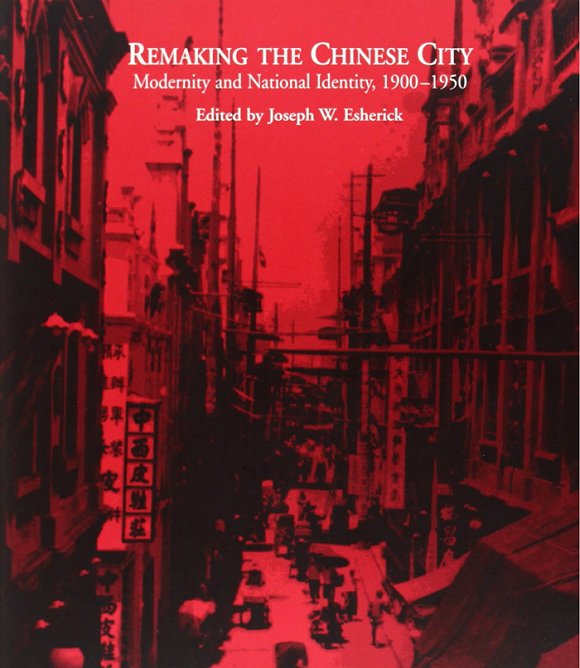
In the book "Remaking the Chinese City: Modernity and National Identity, 1900-1950", Professor Wang Liping of the Department of History at the University of Minnesota discussed how Hangzhou became a tourist city in an article titled "Tourism and Spatial Change in Hangzhou, 1911-1927".
She pointed out that since the mid-19th century, Hangzhou's central role in handicrafts and commerce had declined with the rise of Shanghai's industrialization. In the 1910s, Hangzhou turned to the development of tourism and became a tourist city. Under the glory of "tradition", the city has completed its modern transformation, and all of this is closely related to the changes in the spatial relationship between Hangzhou city and West Lake.
Literati Interests in the Ten Scenes of West Lake
When it comes to the scenery of Hangzhou, the first thing that comes to our mind should be the "Ten Scenes of West Lake".
Spring dawn on Su Di, wind lotuses in Quyuan, and autumn on PinghuThe moon, the remaining snow on the broken bridge, the orioles in the willow waves, the fish watching in Huagang, the sunset on Leifeng Peak, the clouds on the twin peaks, the evening bell of Nanping, the moon reflected in the Three Pools - when applying for the World Cultural Heritage, the experts refined the concept of "Ten Scenic Spots of West Lake" into "inscribed landscapes" and pointed out that the "Ten Scenic Spots of West Lake" belong to the "inscribed landscapes" "The early works in "Title Landscape" are the earliest, most numerous, richest in content, deepest in cultural artistic conception, most concentrated and complete in preservation, and have a wide range of outstanding masterpieces that have survived to this day in the "Title Landscape". They constitute important landscape aesthetic elements and cultural connotations of the West Lake cultural landscape. Following the Southern Song Dynasty, the "Ten Scenes of West Lake" were passed down in the Jin, Yuan, Ming and Qing dynasties, and the concept of named landscapes spread and developed throughout East Asia.
But the person who first came up with the name "Ten Scenes of West Lake" was not a tourist intoxicated by the beautiful scenery, but a literati. To be more precise, he should be a court painter of the Southern Song Dynasty.
Take fish watching in Huagang as an example. It was built in the 13th century AD. Chamberlain Lu Yunsheng once built his residence here. It is located to the west of Wangshan Bridge. From 1723 to 1735, the landscape was changed between Yingbo and Suolan Bridges. In the Lu Garden, rocks were stacked to form a mountain, the ground was cut into a pond, and red fish were raised. The elegant people praised it and it became a hit. During the Ningzong period of the Southern Song Dynasty, when the court painter Ma Yuan and others created a series of paintings of the West Lake, they included Lu Garden as one of the scenes.
For the literati of the Southern Song Dynasty, poetry, calligraphy and painting were indispensable. After the painting was acquired, it was necessary to write a poem and inscription, so the court painter named Lu Garden "Flower Garden Viewing Fish". After that, the painters selected the top ten paintings and nominated the top ten sceneries. The Ten Scenes of West Lake in the Southern Song Dynasty came from this.
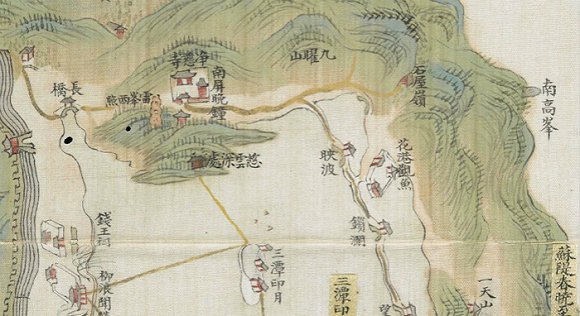
In the Qing Dynasty, the Ten Scenes of the West Lake had a touch of "official designation" due to the imperial decree of Kangxi and the poems written by Qianlong. In the thirty-eighth year of Kangxi's reign (1699), Kangxi made his third southern tour and inscribed ten sceneries of the West Lake, including "Spring Dawn at Su Di" and other scenic names. In the sixteenth year of Qianlong's reign (1751), Qianlong made his first southern tour and wrote seven-character quatrains for the scenery of nowhere. There are 10 imperial stele pavilions of the same shape scattered throughout the West Lake. Stone stele are erected in the pavilions, each piece is carried by a cow. The front of the stele is Kangxi's inscription, and the reverse is Qianlong's poem.
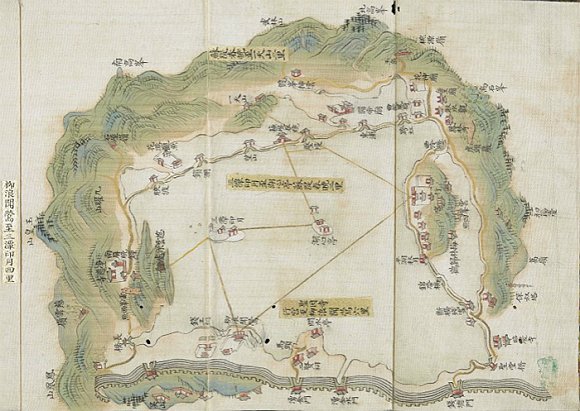
But before the arrival of these two emperors, the elegance of West Lake was created by the literati elite, writing, and praising. In the Tang Dynasty, Bai Juyi built a white embankment on the West Lake, and West Lake began a process of landscape transformation that lasted for about a thousand years. Su Shi's dredging project in the Northern Song Dynasty not only built the embankment, but also left many beautiful poems. This is also the source of the West Lake becoming the spiritual home of scholars and officials in the future.
In the Tang, Song, Yuan, Ming and Qing dynasties, many literary works praising the beauty of the West Lake established the West Lake's unparalleled cultural status. Perhaps it was precisely because visiting the West Lake became a very important factor in cultural politics in the 17th and 18th centuries that Kangxi and Qianlong visited the South Lake again and again.
Recently, Zhejiang Art Museum is holding the launch exhibition of "Water·Print Millennium", "Overview of Lakes and Mountains", which uses the history of watermark prints of West Lake landscapes as a context to show the aesthetics of West Lake. One of the most eye-catching exhibits in the exhibition is "Summary of Lakes and Mountains" engraved by Chen Changxi, a native of Hangzhou in the late Ming Dynasty. The book is printed in color and is divided into 12 pages of illustrations and 33 pages of poems, describing in detail the scenes of the literati and officials visiting the West Lake at that time.
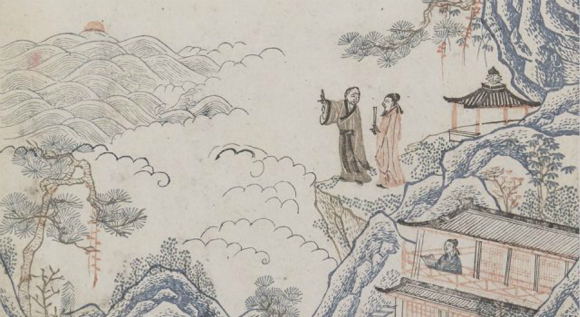
According to expert speculation, this set of exquisitely crafted and expensive albums was printed in very limited quantities and was probably only circulated and collected among a small circle of literati friends. Art historian James Cahill believes that the printing industry in the late Ming Dynasty created a market segment dedicated to the collection and play of a small number of literati: "The audience they set in mind was mainly those who could also respond in an educated manner, especially scholars and wealthy elites."
"A Survey of the Beautiful Lakes and Mountains" is the "educated response" made by the literary elite to the West Lake. Whether they go to see it in person or travel through the album, the cultural elite properly treasures the beauty of the West Lake. "Visiting" is "feeling".
Chenghuang Mountain, Yujie and Xiangshi Economy
The picture books all around are perfect,
It is surrounded by clouds and mountains on three sides and a city on the other.
How many talents can’t be exhausted,
I still have some good words for you sir.
This is a poem written by Zha Shenxing (1650-1727), a poet of the Qing Dynasty, in "Four Miscellaneous Odes of the West Lake by He Yuanruo, a Bachelor". The phrase "cloud mountains on three sides and city on one side" clarifies the spatial pattern of Hangzhou City and West Lake. However, an easily overlooked fact is that until the early Republic of China, West Lake was not part of Hangzhou city, but was isolated by the city wall.
The city wall demarcates a clear boundary between the city and the lake and is also a means of controlling population flow. For a long time, Hangzhou citizens who wanted to go to the West Lake could only pass through three city gates opening to the west during the day: Qiantang Gate, Yongjin Gate and Qingbo Gate. In 1861, when Hangzhou was attacked by the Taiping Army during the Taiping Rebellion, the city wall's defensive and control role became particularly important——At that time, the citizens of Hangzhou were besieged in the city for three months, and about 600,000 people died of starvation or suicide.
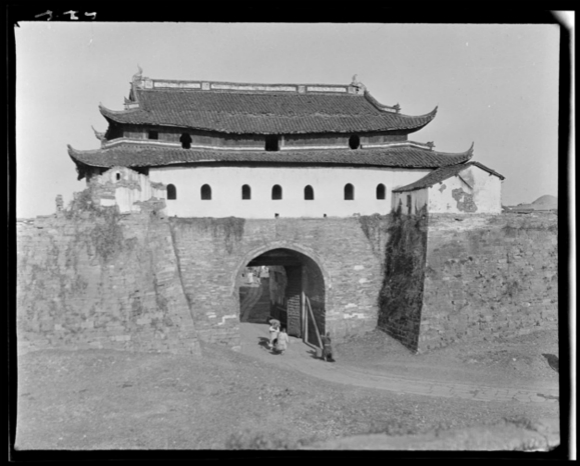
Qiying is even more restrictive for citizens’ travel. In 1648, the Qing government set up a banner camp in Hangzhou in order to suppress rebellions in the Jiangnan and southeastern coastal areas, demarcated 7,000 acres of land in the west of the city, evicted 10,000 households, and built a "city within a city." The Qiantang Gate leading to the West Lake has become part of the Banner Camp. If you want to use the Qiantang Gate, you must pass through the Banner Camp and undergo rigorous searches by the banner guards. In order to avoid trouble, most people would rather choose to go to Kinmen and Qingbo Gate.
Therefore, although visiting the West Lake is an elegant thing for literati, it is not the focus of ordinary citizens' daily lives. The most important civic space and city center is actually Yujie, which is today’s Zhongshan Road.
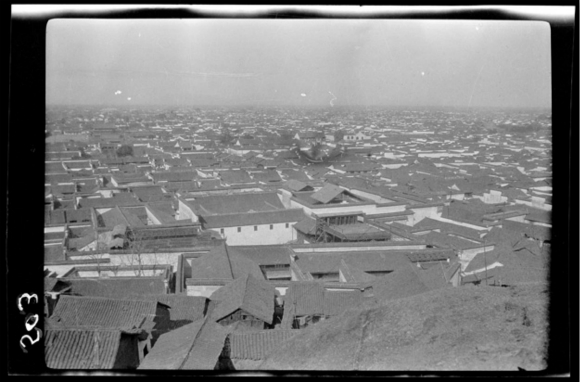
Yu Street, commonly known as Main Street, has been the north-south central axis of Hangzhou City and the busiest area for commercial activities from the Southern Song Dynasty to the early Republic of China. It is a lively scene with numerous shops and hustle and bustle. The southern end of Royal Street is adjacent to Chenghuang Mountain (i.e. Wushan) and is the busiest commercial district in the entire Hangzhou city. It gathers Hangzhou's most famous scissor shops, cosmetics stores, pharmacies, dry goods stores, bookstores and fortune tellers. The famous Hu Qing Yu Tang was located here, and due to its excellent location, it quickly became one of the largest pharmacies in the country after its opening in 1878 and continues to this day.
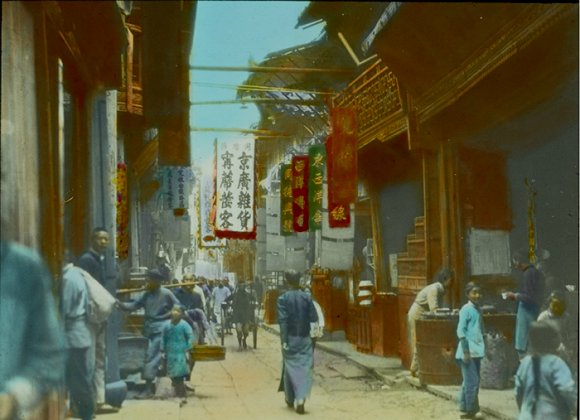
The reason why Chenghuang Mountain has become the "CBD" of Hangzhou is its close connection with religious activities. In the Qing Dynasty, various city patron saints of Hangzhou were enshrined here, and there were also more than 30 Buddhist temples and Taoist temples. Taoist deities enshrined on Chenghuang Mountain include Guandi and Wenchang, and their worship sites can be found in most Chinese cities. At the same time, there are many patron saints here who are particularly important to Hangzhou. Because most of the buildings in Hangzhou are wooden structures that are easy to catch fire, people worship the fire gods and water gods here to pray for protection from fires.
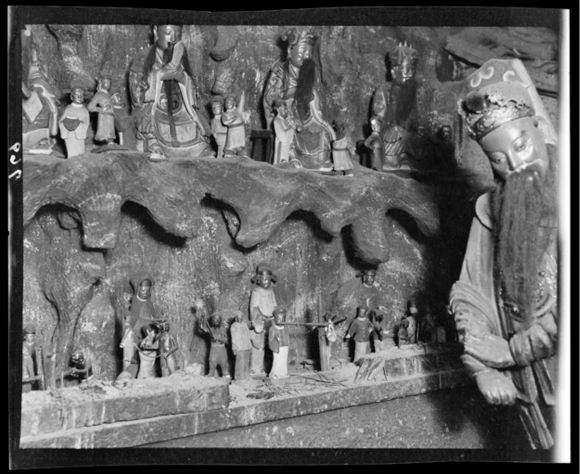
Chenghuang Mountain, where temples gather, has therefore become the center of Hangzhou’s annual religious celebrations and entertainment activities, and has brought a large amount of customers to various shops here. The gods worshiped in these festivals and celebrations (such as worshiping Tai Sui at the beginning of spring) are closely related to the changing of the agricultural season, and major festivals such as the beginning of spring often receive official support, which means that in imperial China, the state played an important role in maintaining the connection between cities and rural areas.
In the old days, Hangzhou had many customs and festivals. Just after the Spring Festival and Lantern Festival, which was less than January, there was also the "Flower Festival", a traditional festival where all the people came together. February 12 of the lunar calendar was considered the birthday of the God of Flowers. On that day, people went around to enjoy the flowers and enjoy the spring. The Huachao Festival refers to the dozens of days before Grain Rain, which are not only sunny and sunny, suitable for travel, but also a leisure period before the silkworm rush. With this free time, the sericulture farmers from Jiangnan came together to Hangzhou to pay incense to the mountains and pray for God's blessings. Rural households in Suzhou and Hangzhou raise silkworms. It has become an important custom to come to the West Lake to worship the gods in the beginning of spring and pray for a good harvest of sericulture.
Every year just after the first lunar month, silkworm women from villages in Hangzhou, Jiaxing, Huzhou, Wuxi in southern Jiangsu, Changzhou, Suzhou and other places carry fragrant rice dumplings and rice cakes and make a pilgrimage to Hangzhou along the canal. The number of people reaches 100,000. After the pilgrim ship arrives at the canal port in the north of Hangzhou, pilgrims either head west to the temples around the West Lake to offer incense, or they enter Hangzhou and walk along the Royal Street to Chenghuang Mountain.
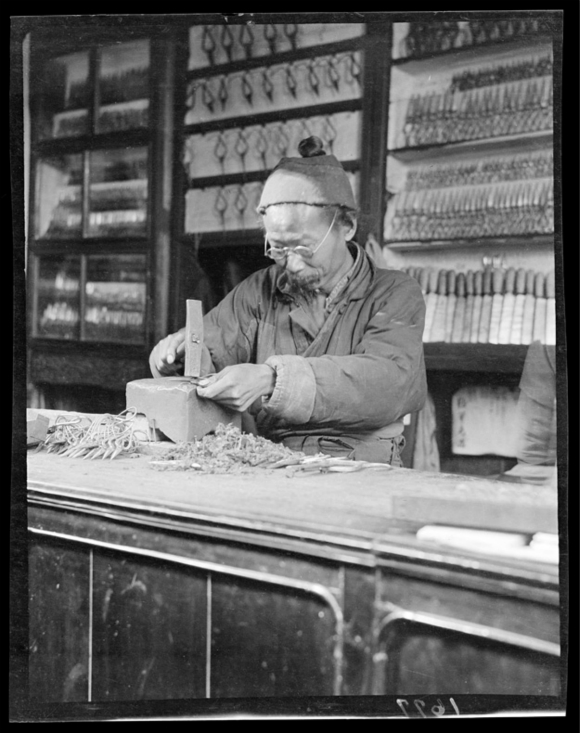
Such a large-scale pilgrimage every year has a huge boost to Hangzhou's economy. The items needed by pilgrims (such as candles, incense, paper money) form an important part of Hangzhou's handicraft industry, and more importantly, pilgrimage is also an annual shopping time for pilgrims. Locals noticed that most of the pilgrims who came for the pilgrimage were wealthy farmers from well-off families. They carried large amounts of cash and were willing to spend money. Therefore, every spring, Hangzhou is known as the "Fragrance Market". Scissors, fragrant powder, silk and satin and fans have become Hangzhou's most famous specialty products.
Tear down the wall to bring the lake into the market
However, Hangzhou's fate ushered in a turning point in the mid-19th century.
In 1853, the Taiping Army occupied Jiangnan and cut off the transportation of the Beijing-Hangzhou Grand Canal. For this reason, the Qing government and merchants changed the sea route through Shanghai, which greatly shook the commercial status of Hangzhou, the starting point of the Grand Canal. The destruction caused by the Taiping Rebellion also accelerated Hangzhou's decline. In the early 1860s, the Taiping Army wreaked havoc on the city, and Hangzhou's population dropped sharply from 1 million to less than 200,000.
Although Hangzhou became one of the treaty ports after the Sino-Japanese War of 1894-1895, it did not prosper.Be proud. When the concession brought a large foreign population and modern Western industry to Shanghai, the Japanese concession on the outskirts of Hangzhou did not develop into a new modern industrial and commercial center. Instead, it became a place frequented by gambling and prostitution. Entering the 20th century, Hangzhou has become a stagnant and marginalized city. In contrast, industrialized Shanghai has replaced Hangzhou's economic and cultural central position and begun to exert influence on Hangzhou.
In 1909, the opening of the Shanghai-Hangzhou Railway brought modernization to Hangzhou, and more importantly, shortened the distance between Shanghai and Hangzhou. In the past, it took three days to travel from Shanghai to Hangzhou, but the railway journey has been shortened to three and a half hours. This means that a large number of people can move between the two cities more conveniently, which also lays the foundation for the future development of tourism in Hangzhou.
In 1911, the Revolution of 1911 broke out, and the Qing government came to an end with the end of the imperial system. The first task of the revolutionaries to "liberate" Hangzhou was to eliminate all traces of Manchu rule in the city, and Qiying was the first to be eradicated. After demolishing the flag camp and acquiring a large amount of land, the newly established Zhejiang Provincial Government decided to develop this land into a commercial area in addition to planning streets and public infrastructure in line with the principle of vigorously developing industry and commerce. "New Market" became the new name of the area after Qiying was razed to the ground.
The main promoter of the new market was Chu Fucheng (1873-1948), who served as the director of the Civil Affairs Department of Zhejiang Province from 1912 to 1913. The patriotic democrat who studied political science and law in Tokyo, Japan, had a keen interest in law, order, public education and business, which was reflected in his plans for new markets.
The establishment of the new market also changed the spatial pattern of Hangzhou city and West Lake: the city wall between Qiantang Gate and Yongjin Gate was demolished along with Qiying, and was replaced by today's Hubin Road. The carefully planned new market required parks, a necessary element of the modern urban landscape. Therefore, urban planners designated five large green spaces from south to north along Lakeside Road and numbered them one by one as "parks." In addition, around 1929, the northernmost sixth green space (six parks) was opened, collectively known as "Lakeside Park". In this way, West Lake was incorporated into the urban fabric of Hangzhou from the outskirts of the city.
By the early 1920s, New Market had become Hangzhou's new city center, and its status was reflected in rising land prices. By 1926, land prices in New Market had generally increased by 8 to 9 times, or even more than 10 times compared to the original price. The seamless connection between West Lake and the city has brought a new kind of visitor to Hangzhou: tourists from surrounding cities (especially Shanghai).
From World War I to the mid-1920s, China's industrialization developed rapidly. The rise of industry and commerce and the gradual popularization of Western education created a new class of citizens in China's coastal cities - the middle class. Shanghai became the center of Western modernization, and in that city, the middle class had a huge influence on society and culture. As Shanghai's middle class grew, Hangzhou's tourism industry also began to take off.
The invented tourism “tradition”
The fundamental reason why Shanghai’s middle class is keen to visit Hangzhou is the change in Chinese urban residents’ perception of time after the Revolution of 1911. The Republic of China government made great efforts to promote the Gregorian calendar and introduced the concepts of working days and weekends. As the pace of life of residents in modern cities gradually accelerates, the Western education they receive also makes them understand that weekends and holidays are used for leisure and relaxation.
The desire to travel is particularly strong among Shanghai residents, largely because Shanghai’s urban space is cramped and the space for parks is limited. Mao Dun has tried to explain the psychology behind Shanghai's urban middle class wanting to "go out" - even just to hang out in overcrowded city parks. He believes that white-collar workers working in foreign trade companies and their well-educated wives believe that if they just stay in a small apartment to spend the weekend, they are betraying the progressive ideals of modern life. They do not want to see their children playing hide and seek under the dining table.
The opening of the Shanghai-Hangzhou Railway mentioned above is also an important reason for the rise of Hangzhou's tourism industry. The railway companies themselves actively promoted the development of tourism. Because they could not compete with cheaper ships in terms of freight transportation, railway companies regarded passenger transportation as their main source of profit. In the 1910s, more than 70% of the railway company's annual revenue came from passenger transportation, while the proportion was less than 20% in freight transportation. The railway company even prints its own guidebook for Hangzhou and provides weekend discount fares for passengers traveling between Shanghai and Hangzhou. By the 1920s, the railway company even arranged "tourist trains" in spring and autumn.
Hangzhou sensed the gathering of tourists in Shanghai and responded quickly. After 1911, the number of hotels, restaurants, photo studios, teahouses and theaters in Hangzhou increased rapidly. Before 1911, there were only 15 hotels in Hangzhou. By 1927, the number had increased to 91, six times as many. Many such service businesses gathered in the New Market area adjacent to the West Lake. A travel guide printed in 1916 tells us that there were 8 hotels, 7 teahouses, 9 restaurants and a theater in the area.
The comfort of modern travel facilities has in turn helped Hangzhou promote the traditions embedded in her bones. Publishers in Hangzhou and Shanghai have published numerous guide books, storybooks of historical celebrities and literati travel notes related to Hangzhou. This type of travel literature packages Hangzhou as the opposite of Shanghai: while Shanghai becomes the avant-garde representative of modernity, Hangzhou sticks to the position of traditional culture.
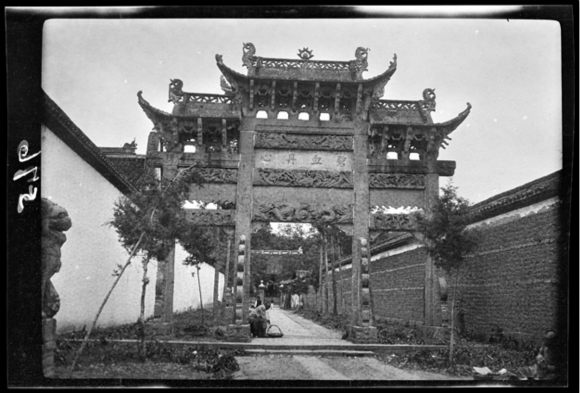
In the guide book, the history of the West Lake scenery and many scenic spots can be traced back to the Southern Song Dynasty, and the Ten Scenic Spots of the West Lake are recommended as must-see attractions for tourists. What is omitted is the inevitable change of these scenic spots themselves in the changing times - although the Ten Scenic Spots of the West Lake were re-established during Kangxi's southern tour, the huge damage caused by the Taiping Rebellion severely impacted the Ten Scenic Spots of the West Lake, and even during the Republic of China, they were not completely restored.
It is particularly noteworthy that the local governmentrole in inventing this new tourism tradition. In a city lacking an industrial base, officials found tourism the best way to generate tax revenue. In order to meet tourists' expectations of "visiting ancient times", West Lake attractions have been rebuilt based on historical classics, and the renovation of Yue Fei's tomb (temple) is one example. From the fifth to the tenth year of the Republic of China (1916-1921), the two governors of Zhejiang, Yang Shande and Lu Yongxiang, presided over the reconstruction of Yue Fei's tomb. They expanded the temple site, connected the tomb area, and surrounded the surrounding walls, which greatly increased the scale of Yue Fei's tomb (temple). After that, Yue Fei's tomb (temple) underwent two large-scale reconstructions in the 22nd year of the Republic of China (1933) and the 35th year of the Republic of China (1946). Several buildings were added, forming the current scale and shape.
Tracing back to the roots is also reflected in Hangzhou cuisine. To attract tourists, restaurants in Hangzhou have begun offering "traditional" dishes. "West Lake Fish in Vinegar" is believed to have originated in the Southern Song Dynasty and has such a long history. This dish is still one of the famous dishes of Hangzhou cuisine to this day. But the true history of West Lake Fish in Vinegar is actually just over a hundred years old: the recipe for this dish was invented by a restaurateur from Shaoxing after the Taiping Rebellion.
Somewhat ironically, with this new tourism tradition comes the demise of the real customs and festivals in Hangzhou's urban life. After the Revolution of 1911, the newly established Zhejiang provincial government stopped supporting religious celebrations and suppressed many traditional festivals in a campaign to promote the Gregorian calendar. The commercial area near Chenghuang Mountain also began to decline with the decline in customs and celebrations.
In the Hangzhou tourism tradition that started during the Republic of China, new inventions are based on the elite culture of the past literati. Modern tourists imitate the way ancient literati visited and appreciate the ten sceneries of the West Lake from the perspective of ancient literati appreciating the West Lake. But the difference is that literati appreciation is not only a visual experience, but also a process of creating elite culture through poetry, calligraphy, painting, and travel notes. However, the "tourist gaze" that replaced the "literary gaze" did not revive this literati aesthetic, because the new tourism economy does not require tourists to have intellectual output after visiting the West Lake, but only visually reshapes traditional culture.
Hangzhou’s tourism development history therefore fits Eric Hobsbawm’s concept of “invented tradition”, illustrating the city’s unique approach to modernization and transformation: in order to respond to new situations in the new era, she traced history and looked for solutions from tradition and the past. A new tourism culture was born around the traditional literati aesthetics of West Lake, and its core lies in the commercialization of the West Lake space.
Today’s distanceNearly a century has passed since the early years of the Republic of China. Tourism has already penetrated into the blood of Hangzhou and has become one of the most important symbols of the city. As the G20 approaches, Hangzhou hopes to tell the world that in addition to tourism, it also has other aspects worthy of attention. On the road of reconciling the relationship between "tradition" and "modernity", Hangzhou has embarked on a new journey.