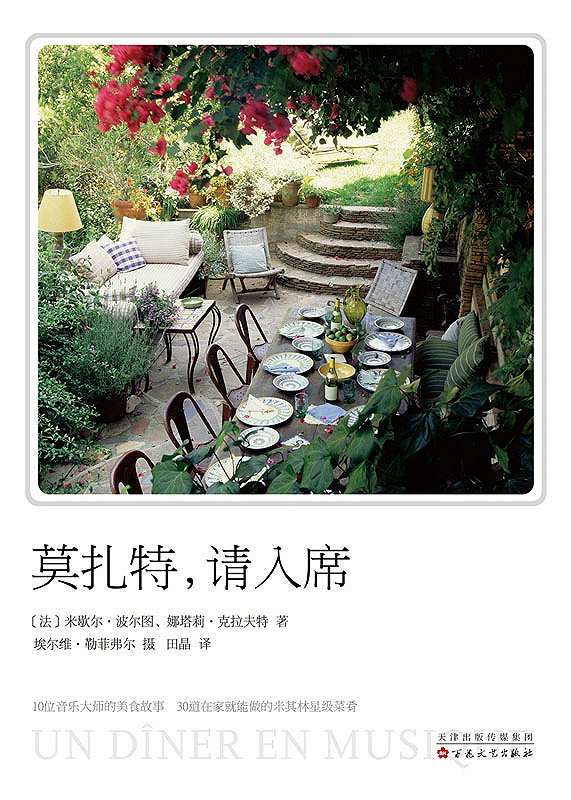
Editor's Note:The small Austrian town of Salzburg is Mozart's hometown, where opportunistic vendors sell menus from Mozart's era to naive tourists. Now, two French people have openly compiled a cookbook for 10 composers. One of them is Michel Portos, a two-Michelin-starred chef, and Nathalie Krafft, a well-known French music journalist. Through the composers' letters and other surviving texts, they explore their tastes and eating habits, accessing the most everyday and familiar spaces of their lives. Natalie wrote in the preface of this book: "It is as if they jumped out of the scope of their fate, turned around and entered the kitchen, and after making necessary adjustments, observed them from a side that has rarely been depicted so far."
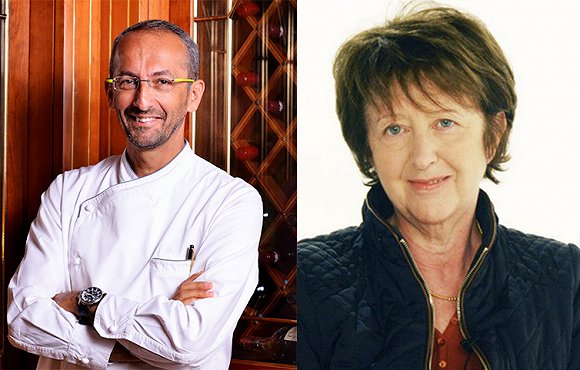
Michelle Porto and Natalie Craft.
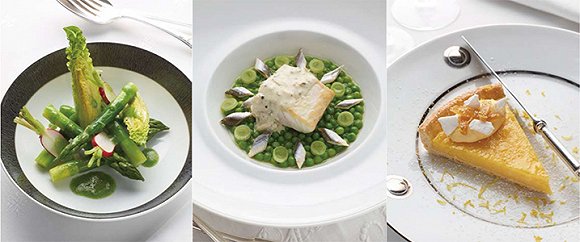
Star chef Michel Porto, who is full of gourmet biographies, is also a music fan. He created thirty recipes around composers such as Bach, Mozart, Beethoven, Schubert, Rossini, Chopin, Verdi, Mussorgsky, Satie, and Duttier to create his own In his own way, he reinterprets Mozart's favorite childhood dish of potato and chicken liver croquettes, roasted oysters that appealed to Beethoven's taste buds, and George Sand's sweet potato gnocchi for Chopin...who himself was especially fond of making pies, and he was crazy about them.
In the preface of this book, veteran French opera star Michel Blanc calls for the creation of a new profession—the waiter, who specializes in recommending classical music that matches your meal. For example, if you order beef offal, he can recommend a cantata suite; if you order snapper tartare and crayfish, then a relatively refreshing Mozart will be very suitable; if you want to eat truffles and chanterelles, a piece of Poulenc's "Dialogues of the Carmelite Sisters" will just add to the entertainment.
Is it the delicious food that awakens the ears, or the ears that awaken the taste buds? We can probably flip through this strange book called "Mozart, Please Take Your Seat", find answers in the food stories of 10 music masters, and learn from 30 Michelin-starred dishes that can be made at home. On a sleepy holiday morning, how about playing Bach's "Coffee Oratorio" first?
With Johann Sebastian Bach
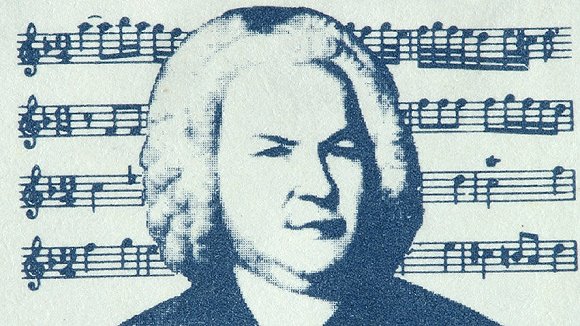
Johann Sebastian Bach (1685-1750)
With hands in flour and heads close to the stars, the musical family Bach family has an indissoluble bond with the noodle vat, and the twenty-fourth outstanding musician born in this family is the famous Johann Sebastian Bach. The first famous person in the Bach family, Wert Bach, was a baker, and a somewhat unique baker: he kneaded dough to music, grinded wheat, and played string instruments. Just as his great-great-grandson Johann Sebastian described when writing his family tree: "Werther liked to carry the schitter with him when he went to the mill, and played it while grinding flour. (The combination of the two, the sound must be wonderful!) It can be said that this is the source of his descendants' love for music." Therefore, we can have masters like Johann Sebastian Bach, thanks to the basic food of bread, and he himself is also a foundational composer that everyone knows, soothing all souls hungry for music.
The musician loves good food and will happily attend a banquet when invited. Warm asparagus salad, zander with anchovy butter sauce, cherries, lemons... he tasted them all, and even potatoes, which had not yet conquered France. And coffee, which has won the favor of Germans, also deeply attracted him. At that time, as the choir cantor of St. Thomas Church in Leipzig, Bach, who was famous in Europe, paid tribute to this drink with a "Coffee Oratorio" in the garden of the Zimmer Café Ancient Orchestra. The light music sounded like a summer night.
[Detailed recipes and cooking methods are omitted here]
Great appetite
Bach had a strong temperament, gave birth to twenty children, and had a strong appetite. He likes food that is rich in energy and satiating, and he is very happy every time he receives game as a gift from celebrities and dignitaries. We have no way of knowing what meals his wife Anna Magdalena would prepare for him at home, but we do know the menu of a delicious meal served to him by the nobles of Halle, Germany - the day Bach, together with his musician friends Kunau and Basil, inspected the great organ in the city's cathedral.
An amazing menu
Dinner menu provided by the distinguished church committee to celebrate the acceptance of the new organ. Harley, May 3, 1716:
A red wine braised beef
Barracuda with anchovy butter sauce
A pea platter
A potato platter
Platter of spinach and radicchio for two
A piece of roast mutton
A roast veal
Boiled winter squash
Warm Asparagus Salad
Lettuce
Little Carrot
Fried pastries with fillings
Candied Lemon Peel
Canned cherries
Fresh butter
Halle's menu is remarkable: a haphazard sequence of dishes that illustrate exactly what ingredients were available in Bach's day and how they were cooked. So we learn that Bach ate potatoes, something that was impossible for the French composer François Couperin of the same era, because Parmentier had not yet introduced potatoes to France. We also know that Bach tasted warm asparagus in a salad (with what kind of sauce?) and deliciously crunchy candied lemon zest. And on the table in front of him was a serving of fresh butter: a luxury at the time.
A wine list
There was nothing ascetic about Bach, although some hypocrites always put on a serious face when playing his music. Philippe Bossan quipped that "Bacchus" is the Latin translation of Bach's name. John Sebastian loved to drink and feast. He loved wine, whether it was liqueur, spirits, beer, schnapps, or cider. His nephew John Elias gave him "a bottle of excellent spirits" and earnestly requested his sister to prepare a certain amount of liqueur to be delivered to him by carriage "because I especially wanted to make our cousin happy". Bach cherished these gifts and expressed his gratitude for "this precious little barrel of wine". But he added: "Unfortunately, this barrel of wine has suffered a lot, either due to bumps during transportation or other reasons. After opening the bottle, I found that it was two-thirds empty. After all, it would be a pity to lose even one drop of this noble gift from God."
People who love coffee
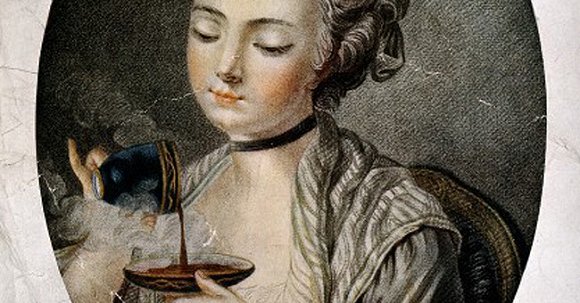
Bach loved coffee very much and drank three cups every day. At the Zimmerhaus in Leipzig, every Friday evening (and Tuesdays during the Grand Market) he directed the music played by the university music society founded by his friend Telemann. Bach composed the "Coffee Oratorio" for this student orchestra, which was not bound by any dogma, and it was first performed in 1734.
"Coffee Oratorio" is a story told by a narrator about a young girl and her old and conservative father. When her father forces her to choose between coffee and her fiancé, the young girl insists on retaining her right to covet food: she wants both, equally.
The legend about herring head
When Bach was a child, he was always hungry. He would even pounce on a herring head thrown out of the open window of a tavern and pick it up. It was the right thing to do: there were a few coins in the fish head, enough for him to buy himself a piece of barbecue. A scholar named Malpurger wrote this anecdote into "The Legend of Several Musical Sages" to prove that people who persevere will always be rewarded. However forFor our purposes, the story simply tells us that herring was a common ingredient at the beginning of the eighteenth century, and that herring heads had no value and could not even be used to make soup. In addition, John Sebastian likes to eat barbecue.
A cabbage in "Goldberg Variations"
The thirtieth variation of the "Gothenburg Variations" is also the last variation. It is a "gathering" (that is, a casual improvisation). This is a musical form that combines several folk songs into one piece. In this variation, we can hear some melodic elements that Bach borrowed from popular songs of the time.
One of the songs is about love, another about a poor diet of turnips and cabbage that drove a son away from his mother's home. “If only mother would make me some meat,” he sang. Yes, Bach loved good food enough to introduce vegetables into this remarkable work of one aria and thirty variations.
This article is excerpted from "Mozart, Please Take Your Seat" (written by Michelle Porto and Natalie Kraft, translated by Tian Jing, Baihua Literature and Art Publishing House, September 2016 edition), and is published with the authorization of New Classic Culture.