Editor's note: On the eve of the release of the first "Left-wing Frontier Thought Translation Collection" in China, Professors Wu Guanjun and Professor Jiang Yuhui of East China Normal University and Professor Lan Jiang of Nanjing University conducted a "three-person talk on contemporary left-wing thought". During the dialogue, philosophy, politics and art collided radically. As the three-person dialogue continued to deepen, the complex and confusing past and present life of the "left wing" gradually unfolded before our eyes.
Professor Lan Jiang sorted out the genealogy of left-wing thought - from Lukács to the early Frankfurt School, to Derrida and Baudrillard. He tried to answer these questions for us: In the 1980s, in the face of neoliberal discourse system and political philosophy, why did the leftlost its resistance and right to speak? Is "humanism" the only path for left-wing thinking? What path will the New Left rely on to prosper?
Professor Wu Guanjun pointed out the political characteristics of the "Left-wing Frontier Thought Translation Cluster" - radical dissatisfaction with the real order. This attitude makes people constantly reflect on the politics of life itself. "Is the so-called beauty and food really neutral behind it? Is it so simple for us to enjoy life? Are they themselves also a set of control mechanisms that make us content with our current position and not think about anything else." So, how can we avoid becoming complicit? What kind of better system should we expect?
Professor Jiang Yuhui started from the relationship between the entire French intellectual tradition and art, giving examples such as Foucault, Deleuze, Rancière, etc., trying to illustrate the symbiotic relationship between radical theory and contemporary art. In sharp contrast, today's ideological circles, especially the conservative circles of Chinese philosophy, are deeply tired of the theories in academic circles and magazines, so Jiang Yuhui uses "noise" art as a breakthrough, "tearing a gap in the prison with nowhere to escape." "The reason why we collaborate and even create with artists now is because there is no possibility to continue to be radical."
The following content is a compilation of the speeches of Sanhui Books and Central Compilation and Compilation Publishing House on this dialogue event, and is published with authorization.
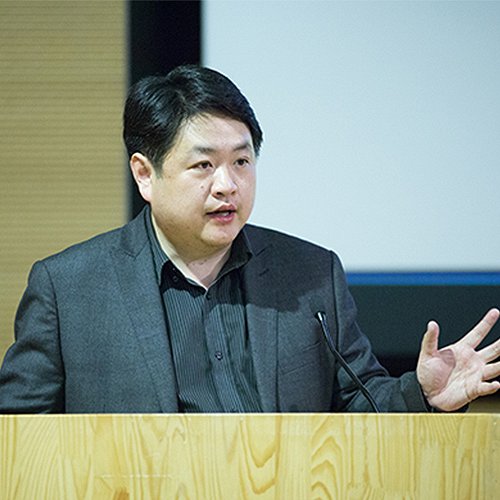
Lan Jiang: The Ideological Genealogy of the Left
When you talk about the left wing in the West, your impression may still be at the stage of the Frankfurt School, including those of Sartre and Merleau-Ponty. Marxism or left wing in the West refers to this group of people. But I am thinking about a question. In fact, these resources may have been surpassed by the West.Some of their main words have been questioned.
Let me give a very simple example. In that era, starting from Lukács, continuing to the Frankfurt School, even to the early days of Merleau-Ponty, and then to Sartre, they liked to talk about concepts such as "alienation", "fetishism" and "reification". We use our society as a materialized society and an alienated society to criticize and criticize ideology. However, when such problems arise, we will definitely encounter the question of "does there exist an authentic self that has not been alienated?" I think today if I buy a brand-name bag, live in a big house and drive a nice car, am I not the real me?
In our materialistic society, people often ask me this question: Why do I have to think that a non-alienated me is the real me? They don't agree, especially those "successful people" who say: I am already very successful. I enjoy it every day. I drink coffee on my balcony every day and watch the sunset. What a pleasant life it is. And we don't watch the sunset in Shanghai, we watch the sunset on the Gold Coast of Australia. This is the real me. Why do you say that I am objectified?
So in the eyes of Frankfurt’s generation, including Baudrillard’s generation, their criticism has encountered a bottleneck. In fact, their statement is correct, but more people do not recognize their critical approach. The left actually started as a political movement, a communist movement, a socialist movement, and an anarchist movement. However, in the 1960s and 1970s of the last century, the left became an art, literature, poetry, and film movement. These people all huddled in art and used aesthetics to carry out revolution.
We may encounter such bottlenecks in philosophical resources. We use concepts such as "reification", "alienation", "objectification" and "fetishism" to re-examine this approach. There are problems with this approach, or this kind of thing became the United States in the 1980s. Cultural studies, people like Eagleton and Jameson, have turned it into another very institutional thing within the academic system, turning cultural studies into a very academic thing, so in this case it means thaton the basis of the original theoretical structure,The left wing could no longer move forward in the 1980s, so at this time, we saw that the left wing was unable to resist the political philosophy of the neoliberal discourse system that had slowly emerged at that time. Of course, at that time, the left wing could only turn to the so-called poststructuralism and postmodernism to resist the attraction of this political philosophy.
At that time, the theory of justice represented by Rawls, political liberalism, and the theory of communicative behavior represented by Habermas represented the mainstream of Western political philosophy. The left had no share in this aspect. Of course, we can now say that people like Rawls, Habermas, and later Richard Rorty can be called left-wing because they are left-wing relative to other people, such as Charles Taylor. But their left wing is based on neoliberal political philosophy and solves problems within the framework of modern political philosophy. So later, in the 1980s and 1990s, the left wing could only turn to postmodernism, poststructuralism, and deconstruction to destroy everything. Our current strength is to destroy. We can't reach Derrida or Baudrillard. The enemy has a castle. We have no weapons now. Our ammunition depot is empty. We can only smash and smash the enemy's fortress. This is what Baudrillard and others do, telling you that what you see is a simulacrum, and you can only treat it as a simulacrum now, as if it does not exist.
So my judgment is that from the 1970s to the 1990s, the left went through a stage of running out of ammunition and food. The alienated humanistic or humanitarian theoretical path could no longer go on. What should we do? Of course, there is more than one path for the left, which we call “humanism” or “Heideggerian existentialism.” This path that influenced the origin of left-wing thought may have run out of steam, but that doesn’t mean there are no other paths for the left. Therefore, the prosperity of the new generation of left-wing people we see today actually grew up on another resource. It is not the tradition of Adorno, not the tradition of Heidegger, nor the tradition of Baudrillard and Derrida. It is a tradition that was revived in another place. This tradition is a new philosophical issue we are going to talk about today.
So what is this philosophy? Of course, Badiou and his student Meillassoux have already given it a good name, called "speculative materialism" or "speculative realism," which means that they are now moving towards a realism and using this concept to restructure the resources of the left.
In turn, let’s trace back to Žižek. Zizek's two books last year, including the earlier book, all talked about a topic called "dialectical materialism", not "historical materialism". Several of his books all included dialectical materialism. The subtitle of this book is "Hegel and Dialectical Materialism". About this time last year, there was also a book called "ab"solute recoil" is absolutely reactionary, and its subtitle is also "The Foundation of a New Dialectical Materialism." That is to say, Žižek is also talking about this issue. In fact, the dialectical materialism he talks about here can be equated with the speculative materialism Badiou talks about. I cannot expand on this equivalence in detail here.
I can only say that this is a brand-new resource used by the contemporary left, which is different from the resources of the humanist tradition or the post-structuralist tradition we talked about before. Of course, the source of this resource is undoubtedly Lacan. Of course, Zizek will trace it back to Hegel, saying that Hegel is a very important materialist rather than an idealist. This is what Zizek has repeatedly talked about.
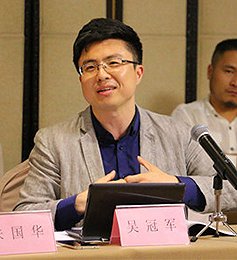
Wu Guanjun: The political orientation of the left
The thinkers introduced in this series of translations today share a characteristic, radical dissatisfaction with the real order, which is a political characteristic.
We may all feel that historically, compared with ancient times and the Middle Ages, our lives are really good. Everyone here may feel that life is not bad. But for these thinkers, this understanding was too short-sighted.
They tell you through many wonderful analyzes how this system can satisfy you and make you feel that your life is not bad... Things that make us feel comfortable are actually problematic. Why do we say it is not a movie when we see Debord's film, and say it is not music when we hear noise, etc. And other things bring us beauty and pleasure...
Are these so-called beautiful scenery and delicious food really neutral? Is it politically neutral? Is it as simple as letting us enjoy life? Are they themselves also a control mechanism that allows us to be content with our current position and not think about anything else? Well, these thinkers argue, we need to do more. They are not saying that this world is the worst, there are worse things than that - but this world is definitely not good enough. So in this sense, this is a political attitude. They are thinkers who are critical of the status quo. This is a very clear line.
So at first Teacher Lan Jiang said that when we talk about the left in China today and the left in the West, the word we use is "leftist". We think it is the same word, but the connection is awkward. Because many thinkers here who consider themselves left-wing do not mention criticism or how to make this society better. In their opinion, it is already the best - the Chinese model. There is nothing better than it. Such an idea is definitely not the idea of a leftist. This is a very important difference. Therefore, as these radical thinkers, their attitudes are very distinct. So at the specific level, at the level of argument, of course they have a very systematic and philosophical discussion. For example, why is such a world not a final order?
In their view, there is no possibility for any order to declare to itself: "I have reached the end of history." They argue in various ways. For example, Badiou used the concept of "event". Under any circumstances, if we feel that the world will be peaceful and prosperous from now on, and there will be nothing new under the sun, we will immediately slap us in the face, and a brand new event will definitely happen. The occurrence of events is beyond the control of politicians in any big country. So, in that sense, the world will always surprise us, stun us, catch us off guard, and it will never end. Another example is Zizek's argument using dialectics. The meaning of dialectics is that no matter what you say, no matter how nice it is, you will always be slapped in the face, because the most critical point of dialectics is that a negative side will appear immediately. When something claims to be extremely good, you just wait to see how it falls. This is the wisdom of dialectics.
So, the philosophy of these thinkers is political. They tell us that the order we are in today cannot be the best, and it cannot stop here and no better order will emerge. If we give up and think that this is already too good, we will actually play a complicit role. So in this sense, they always want to tell people conceptually and ideologically that there is more work waiting for us to do, and what we do is not just minor repair work.
Do you really think this order is good?
Today's so-called "global capitalism" order, of course, brings great productivity, but you have not seen how divided the entire world is. The elite class is becoming more and more "elitized", and it is a perverted "elitization" - because today the word "elite" is only related to wealth and has nothing to do with morality or knowledge. The same goes for China, this "elite"o;Become an increasingly small group. Middle class? On the way here, Lan Jiang and I were still comparing wages. We often compared wages. The more we compared, the more we felt: Are we still middle class? The social gap is getting wider and wider, and the methods of plundering capital are becoming more and more novel. If you look at those capitalists and those big families in the past, generations of people worked hard to accumulate wealth one after another.
Look today, Jack Ma became a millionaire so quickly. In what way, they plundered social wealth much faster than previous generations. This knife is so fast that we don’t feel it at all. We think they just do things we don’t do, that they innovate more than us, but is that really the case? Looking at the dark "game" behind those glossy stories in the media, can you really take a closer look? Just like in the United States, we think their market is fair. If you look behind you carefully, it's not fair at all. Didi and Uber merged again today. Why are they constantly merging? This makes the market more and more inclined towards a small number of elites, who "join the other party if you can't defeat them" and continue to "integrate". After the integration is completed, we will always be the bearers of the most pain. This society has formed a big change that we have not paid attention to but has quietly happened. That is, the way they plunder is becoming more and more different from before.
In the past, at least we could still see their naked exploitation of workers. We can see what Marx proposed. At that time, workers were in factories all year round. When they came out, their faces were scary, full of wrinkles and breathing dust. Today, with more and more automation, fewer and fewer people feel this most painful thing, except for seeing it on construction sites. In a general sense, most people have gone to work in the office, and there are fewer and fewer workers who go to the factory floor wearing shabby clothes. But this does not mean that the world is becoming more and more civilized. It only means that its methods of plundering are becoming more and more sophisticated, or that it requires less and less you people to work one by one. But what does capitalism still need from you? Not as producers, but as consumers. Otherwise, who will buy the things it produces?
So it keeps asking you to participate in another way, involving you in various shopping methods. In fact, we suffer more through this method, because it reduces the demand for productive labor. Today we find that more and more people cannot find jobs. It is not that they want to start a business themselves, but they are forced to start a business, because it is getting harder and harder to find a job and so many people are not needed.
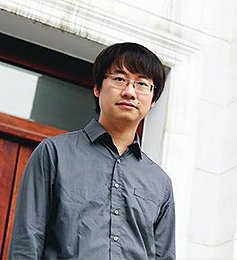
Jiang Yuhui: Left-wing and Contemporary Art
Lan Jiang and Champion have actually given us a picture just now, but I think it’s not enough. Because as Baudrillard said at the end of "Consumer Society", "We have no way to escape, everything can becomeCommodities can all become part of the consumer market. Including the last activity I did with Sanhui, we talked about Clary's book "24/7: Late Capitalism and the End of Sleep". He also painted a prospect for us: Marx said that there is alienation in the field of productive labor. The Frankfurt School went further and said that there is also alienation in daily life, as evidenced by Adorno and Horkheimer’s criticism of the cultural industry. But Clary said that even when we are sleeping, the claws of capitalism are pervasive.
So, why make noise? It is to provide yourself with such an extreme breakthrough and tear a gap in the prison with nowhere to escape.
I am making noise because I feel that as a university teacher within the academic barrier, I feel very tired of talking and writing about these radical "theories" in magazines. The reason why I collaborate and even create with artists now is because there is no possibility to continue to be radical. But in fact, we are all part of the machine, so in what sense can we get rid of it and have the qualifications and reasons to say that we are radical? Including, do we think about things like salary, children, and benefits every day in our minds? ... Actually, I feel very tired, so I urgently need such an outlet.
I just mentioned art or aesthetics. In fact, even if it is not limited to the scope of radical theory, as far as the entire French intellectual tradition is concerned, starting from the Enlightenment or earlier, philosophy and art have always been connected in French thought. Rather than asking which French thinker does not understand art, it is better to ask which one has a deeper understanding of art, and which one is more proficient in art. When I read the works of thinkers from the 1960s and 1970s or more recently, I found that this is actually very obvious. For example, in Foucault, he studied many painters; Deleuze even more, and even wrote monographs on film and painting; and even later in your radical camp, there were many thinkers who were very interested in art, such as Rancière, who studied film in Italy. Therefore, radical theory actually has an inseparable relationship with art, especially contemporary art. Fundamentally speaking, this highlights a phenomenon, that is, whether in the domestic or foreign art world, it is always more spiritually inclined to radical ideas and needs a critical edge to promote their creations.
In stark contrast, today’s academic circles, especially those in ChinaOn the contrary, the philosophy "circle" appears to be increasingly conservative. Therefore, whether it is life or art, we need a driving force, a power that can transform. Of course, the art world is actually very decadent, especially contemporary art, which is completely integrated with the capital market. Some of the alienation phenomena criticized by Champion and Lan Jiang just now are simply the norm in the art circle. But even so, we can still find the seeds of more radical ideas in contemporary art. Even if you don't have to survive, at least you can breathe a little fresh air. Therefore, I sincerely hope that the two of you can become more actively involved in the dialogue or practice of contemporary art or the art circle in the future.
Finally, I think the most radical thinker in my mind is Foucault according to the radical standard, because Foucault said that I live like a dog and work like a dog, but I just want to achieve one goal, which is to transform myself (transformation of self), so that I can get rid of this old academic system and alienated lifestyle, and promote a transformation of myself through academics, thoughts, and changes in lifestyle. Including some of the things he said in his later period are actually a reflection of his consistent radical attitude. So although I criticized Foucault a little before, in my mind, I think he is more radical than Zizek, Badiou, and Agamben. In my mind, I very much hope to be a radical thinker like Foucault, who can be consistent in his words and deeds, and who can pursue himself purely and truly. Recently, a book by Foucault was published called "The Courage to Tell the Truth". I think this can also be used as a core slogan of radical thought.
What is radical? I think it means having the courage to stand up and tell the truth, to be able to face the reality of the world and the reality of oneself. Of course, I chose noise, and the two of you chose another radical lifestyle, both of which lead to the same goal.
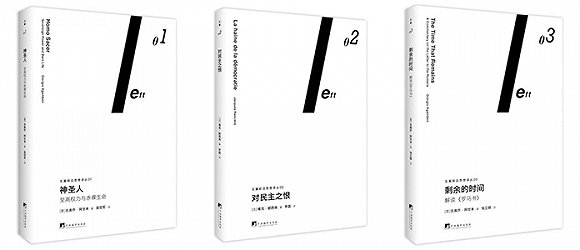
The "Left-wing Frontier Thoughts Translation Series" will be released to readers one after another. It is edited by Wu Guanjun and Lan Jiang and published by Sanhui Books in cooperation with the Central Compilation and Compilation Press. This set of translations includes the classic works of Agamben, Žižek, Badiou, Guattari and other leading European left-wing thinkers over the past two decades. It systematically introduces the most cutting-edge results of contemporary left-wing thought to the Chinese academic community and explores the "ideological genealogy of the left-wing", "the political orientation of the left-wing", and "the left-wing and contemporary art".
The "Left-wing Frontier Thoughts Translation Series" has published three books, namely "Sacred Man: Supreme Power and Bare Life" ([Italian] Giogio Agamben, translated by Wu Guanjun), "Hate for Democracy" ([French] Jacques Rancière, translated by Li Lei), "The Remaining Time: Interpretation of the Book of Romans" ([Italian] Giogio· written by Agam and translated by Qian Liqing), and the remaining 9 books will be published this year.