For the past few decades, Americans have been obsessed with the superiority of Tote bags. We are often told that these reusable shopping bags are great because they are environmentally friendly. Disposable bags are not environmentally friendly. Across the country, restrictions are being placed on the use of plastic shopping bags to avoid waste. Many stores no longer provide plastic bags, or provide them for a fee. The recyclable environmentally friendly bag project began to be promoted across the country.
But canvas totes may do more harm to the environment than plastic bags. In 2008, the UK Environment Agency (UKEA) released a study on the resource consumption of various shopping bags, including paper bags, plastic bags, canvas bags and PP recycled material environmentally friendly bags. Surprisingly, the results found that in daily use and disposal, consumers who want to reduce pollution and carbon emissions should use traditional plastic bags and then use them at least once, such as as garbage bags or for other purposes. Traditional plastic bags are made of high-density polyethylene (HDPE, the kind of plastic bags commonly used in grocery stores), which has the smallest impact on the environment among the shopping bags tested. Cotton reusable bags are the most polluting products to the environment and are most likely to cause global warming because they require more resources to produce and transport.
The results of this study are very different from our intuition. Plastic bags appear to be undesirable artifacts, sometimes hanging in trees, sometimes eaten by animals, and slowly disintegrating in the land. Cities are trapped by plastic bag pollution. Eventually, these plastic bags turn into small particles and flow into the sea, and this process may continue for hundreds of years. Although plastic bags are not easily biodegradable, they require very few resources to manufacture and ship. Plastic bags produce less carbon emissions, pollution and by-products than cloth and paper bags. Not only can it be recycled, but it is also very cheap. Based on the above reasons, plastic bags are widely used in our lives. And it can exist long after it has become useless.
Research by the UK Environment Agency calculated that each plastic bag costs less than two grams of carbon emissions to produce. A paper bag would need to be used seven times to reduce the carbon footprint of a single bag to the same rate. To achieve the same ratio, a tote made from recycled PP would need to be reused 26 times, while a cotton shopping bag would need to be reused 327 times (although some of the products below were not included in the study, we can assume that designer tote bags, such as this one made of leather and metal, are reused an essentially astronomical number of times).
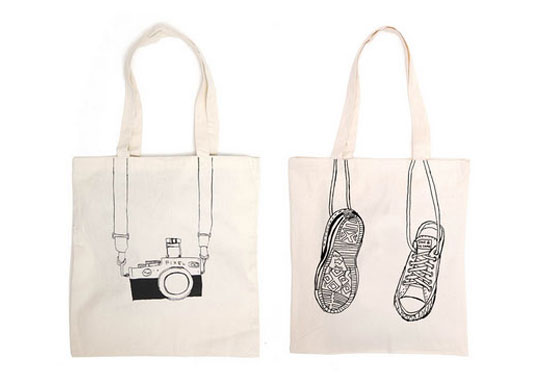
The proliferation of reusable bags makes people think that they are disposable products, which is contrary to the original concept
While the value of environmental protection has declined, tote bags have experienced a great leap forward in shape and quantity. On the registry, many stores are starting to offer cheap (or even free) recyclable totes with the merchant's label on them. Designers are well aware of consumer psychology and have begun to increase the design sense of tote bags. Tote bags began to be given away as promotional gifts by non-profit organizations or commercial sectors, which sent an opposite message: one was conscientious consumption, the other was conspicuous consumption.
Just like plastic bags, tote bags are starting to proliferate. Design Observer magazine published an article in 2009, UrBan Outfitters designer Dmitri Siegel said he found 23 tote bags at home, from various organizations, stores and brands. Just like plastic bags, tote bags are now available in endless varieties. Due to the proliferation of Tote bags, Tote bags that have not been used a few times are treated as garbage and thrown into trash cans in city parks and garbage trucks in residential areas. The opulence of the tote bag actually makes people feel that it is a disposable product, which is contrary to the original concept.
This low-level, unfocused fanaticism will do more harm than good to prevent ecological disaster, and this is a problem shared by much popular environmentalism. Meat eaters decry water use in almond orchards. Well-intentioned rubbish crowds public bins and rots in the streets. Studies have shown that roses grown in Kenya have lower carbon emissions than roses shipped to England from the Netherlands; for Mississippi, importing red wine from France also causes less ecological damage than importing from California. Biodegradable plastic bags, as disposable packaging, fully meet the needs of environmental protection rather than simply questioning whether plastic bags are not environmentally friendly enough. Fuel economy and carbon emission standards for trucks are also being considered, but tankers, cruise ships and military activities that will produce millions of times more carbon emissions rarely come into public view.
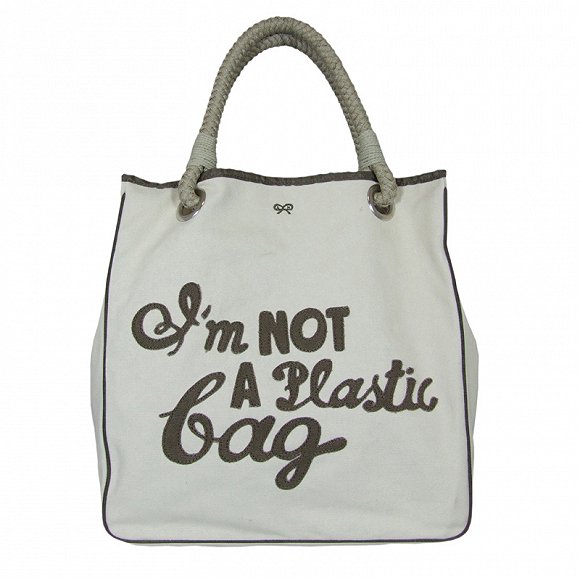
When this tote bag went on sale, 80,000 people lined up to buy it.
Siegel believes that designers have something to do with the overpopulation of tote bags. He noticed that because these bags were large and flat, it was easy to print patterns on them, suitable for embroidery patterns and product advertising. Tote bags are given away in exhibition halls, bookstores, optical shops, grocery stores and tattoo parlors. Add to that the hype. Siegel introduced the "I am not a plastic bag" tote bag trend led by fashion designer Anya Hindmarch in 2007:
This bag was originally a limited edition product sold in London's Hindmarch boutique, Colette and Dover Street Market, but when it went on sale in Sainsbury's, 80,000 people queued up to buy a bag. When this tote bag became popular in Taiwan, the scene was so chaotic that riot police were required to come to the scene to maintain order. Later, 30 people were hospitalized due to crowding injuries.
Whether it is a designer piece that needs to be treated with care or a promotional product that is stained by daily use, although people want to use tote bags instead of plastic bags, the limited number of recycling tote bags does not consume less resources than using plastic bags. Although tote bags promise to be durable and sustainable, they can also get holes, incomplete stitching and open seams. Then covered in dust and stains.
With many fashion brands selling tote bags for hundreds of dollars, tote bags illustrate growing economic inequality. In an article in the Wall Street Journal, Ellen Camerman also cited the case of tote bags sold by Hindmarch and pointed out the problem of converting tote bags into display symbols:
Sarah De Belen, a 35-year-old mother of two, said she uses 30 to 40 plastic bags at the grocery store every week. At the end of last year, she saw a woman using a tote bag designed by Hindmarch in the supermarket, so she spent $45 to buy the canvas shopping bag online. ”
“But this lady found that she needed 12 shopping bags of this size every time she went to the supermarket. 'This shopping bag can probably hold a head of lettuce,' she continued. 'This shopping bag is too delicate to hold a child's diapers or a dripping chicken breast.' ”
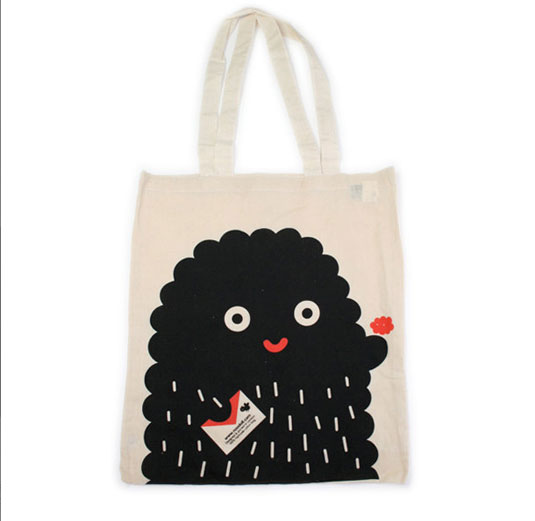
The biggest (or smallest) advantage of tote bags is that people don’t actually use them
Every product has some ideal spirit in it when it is first produced and consumed. The popularity of the tote bag - from photo sites or advertisements - makes the ideas we project onto it tangible. The ideal image is of fresh fruits and vegetables wrapped in totes on a farm on a sunny day. They looked close. Wear casual, comfortable light clothing. They don't use electronic devices. They take their totes to North Island beaches, parks, art openings, theaters, and from modern urban communities to laid-back rural retreats. They feel complete and creative. They are the middle class. This group of people shapes the image of the Tote Bag Dream: healthy, environmentally aware and ecologically responsible, conservatively ethnically diverse, carefree yet productive, connected, materially affluent, inclusive, adventurous yet optimistic.
In short, they are of high character.
But the biggest (or smallest) advantage of tote bags is that people don't actually use them. In 2014, marketing research firm Edelman Berland conducted an online survey and found that more than half of people use plastic bags more than recyclable shopping bags, even though these people have recyclable shopping bags and know the advantages of these shopping bags. Only 20 percent said they preferred plastic bags, but more than half of those who responded said they would stop using totes when more convenient and cheaper options became available. The reality is even bleaker, with tote bag usage estimated to be only 10%.
As long as the owners of the tote bags do not throw them away, the negative impact of these tote bags can continue to be reduced and they may be used at least 327 times. From an environmental perspective, the best ways to use a tote bag are at two extremes: use it all the time or not use it at all.
(Translation: Li Ruiyi)