
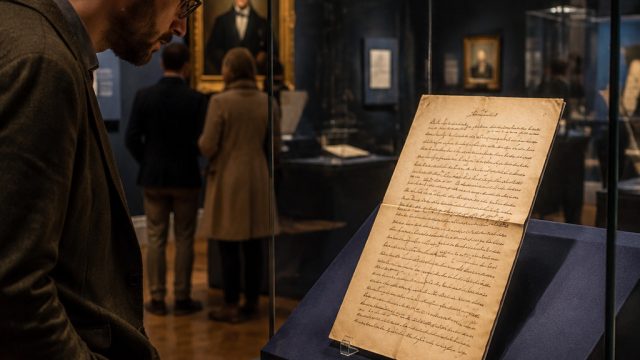
In a remarkable turn of events, a letter penned by George Washington is currently on display in London, shedding light on a pivotal moment in American history. Authored in October 1781, this correspondence marks the formal acceptance of the British surrender at Yorktown, a decisive event that paved the way for the United States' independence. This display not only serves as a testament to the era but also offers contemporary insights into the legacy of the American Revolution.
The Context of the Letter
The document, which is being exhibited at a prominent museum, emerged during the final throes of the American Revolutionary War. Washington's letter reflects his profound desire to minimize further bloodshed, emphasizing the earnest hope for peace following years of conflict. By accepting the British surrender, Washington positioned himself not just as a military leader, but as a harbinger of a new beginning for the nation.
Why This Letter Matters Now
In today's context, as discussions surrounding global conflicts and resolutions are more critical than ever, Washington's sentiments resonate deeply. The letter symbolizes the pursuit of diplomacy over warfare—a principle that remains relevant as nations often grapple with similar choices.
- Importance of peace in conflict resolution
- Legacy of American independence and its global influence
- Relevance of historical artifacts in contemporary discussions
The Significance of Historical Artifacts
Displaying such a significant document in London—a city with its own rich history intertwined with America's past—highlights the ongoing dialogue about independence and governance. It invites visitors to reflect on the sacrifices made for freedom and the principles that underpin democratic societies today.
Engaging with History
Visitors to the exhibition can delve into the broader narrative of the American Revolution, understanding how artifacts like Washington's letter contribute to our comprehension of history. Engaging with these pieces allows for a deeper connection to the past, facilitating discussions about the struggles for independence across various nations.
Inviting a New Audience
As the exhibition runs through the coming months, it is expected to attract not only history enthusiasts but also the general public. The chance to view a piece of history that is intrinsically linked to the ideals of liberty and democracy is a compelling reason for all to participate.
Interactive Experiences
To enhance the experience, the museum has planned numerous interactive sessions where attendees can learn more about the Revolutionary War and its implications on modern governance. These initiatives aim to connect the legacy of the past with today's values and potential future directions.
Conclusion: A Call to Reflect and Engage
The display of George Washington's letter serves as more than just a historical artifact; it is a call to reflect on the journey towards independence and the values that continue to shape nations today. As we engage with such pivotal moments from our past, it becomes clear that understanding history is essential in navigating present and future challenges. Therefore, visiting this exhibition offers a unique opportunity to appreciate the sacrifices that led to the freedoms we enjoy and to contemplate how those ideals can be realized in our own time.