"Breaking the rules" is a phrase that's often used in the fashion industry. But who sets the rules? Aren’t rules the basis of fashion? After all, fashion is more than just the clothes you wear. It is the shape of clothing at a certain moment, and it is the code attached to it that defines it as advanced, current, and fashionable. And just like the menu, it is often simplified and translated into some kind of beautiful thing, which is slapped on top of the existing product, rather than putting effort into thinking about it or actually changing anything. The rules of fashion are dictated by the industry: the editors, the designers, the companies that pay to support it all. Therefore, it is not easy to find people who actually break the rules. Fashion is about settling for the status quo. It's selling clothes and making money.
However, what if something goes wrong with the rules? People no longer buy clothes as willingly as they once did, and the giant conglomerates are seeing their profits slip. Designers are fleeing fashion houses after just a few seasons. Many brands, caught in a panic by the volatility in the luxury goods market, have begun working hard to narrow the gap between the runway and retail, delivering products to consumers at an unprecedented speed, hoping to encourage them to go shopping frantically. To put it mildly, there is a general feeling of anxiety in the fashion industry.
What about the clothes themselves? They should have been the protagonists, but instead they became extras in a full-scale Sturm und Drang, shrouded in financial fraud and designer squabbles. There is an oversupply situation for clothing brands at all price points, especially in the high-end segment. There are a plethora of brands and numerous fashion seasons trying to compete for people’s attention (spring, summer, early autumn, autumn and winter, early spring, and countless capsule series), using this as an excuse to continuously launch clothing products. But how much does any of this have to do with what people want to wear today? How do they want to dress or feel? Has the soft sell now trumped the hard sell?
At least two people care about these issues. One is designer Alessandro Michele, who was hired as creative director of the 95-year-old Florentine brand in January 2015 after 12 years of working in obscurity at Gucci. Three collections later, the 43-year-old Italian designer has reinvented his brand, dialing back Gucci's sexy image and exploring its more romantic side. The other is Demna Gvasalia, a 35-year-old from Georgia in the former Soviet Union who has worked at Maison Margiela and Louis Vuitton. After becoming overwhelmed by the increasing demands of the fashion industry, he co-founded Vetements with a group of companions in Paris in 2014. Six months ago, he was appointed as the artistic director of the century-old French brand Balenciaga. Given that he was an unknown figure - similar to Michele who was suddenly pushed from behind to the front - the industry was shocked by the news at the time. However, his debut collection for Balenciaga in March received rave reviews.
Relative low profile is an obvious thing that Gvasalia and Michele have in common, names you may not have heard of 15 months ago, but beyond that, there are some deeper connections between the two. Gvasalia's confusion was quite consistent with Michele's, and laterThe reporter said that he had planned to leave before unexpectedly getting the position of creative director. In addition, the two men's attitudes towards gender and showmanship are also very similar: they both ignore gender boundaries, and as for the catwalk, they both use it to display clothes rather than construct a spectacle. They would talk frequently and incessantly about clothes, not fashion; about reality; about how to get girls (or boys) on the street to be interested in their clothes and eventually wear them.
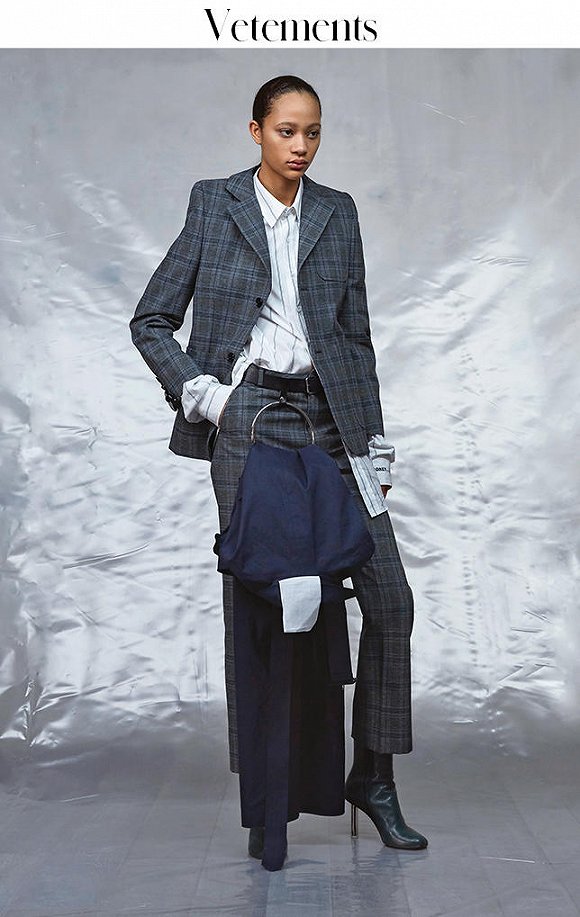
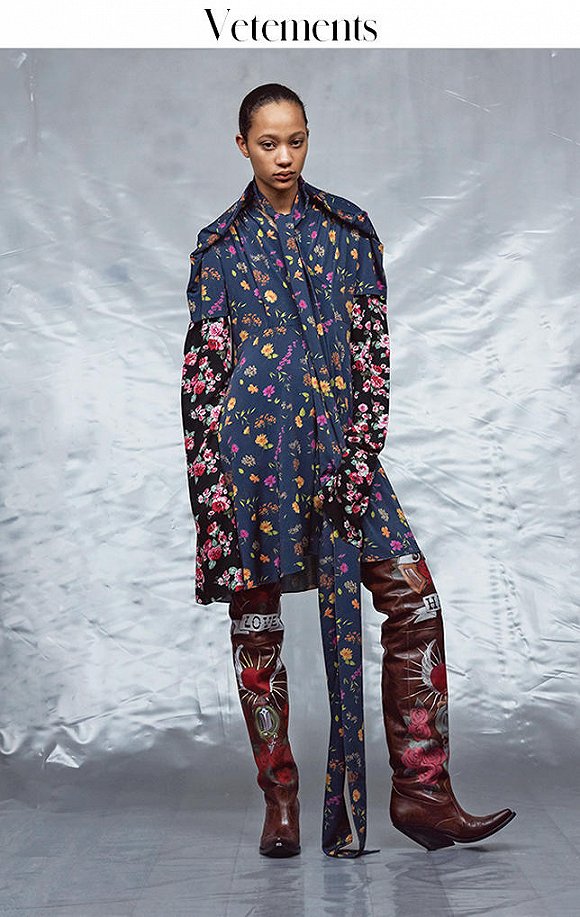
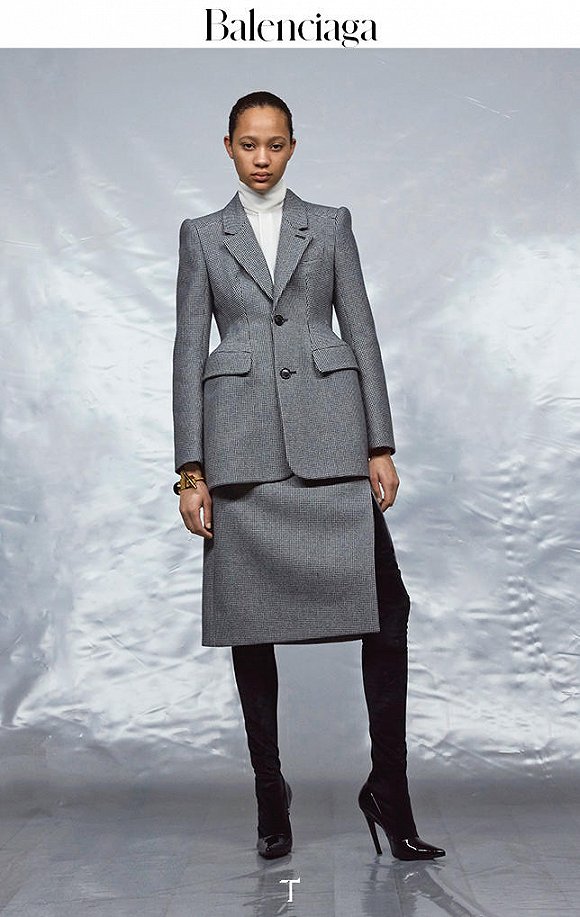
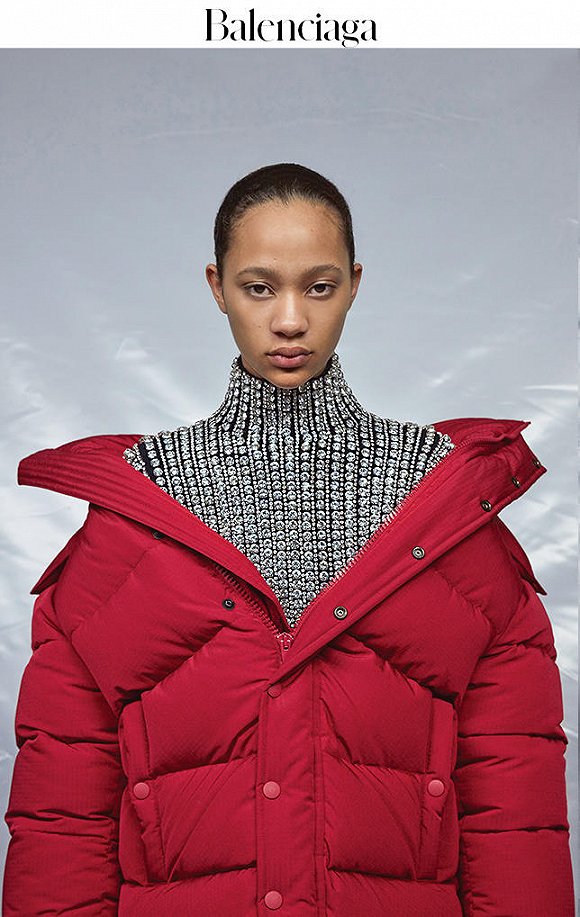
But their designs are completely different. Gvasalia and Michele have exactly opposite aesthetic concepts. Gucci clothing with luxurious decoration and embroidery is like a treasure inherited from the family; Vetements looks like it has just been taken out of a garbage bag, messy and wrinkled, with a deliberately grotesque feel. Gvasalia's Balenciaga adds a third element to the formula, committing to a "couture attitude" that focuses on how clothes are worn and their relationship to the body. These included embroidered evening dresses, severe tweed suits with exaggerated corsets, and curvaceous parkas and Perfecto-style jackets based on grand opera coats. The clothes at Balenciaga and Vetements both had new, exciting structures.
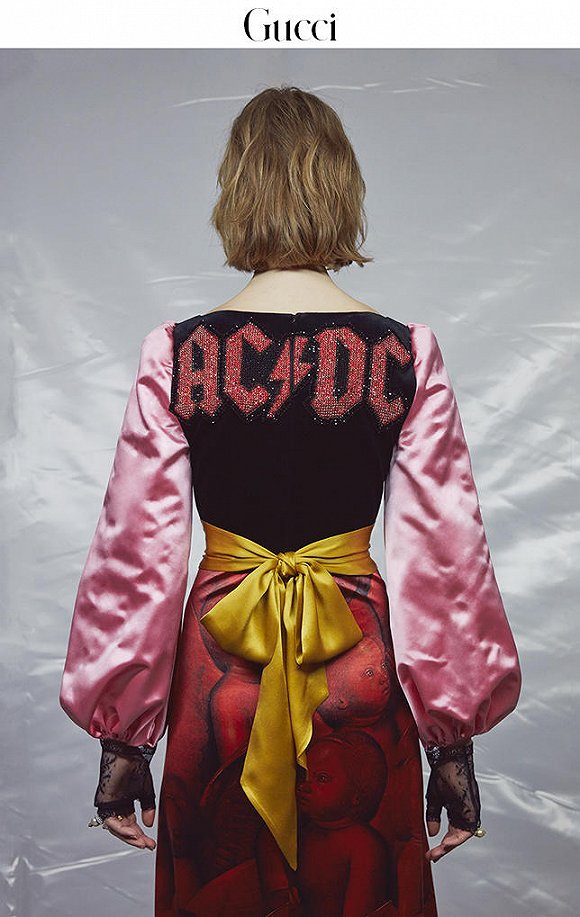
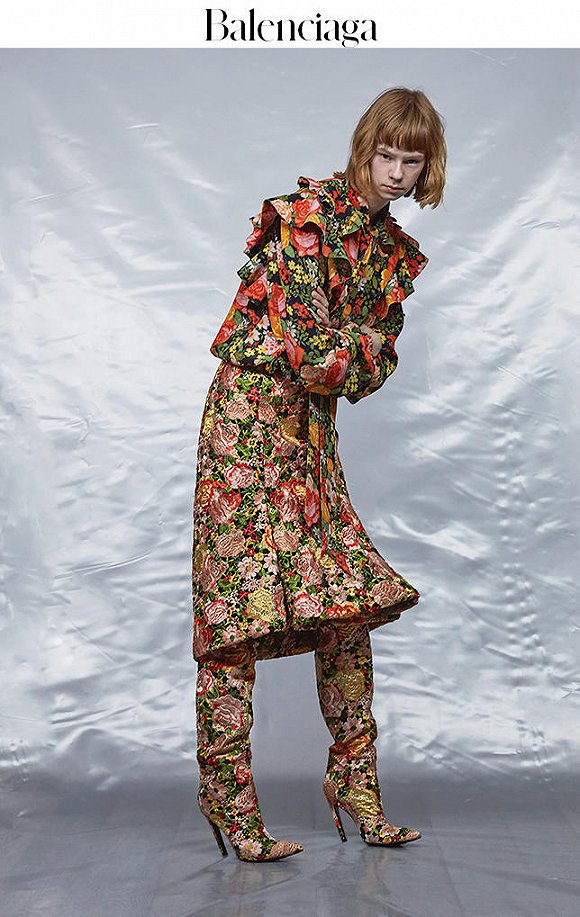
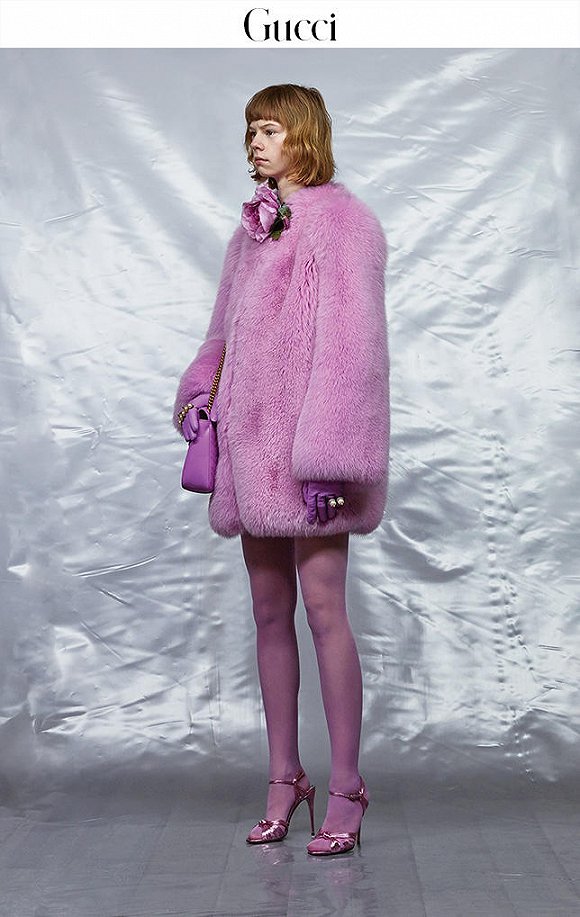
Even standard T-shirts, in the Vetements treatment, are cut very long, with stiff sleeves or high necklines, as if they were worn inside out. There are also some clothes that are either too small or too big, which look weird on the body. They are generally made from synthetic fabrics such as velvet or nylon. In stark contrast, Gucci's clothes were often simple in silhouette (track tops, single-breasted blazers, pussy-bow shirts, a nod to the 1970s), complicated by their shiny surfaces and intricate details: sequins, custom jacquards, sumptuous buttons shaped like lion heads or candy-coloured pearls, wrapped around mink sleeves.
Yet, despite their vastly different creations, Gvasalia and Michele's fashion philosophies are intertwined. The connection lies in the present moment, in the cultural awareness the two share. People can recognize the aesthetics proposed by the two designers and the "universe" their clothes present, and they can use them as a sign of belonging. At the launch of Vetements’ fall/winter collection, a group of high school-age fashion enthusiasts gathered in a church in Paris’s 8th arrondissement, wearing a mix of Vetements and vintage clothing, imitating the looks of models their own age who found them on the street. The boundary between the runway and reality is hard to find for a while. In Milan, there were more people wearing Michele's fur-trimmed slides, chinoiserie coats and floral accessories than there were Gucci models. The newly renovated Gucci store on Montenapoleone Street has been crowded every day for a week, and not just with fashionistas. Michele is courting consumers who once turned their noses up at Gucci's dandy style, who now crave these beautifully crafted jackets, heavily embroidered dresses, and handbags embroidered with flowers or bees. “Take it,” Michele told me backstage at a recent Gucci menswear show, pointing to the rows of Gucci clothes that were about to be displayed. “Take it like it’s yours.”
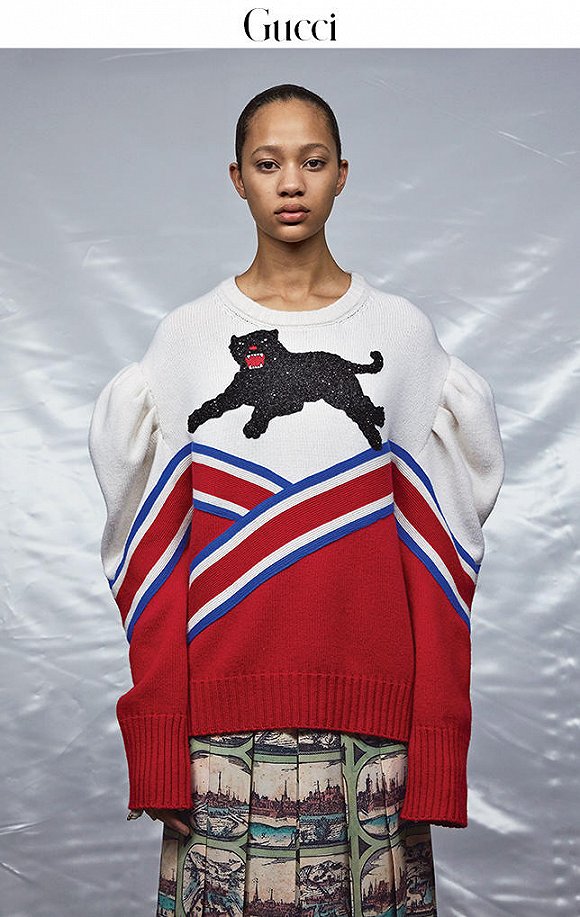
That's the beauty of these clothes: Gvasalia and Michele's designs aren't about forcing a silhouette on you, they're proposing independent, personal choices. They are dressing people, not giving them "fashion." The collections themselves include countless styles that can be worn in a variety of ways. There are no trends, no established silhouettes, and no clear single proposition. Their work overturns the previously dominant concept of the "total look", in which designers come up with a complete outfit from head to toe (incidentally, as the mainstream of fashion in the past decade or so, these "looks" are often shot strictly according to the corresponding specifications and placed in magazines, thus ensuring a singleretail and marketing image). Both Gvasalia and Michele think about clothing as an individual: a great jacket, a great skirt, a nice dress, a great pair of shoes. They mixed it all together on the runway, but the idea behind it was that they could be separated into separate parts. Gvasalia even used the brand name Vetements (which means “clothes” in French) for this reason. "That's it really... it's all about the clothes," he once told me.
Their clothing does not change much each season, which breaks another rule: never-ending change, fashion purely pretends to be new by making itself different from the previous one. Gvasalia and Michele's clothes may not be specifically designed to mix up the seasons, but that's not impossible. Their biggest challenge to authoritative forces is that they abandon the elimination mechanism that is deeply rooted in the industry and challenge the very structure of time.
What the two men put forward at the ideological level is influencing other designers and their designs, which in turn also affects our concept of dressing. Gvasalia and Michele's work is first of all exciting because it attempts to break out of the narrow bubble of fashion. There's a pragmatism behind the duo's output. They often talk about "wardrobe," about "reality," something real and believable, not some fashion construct. At the autumn and winter conferences, many designers seemed to want to reflect what people wear in real life, rather than cold, carefully calculated "matchings." This is exactly the impact of Gvasalia and Michele.
This is a universal way of dressing, hoping to please everyone at all times. They’re about choice, about freedom—a word Michele uses often. In effect, they gave up the designer's original power over the customer, that is, the designer's unique vision and taste determine what clothing is acceptable, even cool. What Gvasalia and Michele destroyed was the perception of fashion as a rule-maker.
Fashion has reached a stage where breaking the rules means focusing on the clothes themselves, rather than the little things that surround them. The individual - the individual customer, the individual garment, an outfit that is personal and not dictated by a fashion designer or a fashion magazine - is about to achieve great success. This is what the fashion industry has been missing for a long time. The Vetements collection is only in its fifth season, but Gvasalia already has more than 100 retail locations around the world, where clothes are often sold out. Gucci's sales have exceeded analyst expectations during Michele's tenure, rising 13.4% to $1.2 billion in the final quarter of 2015.
John Fairchild, the legendary publisher of Women’s Wear Daily, hypothesized in 1989 that fashion was suspended from six designers by a golden thread. “All eyes were on these six people.” Fairchild proposed in his book “Chic Savages”. “They were the ones who told the entire industry how to take the next step.” Now there are fewer than six people who have influenced the industry. We bring the two together three hours after Gvasalia's Balenciaga debut and two hours before Michele heads back to Rome to start designing Gucci's next collection. This is their first encounter.
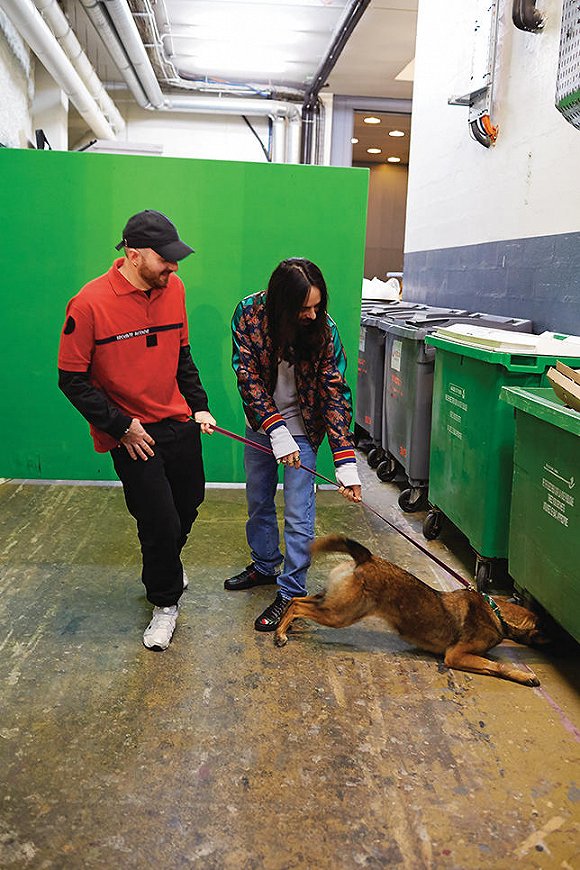
Alexander Fury: It was interesting to have your first conversation because there was such a direct, huge difference in what you were doing. What is your aesthetic?Completely opposite, but there are many hidden similarities between you. Alessandro, you talked to me about strange ideas about beauty; Demna, you once said of Vetements: "It's ugly, and that's why we like it."
(Gvasalia smiled)
Alessandro Michele: But ugliness is beauty. Isn't it?
Demna Gvasalia:I think beauty is in everything, if you find it. I mean, it's easy to say something has classical beauty. Everyone knows it. You don't need to think.
Michele: A hidden beauty. When I was talking to Miuccia (Prada) in Milan, she told me something very funny but very true. She told me: "When I first entered the fashion industry, everything had to be ultra-beautiful, aggressive, and carefully crafted. Then I came, with these ugly girls. For many years, they criticized me."
Gvasalia: Until they start to understand.
Michele: Yes, until they figure it out. "It won't be that hard for you," she told me. Because things are different now. But I think it's always difficult because when you want to change the language, they take time...
Gvasalia: To digest it.
Fury: I guess the same thing happened with Gvasalia coming to Balenciaga. Your work at Balenciaga and Gucci focused on the unexpected side of the brand. They've always been there, but they're not that well known.
Gvasalia: I think it’s because it’s a new story. That's why it's uplifting. You have a foundation, which is a wonderful platform, but then you need to make something new that can coexist with what's already there.
Michele: I think another reason is that every designer will have a different view of the same brand. I think creative work is about seeing through your own eyes. It's like... when I think about Gucci, I look for the craziest stuff the company has ever done. Because for many years, to me, Gucci is flat and soulless in a sense. But in the archives, you can find a lot of weird souls. They created many strange works. I think my job can be very simple, because there are no stories about ready-to-wear in our history, so I can invent and create as much as I want. I just have to focus on travel, handbags and leather goods. I used to be obsessed with the concept of a "jet set" and to be honest, I thought it didn't exist anymore. I don't want to talk about something that's completely dead. But now, I am obsessed with the streets, just like you, obsessed with this.
Gvasalia: Because this is what you see toothing.
Michele: Yes.
Gvasalia: Everything you see has been filtered by your personal preferences. I think there's a lot that's inspiring about ordinary things in a sense. You can actually do a lot of writing on this. Use what you see.
Fury: But it's also very challenging. How can you make something mundane interesting?
Gvasalia: And then there's clothes that are stimulating and easy to wear, that make them say, "I need that." I think the other thing is, somehow... you do a show and then you go to the store and half the clothes aren't there, which makes no sense. We need a confession.
Fury: Traditionally, very little of what a designer makes for a runway show is sold in stores. They exist to be photographed. Is it also a key point in your creative process for you to ensure that the pieces on the runway are eventually mass-produced and sold?
Michele: Yes. Reality is important to our work. I think fashion has been imprisoned for a long time, without freedom. I think it's impossible to create a new story without freedom, only rules. I mean, I've been in the fashion industry for years - but I came to this realization through years and years of designing product, product, product. These rules ruin everything. There is also a market, a product without concept, soul and attitude. If you can't give people an idea and make them feel like they belong to a community...
Gvasalia: They need this.
Michele: They need this.
Gvasalia: I think this is happening. After what you've done, I think that's happening. And it was in such a short period of time. It's quite amazing - on the one hand it's actually a virtue of our time, because everything is so fast. People need to belong. They need to identify themselves as, well, "I'm a part of this." That's basically the case for me at Vetements, but at Balenciaga it's still a challenge to build that perception. In a sense, this is a process of connecting the past and the future.
Michele: Your job is not just to decide the length of the skirt. Who cares? I feel like no one cares about this now. We've seen skirts in all lengths...I feel like you have to come up with something different. The most important thing now is to come up with a true fashion attitude. Because people want you to come up with an idea and prove that you can create a personal perspective. You have to belong to a brand that has a story, because obviously a brand needs an aesthetic. But we also have to bring up the idea of freedom, because when you take to the streets, people do whatever they want, there are no rules.
Gvasalia: They chooseThings to buy for yourself.
Fury: I think it's interesting that you both talked about attitude.
Gvasalia:I think this is a very critical point. When you see someone wearing Gucci – you know she’s a Gucci woman. Too conspicuous.
Fury: Another thought is that sometimes a wearer might - not have the right attitude.
Gvasalia: But it will give her something, it will give her something. I think that's what they want too, because they want that attitude, that look. That might even be something they don't have.
Fury: Demna, do you find it difficult to think in two different ways, to have the attitude of Vetements and the attitude of Balenciaga at the same time?
Gvasalia: This actually helps me. At first I thought, okay, I'm going to go crazy, like Jeykll and Hyde. I have to admit, those in-between moments – it’s like taking a cold and a hot shower. I would go back and forget about my day at Balenciaga, it would be refreshing. For me, this helps creatively.
Fury: What’s interesting is that in your creations, you both subvert the concept of trends. The trend has been dying from a long time ago, but the fashion industry has clung to it in order to classify its various collections. Does this concept of seasons still make sense?
Gvasalia: You mean in terms of temperature? (Laughs) It can be a little confusing! We launched puffer jackets in June - I don't know who would buy puffer jackets in June unless they were a fashion victim. I don't think this is possible. But seasoning—continuity, persistence—is important. Especially if you're rebuilding or redefining a brand's identity. At this time, I think it really needs to be polished vigorously. The method is slightly different, for example, it needs to be fresher, etc. But I think it’s necessary so that it doesn’t feel like a design exercise every 6 months. I think there were a lot of brands doing that in the 1990s. I know Margiela is like this, every six months there must be a new concept, otherwise it is not strong enough. The concept must be strong enough, it doesn't matter now.
Michele: That was another world, another era. Today’s world is completely different, and the customers are different. The same rule cannot be used repeatedly for a long time because eventually the market will stop. I think customers are now ready to let them decide how to mix and match, without talking about the total look. I don't think this is new anymore.
Gvasalia: Because people are looking for that individuality. They don't want to dress like they're in an advertising photo, they choose. In the end they may still [dress that way], but that's their choice, they decide how they want to stand out. We are now highly globalized and everything is at our fingertips. I think nowPeople have a desire to be different from others, which is why the issue of personalization becomes particularly important.
Fury: Your creative approach is also the same. You pay extra attention to individual pieces of clothing rather than the total look. To a large extent, it is just about making exquisite and precious clothes.
Michele: There is no such thing as old for me, and I don’t know why. If a dress is beautiful, it's very personal and I think it's timeless. I think we still have this idea that we have this beautiful thing that might just go in the trash the next season.
Gvasalia: This is scary.
Michele: Very scary.
Gvasalia: And it’s bullshit.
Michele: I don’t care what season it is. Sometimes I prefer the effect many seasons later.
Gvasalia: Usually if you maintain continuity between seasons, you don't have this problem. In this context, it still makes sense. It's like saying, "Oh, this is Prada from last summer." If you like it, you like it. You don’t care what season it is. For example, I would put the season on all the clothes in Vetements, and the people who sell them would initially say, “Oh, you can’t do that, no one wants to wear something from a year ago.” No, they will wear it. In fact I think it's even an added value. It's kind of a continuity thing and it's still pretty good.
Fury: This seems to be a concept that everyone can accept - the same way they accept your clothes. Do you realize that others are learning from the ideas you propose? Can you see fashion changing?
Michele: I think when you're working, you don't think about this kind of thing. But clearly something is happening now, I don't know what.
Gvasalia: I think we arrived at the right time. At the same time, the fashion industry recognized the need to rethink. Maybe that's why there's an impact, I don't know. I think really questioning these things and asking these questions will make the entire industry evolve. I actually think that's where the impact is. Questions about seasons, continuity, etc., I think this is where the impact comes from.
Fury: It is your work that challenges these ideas and has made people question it.
Gvasalia: For me, I never think about this when designing a collection.
Michele: Yes, yes.
Gvasalia: Because it’s more natural. This is what I think is the right way. This is exactly what non-conformity is about, and this is about getting things done. Because to me, these rules don't matter. I'm trying to invent other rules, ones that suit us. Maybe others want to appropriate them, but that doesn't always work. You can't always use the same pattern.
Michele: I think that's the best way: try to get a feeling that something is happening. I'm just talking about me because I'm new in this business. I'm enjoying myself - I don't think about it. But if I'd been in this business long enough, I think I'd have felt that something changing could be a good reason to express your perspective rather than plagiarize. For example, last season I saw that kind of weird decoration everywhere. But fashion isn’t about decoration (he touches the metallic embroidery on his Gucci jacket) and fashion isn’t about being the wrong size (pointing to Gvasalia’s oversized coat, who laughs). You have to find your own language. If you repeat something that is not you, it is not your language, it will be useless.
Gvasalia: That’s true. They saw that it was good for Gucci to do this, so we should do it too.
Michele: There are birds and flowers everywhere! I didn't intend to put birds or that kind of nature, it's purely me, my culture. I think more of that is to come.
Gvasalia: And know this. I think for quite some time, everyone knew, especially the media. But suddenly, out of nowhere, something happened. This got some people talking and then exploded further.
Fury: You both talked about starting with physical clothes. This is a bit different from how people usually imagine designers working and sketching.
Gvasalia: I can’t even remember how long it’s been since I drew.
Michele:Me too.
Gvasalia: I write my thoughts down on my iPhone now. Because I don’t carry a sketchbook. Just take notes and remind things. Case in point: a collar like this at Balenciaga on Monday.
Michele: That’s right.
Gvasalia: I was thinking of clothes, which are very three-dimensional and cannot be drawn. For me, I'm always talking about sculpture - but it should be like sculpting. Also, you need to see what it looks like in motion, I hate using fake models when I'm working. I like to use real people and make her move. Can she move in this outfit? Can I drive? these practical questions. But how does it behave when moving? And so on. I always start with a piece of clothing and then cut it. I ruined so many clothes. To make more clothes.
Fury: Why don't you work with a stylist, I guess that's an interesting question too, because that's another thing that sets you apart. Do you never use them, Alessandro?
Michele: I don’t know. It's like asking, "Why don't you drink?" Because I don't need to. Because this is a process. I don’t have anyone so close to me that I can share so much with. It’s not that I don’t want it, or that I’m against the profession of stylist. This is my story,I don’t use a (stylist) because I like to do runway looks. A show for me is about styling the entire collection. It’s about the idea – what I want to use to express my idea. So it's impossible to translate to another person. If I need a color, I need to put something on you in a different way. It was in my head, an idea. Who can have the same idea as me? I would be happy if I could find someone to share this with. Because sharing is a beautiful thing. I love sharing, but I think I'm obsessed with styling. I will start two lines at the same time - clothing and styling. I don’t say that I dress first and then style. I considered both together.
Gvasalia:I feel like that look - where the stylist comes in and says, "Okay, here's the girl!" - doesn't apply now, it's not like that anymore.
Michele: And this is your job! In a sense! This is totally my idea.
Gvasalia:When I work with Lotta (Volkova, stylist at Vetements and Balenciaga) - she knows what I know and what I want, and it becomes a kind of communication again. We have a close relationship, we know each other very well, we are friends, it’s not like I hired her to have a relationship.
Michele: This is not a stylist - she is your friend.
Gvasalia: And I like the way she wears certain things. It was kind of projected on me, because I actually wanted to come here with my boots on!
Michele: This is a completely different thing, this is your life, this is not a stylist. This is what I said before, the idea of sharing what belongs to us. If a friend inspired me - yes, it's possible. That's what's different. It's not about styling, it's about creating something new, with an energy.
Gvasalia:For me, it’s more about sharing – I actually get inspired by watching it. Not just Lotta, but other women around me... I'm not inspired by them, but I love the way they look with their skirts pulled up. I don't do these parts because I'm a man, but it gives me an idea.
Fury: And then you also touched on this - the idea of gender ambiguity, which has a lot to do with both of your works.
Gvasalia: Gender fluidity.
Fury: I hate that word!
Gvasalia: The worst word ever, it sounds vulgar.
Michele:But thisYes - I've always said I didn't invent anything. These are all things that exist in my life. What can I say? It’s just this world, it’s just what’s already there, and I can’t ignore it. I know that for a long time, fashion wanted to stay in its own world, like another world. The fashion was in front of a window in... I don't know where it was - Avenue Faubourg in Paris? I have no idea. Where is the "fashion"? Fashion is the way you wear clothes, the way you are you. Say the word again, attitude. So this term, gender fluidity, is kind of an invention. Because this is our life, all of us. If we want to talk about how we look, fashion is all about the different meanings within you.
Gvasalia: But it's there, just normal. The last two looks of Thursday's (Vetements) show were identical: one for men, one for women. The idea is not to say - oh, let's show that this clothing can be worn by both men and women. We just tried it with two people and it worked great.
Michele: This is not a trick.
Gvasalia: Absolutely not. And that boy liked that outfit very much, and so did she. What I want to say is that today’s (Balenciaga) show was more difficult! These are all...normal now. None of this would have happened 10, 15 years ago. It would be a statement, a conscious statement, to put a dress on a man. Today is such a society. You want to wear a skirt?
Michele: We are really in a playground - everything is unpredictable. This is truly alive. You think about people. Then think about what is happening outside. I mean, I'm not making a pair of shoes just for those media articles, ever. I'll think about a man in a nightclub, on the street, or a friend of mine, and it's a very pragmatic view of fashion. The word "fashion" is very...
Gvasalia: It’s very difficult to grasp and needs to change!
Michele: Because fashion is clothes. Sometimes people talk about me in the context of fashion, and I feel like - I don't want to say "uncomfortable," but I still can't believe I'm in "fashion."
Gvasalia: To some people who are not in the fashion industry, if I say that I am in this industry, I will feel... (He shrugged, and it was obvious that he found this word awkward and frowned) Do I have to say it?
Fury: There are too many things packed into this word. It incorporates too many existing opinions from outside, which is a bit elitist.
Gvasalia: Not necessarily right.
Fury: But like you said, Alessandro—fashion is kind of a showcase thing. You don’t wear fashion, you wear clothes.
Michele: I also seduce myself. I seduce myself because in a way I feel bored.
Fury: For fashion?
Michele: I can say that I am completely tired of being a person in the fashion industry. I wish I could seduce myself. Because I know very well that I need to be seduced. A lot of what I'm doing is because I feel like a customer. I don’t feel like I’m anyone special, I’m wearing what I make, I’m doing what I love. This is about us, not me.