Now that almost everyone has a mobile phone, most public phone booths have become the most redundant presence on the streets. But for London, a city with its landmark phone booths, even though the phone booths are no longer of much use from a functional point of view, considering the cultural value, they still have significance. You must know that the red phone booths in London are popular spots for tourists to take photos, and the derivative products launched around this design can also bring huge economic returns to the city.
So how to improve the functionality of phone booths in today's era?
Lovefone, a mobile phone repair service provider in London, has come up with a transformation method that keeps pace with the times: transforming phone booths into "the smallest mobile phone repair shop in the world." The first phone box repair shop opened last week on London's Greenwich High Road.

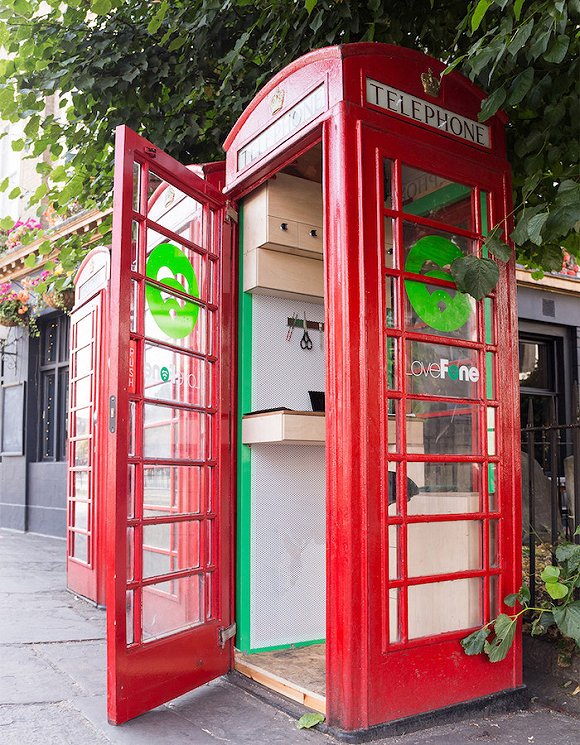
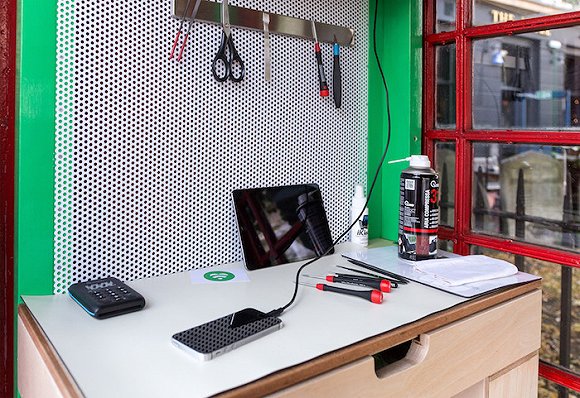
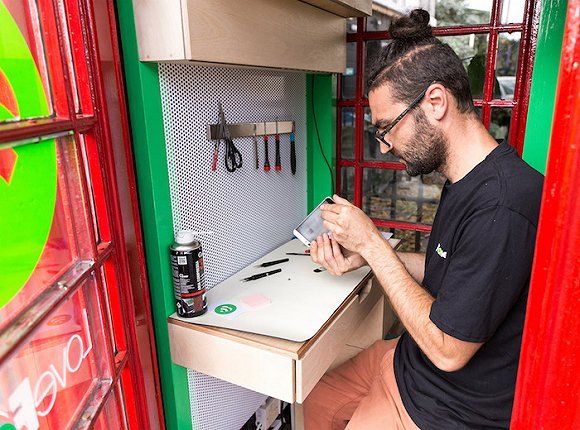
In order to maintain the original appearance as much as possible, the repair shop is a small workshop that can only accommodate one repair service person. All the tools and storage cabinets are placed in one wall, so that the transparent glass on the other three walls can still be retained, making it easier for passers-by to notice the existence of the repair shop.
In fact, although the red phone booth is a historical heritage and has rich cultural value, in order to make it play a greater role, many organizations and institutions in London will rent and sell the right to modify and use the phone booth at low prices. For example, Lovefone leased the rights from a company called Red Kiosk Company. This company specializes in renting phone booths to small businesses. For another example, telecom operator BT has a plan called Adopt a Kiosk Scheme, which allows everyone to buy the right to modify a phone booth for 1 pound.
Thanks to the efforts of these organizations, the red phone box has indeed taken on a new lease of life. In addition to being transformed into mobile phone repair shops, these phone booths have also been transformed into sandwich shops, micro libraries, galleries, etc.
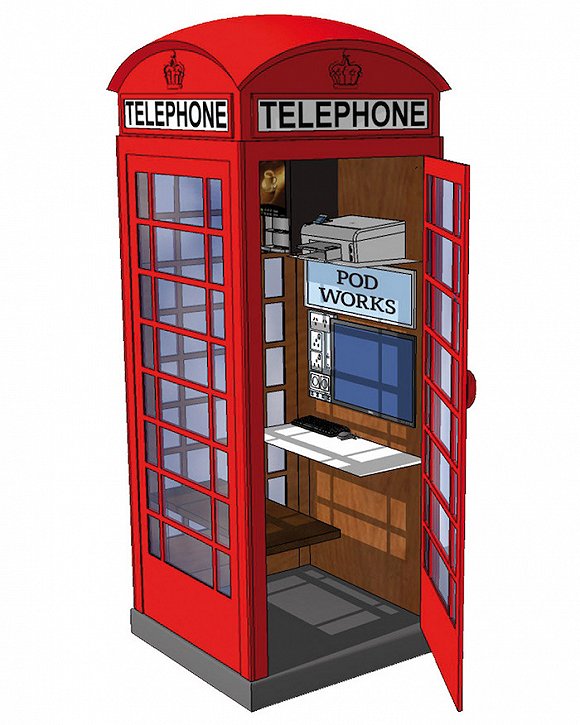
In the past two months, some designers proposed to transform the phone booth into a temporary office space. In addition to computers, the space also has printers and a series of office tools. Just as phone booths were designed when people needed instant communication, the current need for timely office work also makes the existence of temporary office spaces quite necessary.
Currently, according to public information, there are more than 2,000 red telephone booths in London. There are the original version K2 designed by designer Gilbert Scott in the 1920s, and the improved version K3 that briefly existed for a period of time. The most common one is the K6 version that was launched in 1939. This version is also included in the London Design Museum's permanent collection.