Adrian Joffe is very sensitive about his weight: "I gained 10 pounds in the past five years, but it took me 6 months to lose them. It is not easy to stay in shape at my age." Indeed, he was born in 1953 and has now entered his sixties - although in appearance, Adrian Joffe looks much younger than his actual age.
As for how to keep in shape, Adrian Joffe's methods are very traditional. He practices boxing and walks as much as possible. This is also a way for him to adjust his mental state. However, as COMME des GARÇONS (hereinafter referred to as CDG) and boutique buyer store Dover Street It is not easy for the president of Market (hereinafter referred to as DSM) to get such an opportunity: "I work very hard, but sometimes I am too busy to exercise. As time goes by, my mood becomes very bad and I start to curse people in the company."
Judging from his Instagram, Adrian Joffe's recent schedule has been very intensive, from Paris, London, New York to Seoul, and now he has arrived in Beijing with the launch of CDG perfume in China. He has been accepting a series of media interviews non-stop, followed by store tours and business inspections. In addition, he also pays great attention to his diet: "Yes, I diet, but I don't eat food. I eat whatever I want, but only in small amounts." About Adrian Joffe's appetite was described in detail in the article "Lunch with FT: Adrian Joffe" written by the famous fashion critic Vanessa Friedman for the Financial Times in 2014: Adrian Joffe ordered a main course of three mini ravioli. When he saw Vanessa When Friedman's salmon platter was served, he joked: "Look, your appetizer is bigger than my main course."
In addition to preventing psychological problems from the physical level, Adrian Joffe also tries to obtain spiritual peace through Zen Buddhism and meditation: "I can't say that I am a devout Buddhist, but I agree with its philosophy, such as cause and effect." When he was young, he studied at the School of Oriental and African Studies, University of London, majoring in Eastern and Tibetan culture. But unfortunately, before the studies were over, the college decided to stop teaching since he was the only student.
Adrian Joffe then came to Tokyo and began to help his sister Rose Joffe's knitwear company handle brand licensing matters. In 1987, he met the already famous Rei Kawakubo and later became the brand's commercial director. In 1993, he was promoted to president. At the same time, Adrian Joffe and Rei Kawakubo officially married in 1992, but they have always maintained a long-distance marriage: he is in Paris, she is in Tokyo. Different from other couples in the fashion industry, they rarely make public appearances together, do not eat with celebrities, and are not even keen on collecting art: "Appreciating or liking art is notIt represents possession. If we want to see an art exhibition, there are art galleries outside."
In most articles describing Adrian Joffe, he is always described as the business mastermind of CDG and DSM, the man behind Rei Kawakubo - under his leadership, the brand has created a series of commercial creative masterpieces. But is Adrian Joffe just a businessman? Or is it just a husband who acts as a translator and spokesperson for his wife who is not good at words and rarely gives interviews? But I’m afraid no one will regard him as a pure businessman. Just as Pharrell Williams, who once launched the “Girl” perfume together with CDG, said: “Money cannot produce good ideas, but good ideas can produce money.” Adrian Joffe and Rei Kawakubo may be the incarnations of each other in the world, and they are inseparable from each other.
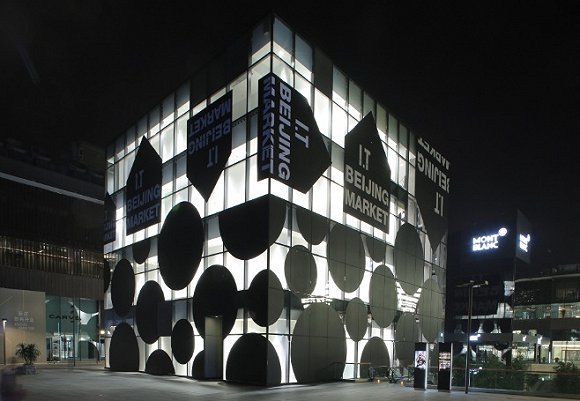
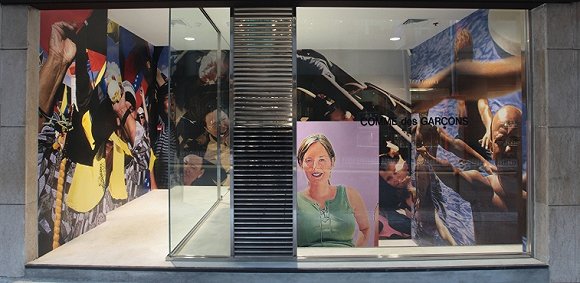
Interface News: Dover Street Market in New York, London and Tokyo are all operated independently, but when it entered China in 2010, why did it choose to cooperate with I.T and change its name to I.T Beijing Market?
Adrian Joffe: In 1982, COMME des GARÇONS began to cooperate with Joyce Boutique in Hong Kong. Joyce Ma (the founder of Joyce Boutique) was the first person in China to buy our products. Our cooperative relationship has lasted for many years, but she has never wanted to open an independent CDG store with us. Later, I.T contacted us and said that they also opened a boutique and they loved CDG, but I always rejected them because our cooperation with Joyce was exclusive. But Shen Jiawei of I.T insisted on coming to us every season, and I insisted on saying no to him. As a result, this grind lasted for six or seven years, and I began to pity them - this was a joke, I was attracted by himThey were impressed by their persistence and their willingness to cooperate in opening a CDG store, which led to the store on On Lan Street in Hong Kong (opened in March 2007, CDG’s fourth store in the world), which later moved to Ice House Street in Central. A few years later, I and I.T said that I wanted to open Dover Street Market in mainland China. They said that we should open it in Shanghai. All brands will go to Shanghai first. I said no, we want to open it in Beijing. As a result, I convinced them and they found a suitable place (Taikoo Li North District, Sanlitun, Beijing).
However, in mainland China, it would be difficult to open Dover Street Market directly, especially for those who are not familiar with us, which may cause some cognitive problems, so we thought it would be much better to convert the name to I.T Beijing Market. At the same time, we insisted on creative control and designed the entire store, and I.T also respected our principles. In addition, they also have first-class human resources and service levels. The store's situation was difficult in the first two years, but it has improved a lot now.
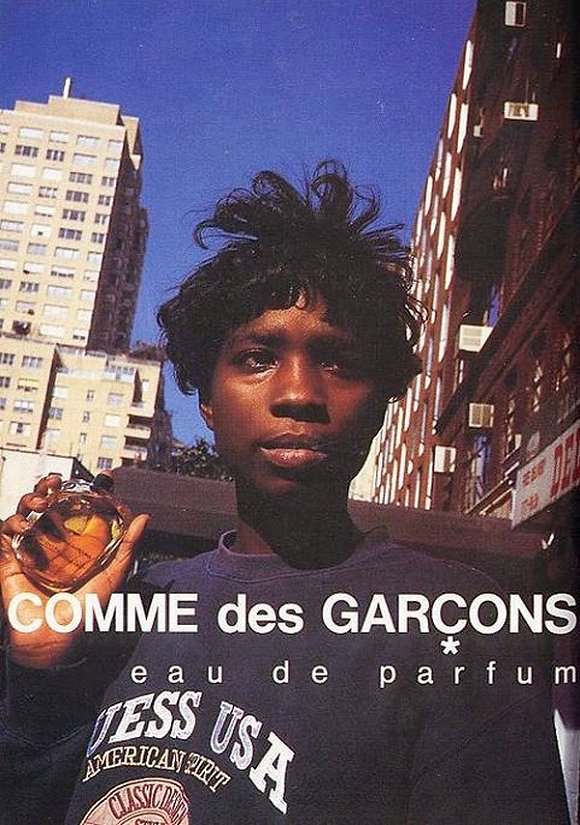
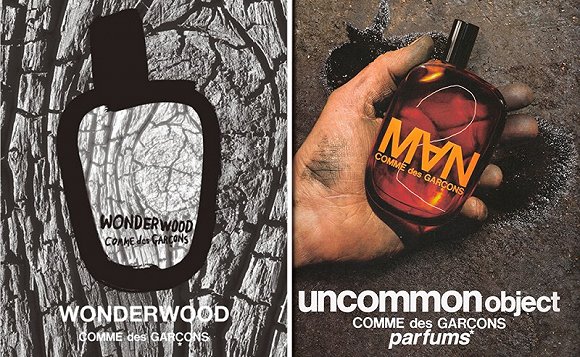
Interface News: COMME des GARÇONSIn addition to fashion series, the most talked about are perfume products, which have dozens of branches and cooperation series. However, I heard that Ms. Kawakubo actually hated the idea of designer brands launching perfume series with the same name at the beginning. How did you convince her at the time?
Adrian Joffe: It's very simple. I told her that you don't need to know about perfume, and you don't need to know about the top and middle notes. Most Japanese people don't understand this - you can leave this part of the problem to me, and you can just design the perfume bottles and packaging boxes, and you don't have to refer to the traditional perfume appearance design. You can design what you want without mercy and freedom. She agreed, but only emphasized to me that she didn’t want the perfume to smell ordinary, she wanted something different, so I started working on the fragrance in Paris and she was responsible for the packaging design. The reason for launching perfume is because I want people to understand that COMME des GARÇONS is not only fashion, but also has many ways to express herself.
Interface News: You started out in brand licensing matters. You licensed the COMME des GARÇONS perfume to PUIG, a Spanish fashion, perfume production and channel distributor. At the same time, CDG also retained the design, production and sales rights of the perfume. How did you envision such a cooperative relationship (Partial License, that is, "partial authorization") at that time?
Adrian Joffe: They came to me and said that they really liked the perfume of COMME des GARÇONS. They thought it was very creative and wanted to get the brand authorization. I was very hesitant at first. On the one hand, you know that this kind of authorization does help to sell products on a large scale, but it also means that we lose control and may even cause the death of the brand image. But on the other hand, I am indeed interested in their huge sales channels, so I proposed a cooperation method. I will give the trademark rights of COMME des GARÇONS Parfum to PUIG, and we will make a product line called COMME des GARÇONS Parfum Parfum ourselves. We will continue to adhere to the previous "anti-perfume" strategy - you use your channels, and I will sell my creativity, complementing each other without interfering with each other.
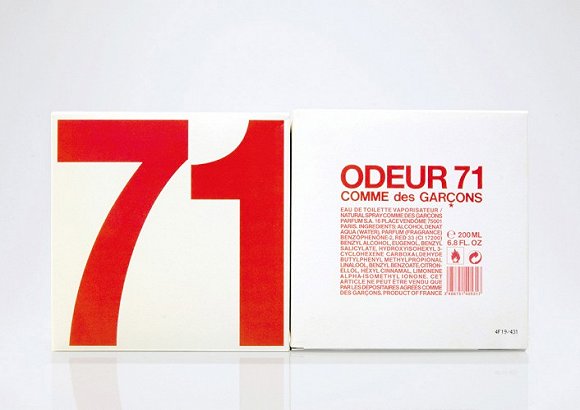
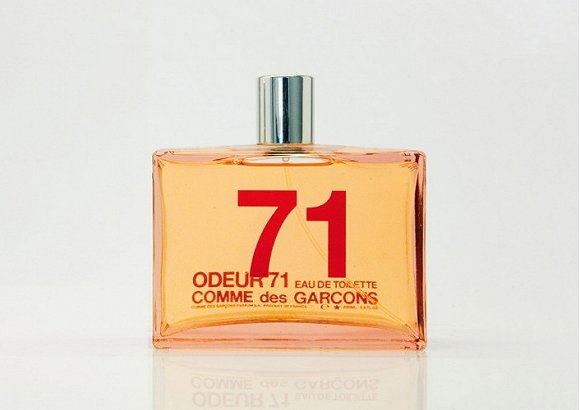
Interface News: In addition to the perfume packaging designed by Ms. Kawakubo herself, she also hired graphic designers or teams like Marc Atlan and Petronio Associates to design perfume packaging! ?
Adrian Joffe: I remember almost 20 years ago, Marc Atlan helped us design the outer packaging of one or two perfume products; Petronio Associates was responsible for the "71" one. But Rei Kawakubo designs the vast majority.
Interface News: ComparisonRegarding other brands, whether it is due to company size or strategic plans, CDG and DSM have always maintained relatively cautious market actions (so far their Japanese companies and international branches are still private companies). You yourself also hope that the brand will maintain a "Poor Luxury" status. So what do you think of other brands' intensive store openings in mainland China in the past few years? Now as sales slow down, some stores have announced closures.
Adrian Joffe: Indeed, we do not have high advertising costs, and we do not want to induce consumers to buy our products through large-scale publicity. We hope that customers can make their own choices; we have no shareholders, and we cannot achieve the 10% or 20% annual profit growth rate of those large groups. But I don’t think this is a good thing. Their insatiable desires in the past are causing them to suffer the consequences - I guess many people will not agree with me. These companies may think it doesn’t matter. They open dozens of companies today and close a dozen tomorrow. They are completely different from us. COMME des GARÇONS chooses a more organic approach and does not set up any five-year development plan. We don’t even have a plan within five months.
Jie News: Don’t you even make such a short-term development plan?
Adrian Joffe: Maybe sometimes we will go quarterly, or at most we will think about expectations one year from now. We make strategic plans, but we don’t do market research, and I believe IT doesn’t do either. Things in the fashion industry change so fast that it’s hard to predict, but some companies always ignore this, causing them to go from bad to worse. But it doesn’t matter, it has nothing to do with us - do you think opening stores on a large scale and then closing them now will have a negative impact on the entire industry system? At least it may have some impact on employment in China!
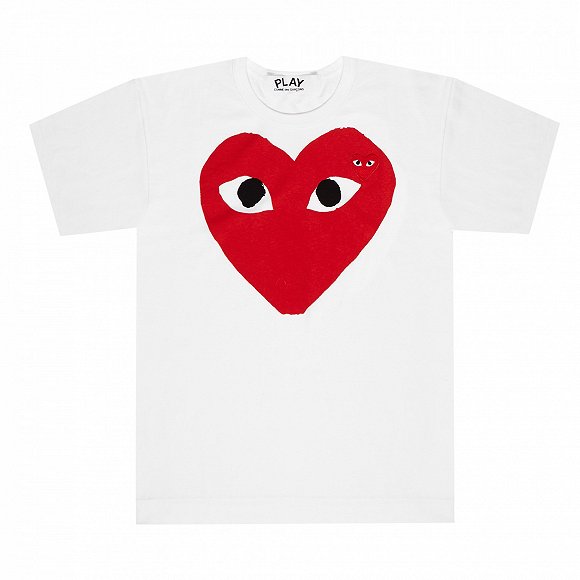
Interface News: I think a large number of commercial pieces will have more adverse effects on the brand. In some periods, they will bring huge profits, but at the same time, these products will cause a certain degree of damage to the hard-forged brand image. But having said that, the COMME des GARÇONS Play series launched with the concept of "non-fashion" sells very well in China and is regarded as one of the key product lines for brand profitability. However, many consumers regard thoseT-shirts with the word "Play" and heart patterns printed on them are confused with the main line series, and it is even mistakenly believed that the Play series represents all of CDG. As the person in charge of conceiving and launching this series, what are your thoughts on this?
Adrian Joffe: Yes, we have some concerns about this. COMME des GARÇONS is a brand that emphasizes change. Our designs are completely different every season, but at the same time we want to try to make a certain series remain unchanged, which is an approach of "design without design". This is where Play was born. Play is so popular now, and many people learned about COMME des GARÇONS through it. We are a little worried about whether these customers will have a better understanding of the brand's core values.
In fact, this problem is not only in China, but also in South Korea, where the Play series is extremely popular. Our partners there hope to open as many Play stores as possible, and they are growing at a rate of one store every three months. Now there are 12 Play stores in South Korea - this is a bit crazy, and may give people the wrong impression that "Play equals all of COMME des GARÇONS", so we decided that if the other party wants to continue to open a Play store, they must also sell other product lines of the brand, such as Play with COMME des GARÇONS. GARÇONS COMME des GARÇONS (women's clothing line), or COMME des GARÇONS Shirts (a branch focusing on shirts)/Girls (focusing on young female customers). Now we have three such stores in South Korea, and there is also one in Causeway Bay in Hong Kong that also sells COMME des GARÇONS COMME des GARÇONS's Pocket store (a store that sells "pocket-sized" items such as Play, Wallet, perfume, etc., and also has specialized series). By the way, the Play series is also super popular in Bangkok. We recently opened a COMME des GARÇONS COMME des GARÇONS plus Play series store in Siam Discovery Shopping Center. At first, we were worried that the Play series would account for more than 80% of sales. However, the data from these stores in Seoul and Bangkok showed that an average of 65% of sales came from the fashion series and 35% from the Play series. I don’t know about the store in Hong Kong.
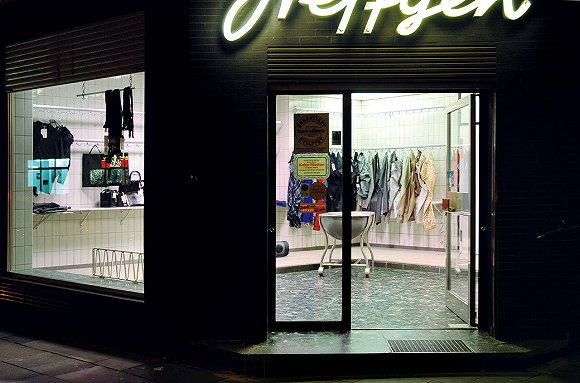
Interface News: From COMME des GARÇONS's series of Guerrilla pop-up stores (known for limiting customers' daily consumption, choosing unconventional locations, and only opening for one year), partial distribution rights for perfume series, to Dover Street Market, you can attribute this to the concept of "Creative Business Idea".
Adrian Joffe: In 2004, CDG's first Guerrilla (guerrilla store) opened in Berlin, Germany. At that time, the fashion industry was also facing a trough. Brands such as Gap and UNIQLO began to become popular on a large scale. People thought that the end of the fashion industry was coming, so I thought that people who were not in the fashion industry could participate in the guerrilla store, because different perspectives can bring different reactions. We put the products in the shops of illustrators and architects to see what effect we can get. In the past seven or eight years, we have opened about 37 pop-up shops, some of which have been very well received, and some of which have not been so good. When we opened the pop-up shop in Iceland, we worked with four artists, but no one took any notice of them. In the end, when they returned the unsold goods to us, they basically returned the same quantity as we sent them. But the store is very beautiful, and it is a good image promotion. What’s interesting is that when we decided to open Dover Street Market, some people thought it was a pop-up store, and they even came to me and asked me why you haven’t closed this store after one year! I spent years telling them that this was not a pop-up store and that it cost too much to close in one year.
Interface News: As far as I know, Ms. Kawakubo has certain control over the company's strategy. For example, she will designate the brands for online sales at Dover Street Market (although it is under the same website structure, online stores in different regions sell different brands, and China has not yet opened online sales services). So what will you do when there are differences of opinion?
Adrian Joffe: We argue every day, but she has almost given up arguing with me now because she can't compete with me. Regarding COMME des GARÇONS, she has the absolute say, but as for other brands, she will leave it to me to make decisions. She is very busy and cannot take care of everything. If she encounters something she doesn’t like, such as which brand I choose to cooperate with, what I want to put on the Internet, etc., she may not say anything publicly, but will accuse me, and I choose to ignore her - this is the only way to balance our relationship, haha. But all joking aside, once it comes to issues such as vision, I will definitely seek her opinion.
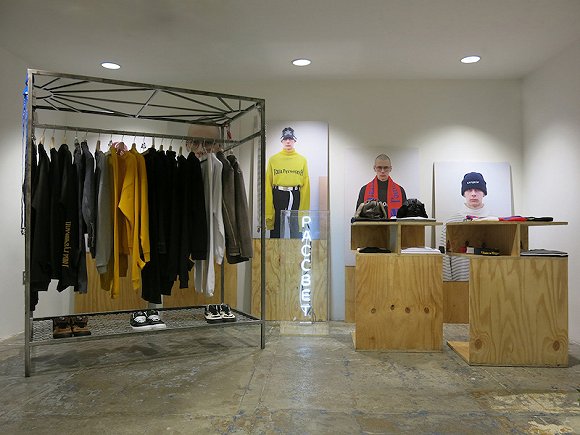
Interface News: Is it your suggestion to support young designers like Gosha Rubchinskiy?
Adrian Joffe: Yes. She didn’t understand at first why I wanted to cooperate with Gosha and why I wanted to help him make ready-made clothes in Russia. She didn’t think Gosha’s work was very creative. After all, we have different perspectives, so I had to convince her that supporting such a designer brand would be beneficial to Dover Street Market and that we should start from the overall pattern of the fashion industry. I also went to Moscow to meet Gosha and understand his background and so on. Rei is not a patient person. If you cannot make her understand what you are saying within five minutes, she will not listen. Working with Gosha, it took her three years to realize that I made the right decision. But there are some things she hasn’t allowed me to do yet. For example, I really want to sell Play on Japanese websites, sell Black series online, etc. - but in terms of content and e-commerce, she is my absolute leader.
Interface News: What impressed you about Gosha Rubchinskiy?
Adrian Joffe: I first noticed his photography because I am very interested in the history of the post-Soviet period. I met him at a party in Moscow. He was hanging out with a group of young skateboarders. I asked him what he did for a living. He said he made skateboards and also made some T-shirts. I said we have a store in London and maybe we can sell your T-shirts in the future. We had a great chat that time. He showed me the T-shirts he made and the photos he took. I liked them very much. Later, the Russian garment factory that originally made T-shirts for him closed down, and we became his manufacturer. Then he said he wanted to do a fashion show. I found that he was very good at telling stories and could express his own things through these stories.
Interface News: What do you think of the current craze of youth culture and subculture set off by Vetements, Gosha Rubchinskiy, etc., or the craze after interpretation by the media? In response, there are now many voices saying that the subculture has been over-consumed and has become less interesting.
Adrian Joffe: There's a danger that the media can make everything boring, not just subcultures. Today's young people don't study much. Especially people with low education levels are easily misled by the media. we should rethinkThe issue of education, as Hillary Clinton said, education is critical.
Interface News: Learning without thinking is futile. Many people have high academic qualifications but are still not good at thinking.
Adrian Joffe: Yes, some of the people I work with do good visual work and have many channels for obtaining information, but from my observation, they lack real creativity, or insight - I have begun to worry about my nephews, what kind of world will they face! ? Of course, today's society still has a lot of opportunities and potential, but it's also a bit scary.
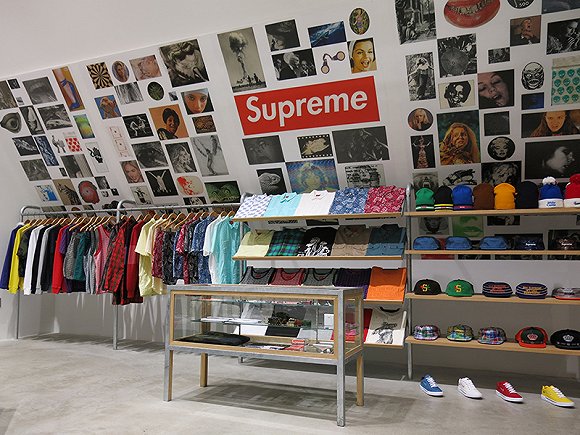
Interface News: I heard that Supreme founder James Jebbia was once very angry that the Supreme retail space he designed for the DSM New York store was placed together with Prada's display devices.
Adrian Joffe: He is a very tough person and difficult to deal with, but I respect him very much because he has his own opinion. I almost cried that time. He kept talking to me about why Prada’s display devices should be placed next to Supreme’s. I told him that this is the principle of Dover Street Market. We will not tell brands who will be next to whom. James Jebbia felt that it was unfair for us to do this because we required that the back panels of other brands’ retail spaces should not be the same height as the ceiling, but Prada was allowed to do so. However, that was because Prada’s space was close to the elevator, and we felt that we could make an exception for them in this special case. As a result, James kept telling me that he wanted to go from Dover Street to The Market was withdrawn, and I said you should leave. But three days later, he came to me and told me that it was actually good, because he found that many customers would go to the Supreme location after visiting the Prada location, which helped them increase a lot of customer traffic. But he gave me a hard time in the past two days. Regarding this, he didn’t say anything afterwards. He owed me an apology.
Jie News: Not long ago, the UK announced its departure from the EU. I saw in WWD reports that you were very dissatisfied with this, and even said "fuck democracy". So what do you think of democracy in the fashion industry today? After all, the fashion industry has been led by a few people for a long time, but with the rise of the Internet, social media, and KOL, everything has changed.
Adrian Joffe: Sorry for using bad words. When they announced this news, I was furious. Democracy is not as beautiful as imagined. Look at the UK now, look at the United States - Donald Trump may win, that is, the Russians like him and Putin likes him. If it were China, do you want him to be elected? This is not a good thing for people with a certain level of education.
The same is true in the fashion industry. Nowadays, this kind of universal participation has advantages and disadvantages. On the one hand, it does help those talented people to stand out, such as Susie Bubble, Bryanboy, etc. If you post some photos on social networks and make some interesting comments, you will have the opportunity to be recognized. As Andy Warhol once said, everyone has five minutes of fame in the future... But at the same time, there is a group of almost illiterate people talking nonsense - I seem to feel that there is a company specifically hiring these idiots to say those nutritious things, and I think we need to control this. But this is also a process. There will always be times when we lose control in the process of change, but it is unavoidable.
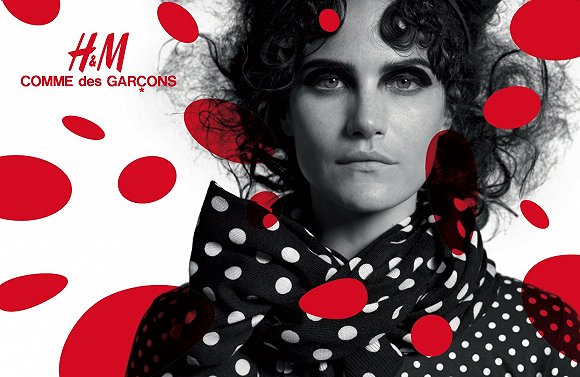
Interface News: Speaking of change, many brands and designers now complain that fast fashion is more destructive than contribution to the fashion industry. However, in your past interviews, I saw that you do not seem to be particularly disgusted with fast fashion.
Adrian Joffe: No, we don't like fast fashion at all.
Interface News: But COMME des GARÇONS launched a cooperation series with H&M in 2008.
Adrian Joffe: Because we also have to consider it realistically. But compared to the show-now-buy-now model they are advocating now, I would rather have fast fashion - See Now, Buy Now - which is really convoluted and sounds a bit like Red Lorry Yellow Lorry (British post-rock band).
Interface News: Why are you so averse to show-and-buy?
Adrian Joffe: This is a completely uselessIf we follow this model, there will be no need for fashion critics or media in the future, and the opinions of buyers and store managers will no longer be important. All decisions will be left to some idiot in a certain company. Just as I don't agree with extreme democracy, I don't agree with this other extreme, dictatorship. In contrast, fast fashion is nothing more than us making pink short skirts, and they followed suit with pink short skirts. But season after season, we are always moving forward. I don’t think this has much impact.
Interface News: Jean Touitou of A.P.C also disagrees with show-now-buy-now. He said this is just a trick played by the brand on the media.
Adrian Joffe: I love Jean, he can always see the essence of things. Maybe some companies think they can find out which products will be popular through market research and put them on the shelves in advance, but it's hard to agree. What if they continue to do this and the particularity of the fashion itself is emphasized?
Interface News: You also dislike pre-collections such as early autumn and vacation. COMME des GARÇONSnever does a pre-show collection, but some brands sold at Dover Street Market do.
Adrian Joffe: That thing sucks. COMME des GARÇONS doesn’t do it anyway.
Interface News: When ready-to-wear was popular, some people once said that haute couture had no meaning. Now these pre-show collections have become the main force, but this seems to have reduced the main line of ready-to-wear series to a new generation of haute couture.
Adrian Joffe: That's right. Now they spend a lot of money on pre-fall and resort collection fashion shows, and 70% of the budget is used to order pre-show collections. I think this is simply rubbish.
Interface News: Vetements is almost the hottest fashion brand at the moment, and Demna Gvasalia’s first men’s and women’s collection designed for Balenciaga has also been released. What do you think are the similarities between him and past reformers, such as Martin Margiela and Helmut Lang? Or do you think he can become a leader of this era?
Adrian Joffe: He has worked for Margiela in the past. Naturally, there are many similarities between the two. If the gossip I heard is correct, Margiela also feels that the Vetements products are very similar to those made by herself. Vetements is a good brand. It has many young designers and cooperates with a large number of brands. At the same time, it is not overly ambitious. Its emergence has further shaken the original boundaries of fashion. Demna Gvasalia's collection for Balenciaga is great, Gucci's Alessandro is also excellent - yes, Demna Gvasalia borrowed a lot, but who cares about that now? Perhaps real creativity no longer exists in this era, and having a good stylist is enough. Who do you think can succeed Rei Kawakubo?
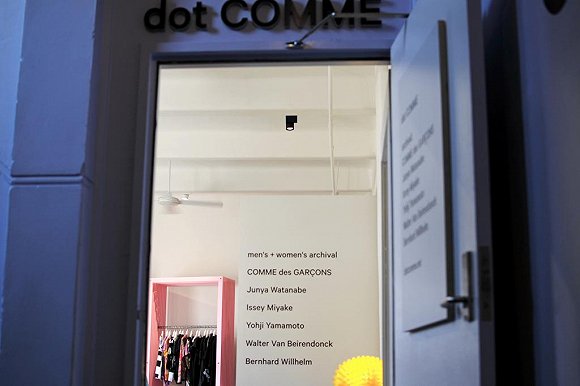
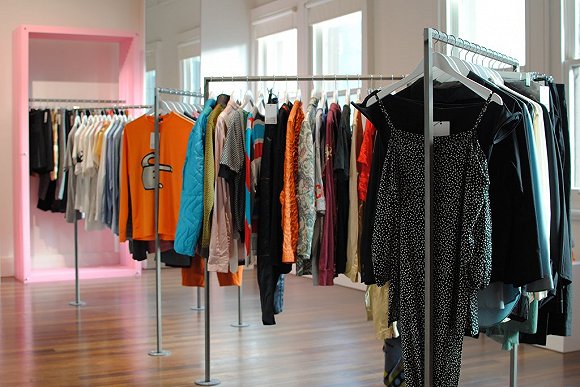
Interface News: I'm afraid I can't think of anyone. The achievements of the past may be difficult to surpass, so now many fashion people have begun to collect classic works from previous years. For example, in Melbourne, there is a store and website called dot COMME, which specializes in past works of brands such as COMME des GARÇONS and Junya Watanabe (they even have a Lump & Bump series for the spring and summer of 1997); in addition, on Grailed, a second-hand trading website focusing on niche and avant-garde designer brands, COMME des GARÇONSis also a brand that those hard-core fashion lovers are passionate about.
Adrian Joffe: I don’t know if what you are talking about is the same as what I heard before. I would like to meet them. Is it in Melbourne? I'll ask my colleagues there to look for it tomorrow. Thanks.
Interface News: Have you considered launching a series of official archive reissues of COMME des GARÇONS? For example, LN-CC has collaborated with Raf Simons and others to produce a replica series.
Adrian Joffe: No, that would be too energy-consuming. When we opened the pop-up store in Berlin, we put some archive items there, but it was too troublesome and we only had to do it once. Besides, aren’t there people outside who are doing these things voluntarily, whether it’s collecting or reselling.
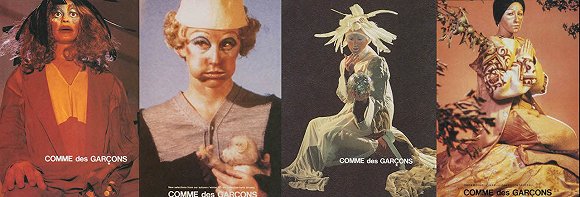
Interface News: You and Ms. Rei Kawakubo have a special marriage relationship and have been separated. In addition, I heard that you don't like collecting art, but this seems to be a hobby of many fashion people. In addition, COMME des GARÇONS and Dover Street Market have always liked to cooperate with artists.
Adrian Joffe: I like to appreciate works of art in actual settings. Appreciation or love does not mean possession. Sometimes material things are like a shackle that stops people from moving forward. I have a place to live in Paris, and she (Rei Kawakubo) also has a house in Tokyo, which is enough. We don’t want to have properties in every city around the world. The more material things you have, the heavier your burdens will be. If we want to see art exhibitions, we go to museums and art centers. In addition, she never felt that she was Japanese, and I didn't feel that I really belonged to a certain culture. Maybe for people like us who are "rootless", we don't need to get along through so-called commonalities, such as collecting art, buying luxury cars, and buying yachts.
Jie News: But we all live in a material world, especially in the current fashion industry, where the proportion of gimmicks (hype) has almost reached its peak. Do you think there is a conflict between Zen Buddhism and Buddhist learning and the world of work you live in?
Adrian Joffe: When I was in Japan, I further understood and learned the meaning of Zen and Buddhism. She helped me stay awake and allowed me to distinguish reality from fiction. For three years, I meditated every day to gain peace, especially when I felt like I was going crazy. It was very effective. I dare not say that I am a devout Buddhist, but I agree with many of these philosophies.
Interface News: For example, there is a saying in China, "If you want to be born in the world, you must first enter the world." That is to say, if you want to be sublimated, you must first experience the glitz, as well as the unavoidable worldly things of life, death, love, hate, and love.
Adrian Joffe: I agree 100%.
Interface News: But you like traveling very much.
Adrian Joffe: Yes, we like to go to different places, meet and experience different people and things, and buy interesting things...…Travel can release us from the comfort zone.
Interface News: Have you made any plans for your next trip?
Adrian Joffe: For now, I just want to stay home, I'm exhausted.
*The above interview content has been partially refined and edited based on the oral responses of the interviewees.