The increasingly rapid operation of the fashion industry has made the game between fashion creativity and fashion business more intense. There has always been such a contradiction between show fashion and commercial fashion - the former has a lower chance of being purchased in stores because of its bold creativity or high production costs, while the latter is regarded as a mediocre compromise because it favors practicality.
For those fashion houses with advanced customization product lines, the same problem exists between "advanced customization" and "advanced ready-to-wear" - in recent seasons, we have indeed seen that time-honored fashion houses such as Christian Dior, Valentino and Chanel have gradually diluted the original experimental techniques in advanced customization works into more practical works. With the emergence of new product lines and new models such as pre-season series and show-now-buy-now, it becomes increasingly difficult to reach a conclusion on how to balance creativity and practicality.
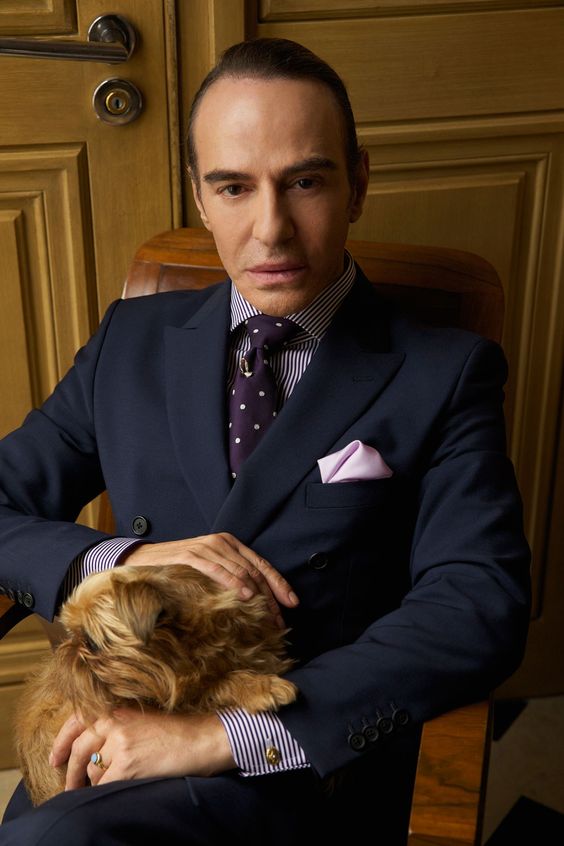
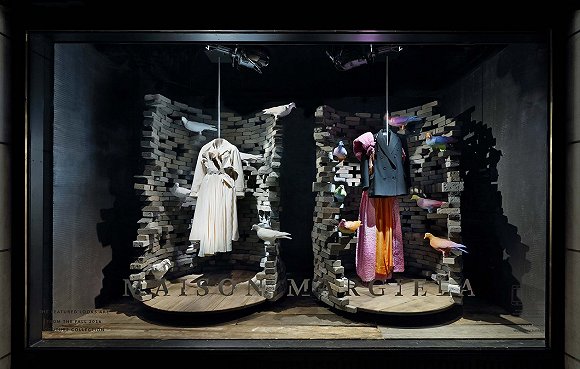
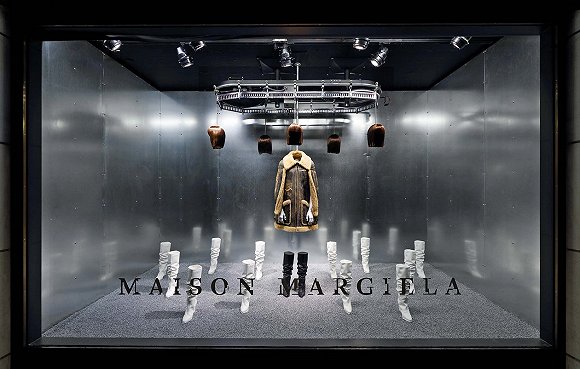
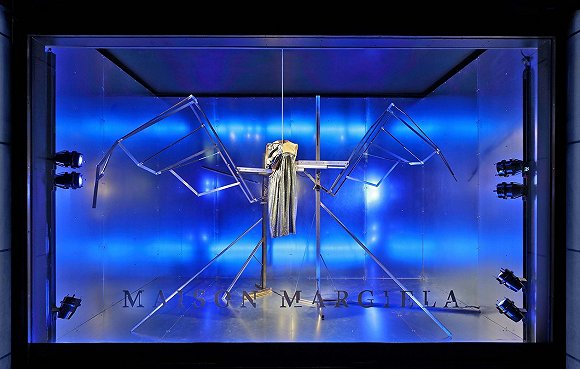
Recently, Dennis Freedman, the creative director of Barneys department store, collaborated with John Galliano, the creative director of Maison Margiela, to design a special window display project in the New York flagship store of Barneys department store, with the purpose of exploring the above issues. In its four windows facing Madison Avenue, passers-by can admire works from Maison Margiela's 2016 spring and summer haute couture series and the 2016 autumn and winter haute couture series.
In this regard, Freeman said that this is the first time he has displayed haute couture works in the window since he joined Barneys. The original intention of launching this window was not to stimulate sales. The core purpose was to show how John Galliano used creativity from the haute couture series to influence the design direction of haute couture. As early as when he was working for Dior, John Galliano showed his ingenuity in this regard. Its signature approach is to transform popular design elements in advanced customization into subsequent ready-to-wear works. At that time, fashion media and buyers could often guess the direction of the new season's ready-to-wear through his haute couture series.
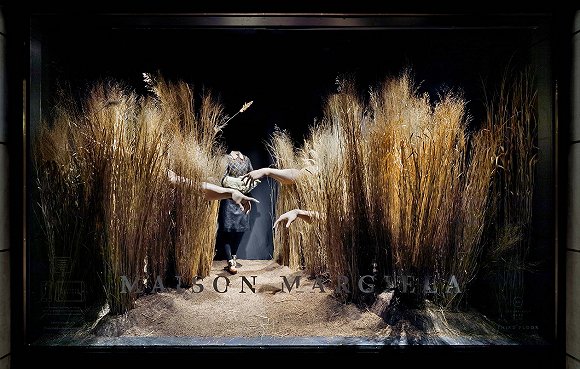
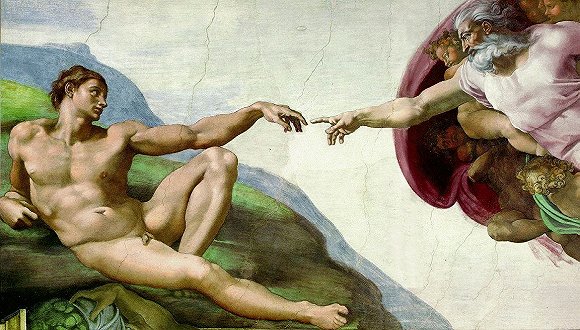
For these top department stores, the display window is not only the best facade to promote the image, but also a marketing method to maximize the stimulation of passers-by to enter the store and spend money. Among the four windows of this collaboration between Barneys and Masion Margiela, one is used to display haute couture clothing that is not sold through conventional channels; the other is based on Michelangelo's church fresco "The Creation of Adam": in the huge golden wheat straw field, the 3D printed arms symbolize God and Adam, and the innermost one is Masion Margiela 2016 autumn and winter women's wear series - the reason why it is designed in this way is to describe the story about "creativity" on the one hand, and on the other hand it is a metaphor for John Galliano's rich creativity. "Barneys is a communicator, and the additional 'gift' is that you can buy the plaid wool knitted jacket in the store immediately." Freeman explained Barneys' role in this cooperation.
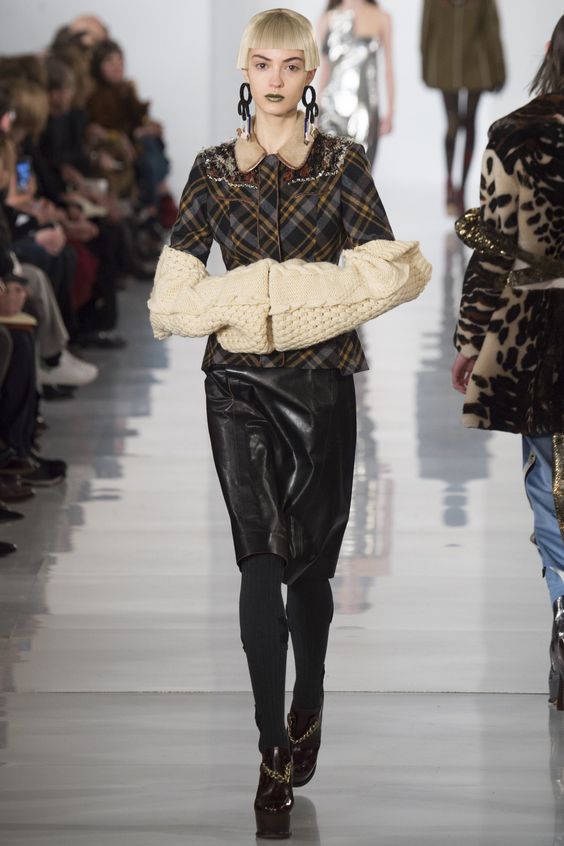
As early as March this year during the Paris Women's Fashion Week, Freeman personally went to Maison Margiela's Paris studio for this window cooperation project and discussed the specific cooperation plan with Galliano. "Suddenly, you are pushed into a fantasy-colored inner room and look at the surrounding decoration. I began to imagine that I was Alice in Wonderland, waiting to attend the Mad Hatter's afternoon tea party. Galliano has prepared exquisite tea sets and pastries. This is a room full of inspiration, with so many things worth seeing and touching. You will be touched both physically and visually, and even the aroma of tea and pastries will stimulate you. I seem to have stepped into Galliano's creative brain," Freeman recalled of his time at Maison Atelier Margiela says.
Vogue.com conducted an interview with John Galliano regarding this window collaboration. The following are the parts we extracted:
The theme of this window display is called "Juxtapositi and Deconstruction"on and Deconstruction)", how do you translate this idea into fashion? Nowadays, most consumers learn about fashion through pictures on the Internet or social media. Do you think they will feel this special relevance?
Maison Margiela's principle is to subvert traditional models, break historical elements or clothing prototypes, and perform contemporary interpretations. This process has always been the "competition method" of brands in design. This means that a simple element can actually reflect different historical backgrounds. We can call this "juxtaposition", but at the same time we also give it different styles. This is what we call "deconstruction". This remixing process actually implies a special correlation. Today the entire creative industry is looking to social media for creative inspiration, and their inspiration is nothing more than wall-to-wall collages. But for Margiela, background knowledge and historical sources play a decisive role in completing a collection. The effort we put into collecting ideas actually goes beyond making the clothes themselves. Barneys provides a rare opportunity to reveal the real world of Maison Margiela, not only because of the details of the clothes that cannot be seen through the pictures, but also the structural relationship between the clothes and the clothes.
The reference inspirations involved in the windows are very interesting, from Michelangelo's church frescoes to the pigeon coops hanging haute couture clothes... Can you tell us how you came up with this inspiration and applied it to the design?
The areas in which we collect inspiration actually include historical and geographical levels. For example, we have always started from the European continent, and gradually extended the search scope to different ethnic groups around the world. We collect old books and vintage clothing, and we also travel, whether physically to places of inspiration or through online research. After that, we will put all the collected inspiration together in different ways. For example, we will customize some special fabrics for this purpose, make some additional handmade accessories to match the overall image, or use modern digital textile technology to achieve the clothing silhouette we want to express. Wherever our inspiration comes from, in the end it becomes something else and is transformed through visual language into a product with the spiritual core of Maison Margiela. So even though our inspiration is completely different every season, it still belongs to Margiela and is instantly recognizable.
Let’s talk about the clothes displayed in the window this time!
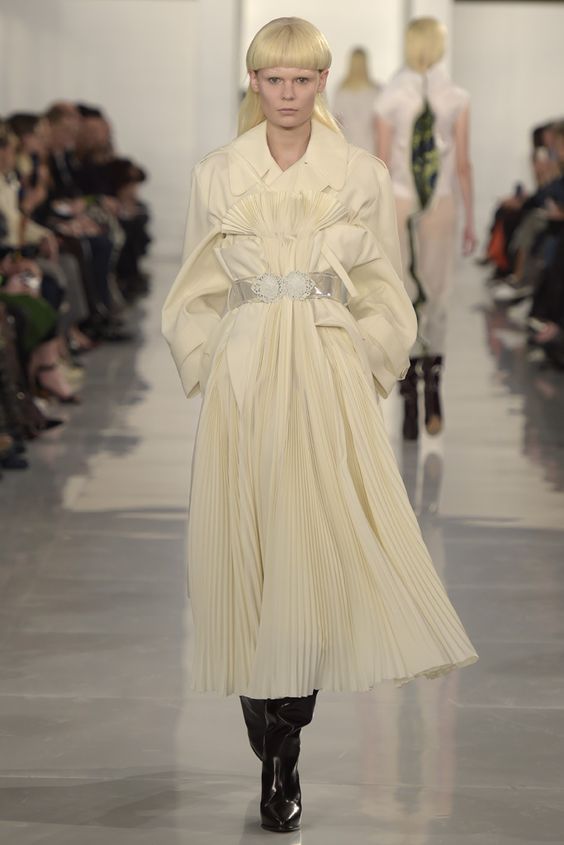
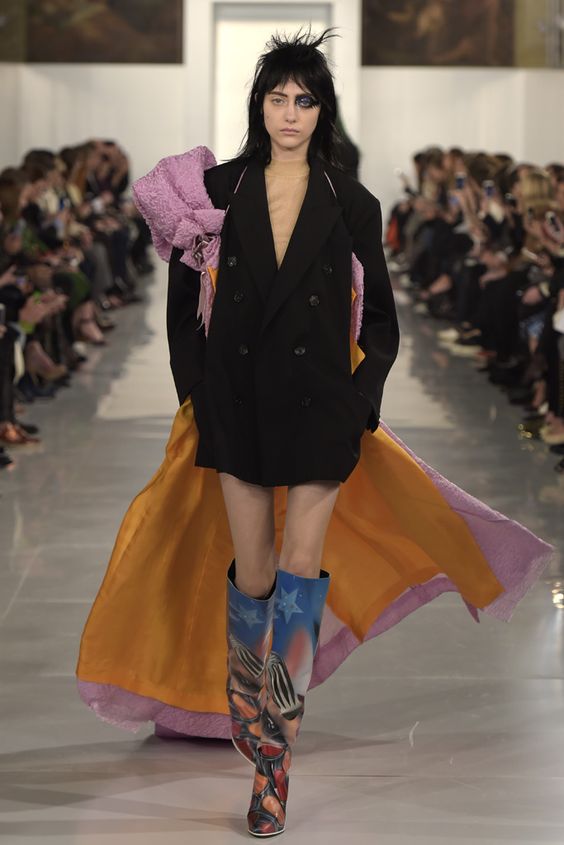
First of all, these styles all reflect the concept of "collage", which extends from haute couture to haute couture. For example, for the two haute couture works displayed in the Pigeon Nest window, one is a beige trench coat. We added a pleated dress skirt on the chest and used a wide belt to create the illusion of being two pieces of clothing. As for the men's double-breasted suit jacket next to it, on the T stage, we did not let the model wear the pink and orange seersucker jacquard dress directly on her body, but put the dress's shoulder straps on the jacket. The model walked as if she was carrying a parachute. But in the windows, theyThey are indeed two separate pieces of clothing. So you can see the subtle contrast in form between these two looks. As for the ready-to-wear window display, we transformed a bomber jacket into a shearling cape – something that, frankly, few people would have thought of. In addition, we removed a complete silver evening gown from the chest up, deliberately exposing the lining, and adjusted the positions of the cuffs and neckline to create the shoulder-sliding effect we see now. These designs actually break the original deconstruction of clothing and give it a new soul. From this point of view, this approach extends from haute couture to ready-to-wear.
On this themeThe "consistency" and the "uniqueness" specific to each look have been demonstrated in both series, but why do these two seemingly contradictory characteristics appear to be very coordinated on the show?
Consistency and uniqueness are the keys to Maison Margiela's aesthetic, and the two must reach a balance. As long as the woman wearing the dress feels comfortable wearing it, it doesn't matter if it's done in an edgy way. So it is unique in terms of shape, but overall, they all belong to the deconstructed design just talked about. We cannot comment neatly on what kind of feeling is correct. We can only say that this feeling is correct for Maison Margiela and for consumers who buy our designs. But this is enough.
Fashion is changing faster and faster, but your design at Margiela and the window display creativity of our cooperation require time to study. So do you feel the pressure of fast fashion? Or do you think Margiela consumers actually reflect that there are some things worth exploring in depth?
Maison Margiela has always violated the rules of fast fashion. Our designs often start from the haute couture series and gradually penetrate into haute couture, accessories and shoes. If fast fashion really has any impact on us, I think it should be that it has inspired us to explore more possibilities in clothing technology, so that we can design works that are difficult to imitate.
The above interview is from Vogue.com, original text: The Designer Is Present! John Galliano Discusses His Maison Margiela Window Collaboration at Barneys New York