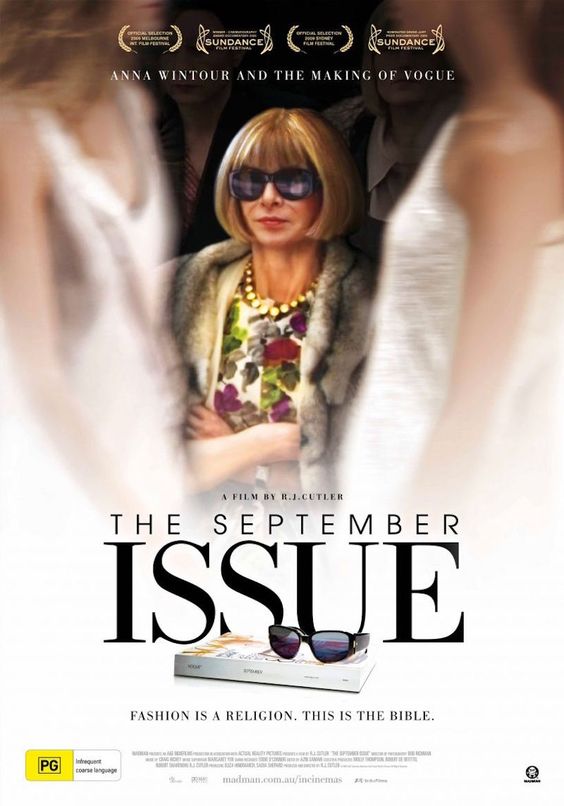
The outside world knows almost all about the production process of fashion magazines through the fashion documentary called "The September Issue". As fashion knowledge becomes more and more accessible, everyone also knows what hard copy is; what soft copy is for; fashion blockbusters are not only artistic creations, but also sales of goods; shooting star covers is a tough nut to crack... Every time the September issue is released, discussions and analyzes about the September issue come back overwhelmingly.
If we go back four years, China's luxury goods market was still booming at that time. Major women's magazines worked hard on their September issues, flying around the earth just to shoot a set of fashion photos. You can often see grand words like "a thousand-page masterpiece" on the covers. Everything from the shooting lineup to the thickness of the magazine and even the free gifts included in the magazine are all competing. The most profitable project at that time was the production of brand separate volumes. When the economic situation was good, the phenomenon of four separate volumes being released with the magazine was not new. Indeed, the more invested in costs at that time, the more revenue the magazine would earn for that period. At the same time, the thickness of a September issue of the magazine is also a symbol of its wealth.
Back in this sensitive period when news of magazine closures are constantly coming, every company is reducing budgets and lowering production costs in order to prevent profit margins from falling. The uncertain global economic trend has weakened the advertising budgets of major brands. Coupled with the impact of online, social media and the KOL market driven by the fan economy, the revenue of traditional paper media has been severely challenged. The days of relying solely on advertising to make money are long gone. Nowadays, when brands place orders for hard advertisements, they often need to be accompanied by complimentary covers, soft articles, and related push notifications on Weibo and WeChat.
Because of this, a fashion magazine is not just a paper publication, it is more like the tip of a pyramid, supported by different platforms and products below. Whether it is a declining vertical website, a dedicated App, a WeChat official account, an official Weibo, or even Instagram and live streaming software, these are just platforms for disseminating content. Today's fashion magazines are positioned like a marketing and consulting company. They will tailor a special project for the brand, use all the resources of the magazine to package it, and promote it through online and offline activities to make profits. For example, the cooperation between Mini and the Chinese version of Esquire Lab, the online marketing and promotion of the 2016 early autumn series launched by Gucci and the American version of VOGUE, the e-commerce platform ELLEshop launched by the Chinese version of ELLE in 2011, and style.com, which has completely transformed into e-commerce. It is not difficult to see that traditional fashion media have adapted to the new media and business environment by expanding their own attributes. Integrated marketing of magazines as a golden signboard seems to be the key to the survival of current fashion magazines. As for "content is king", it is the foundation-— Just like advanced customization, if you can't produce amazing craftsmanship to present a gorgeous dress, then who will believe that you are a powerful fashion house? Even though the whole world knows that haute couture alone is not enough to support the overall revenue of a fashion house, it can extend the product line so that "advanced ready-to-wear" and "bags and shoes" can be sold.
This time, we selected the September issues of five domestic women’s fashion magazines and analyzed the current situation of the September issues in 2016 through data analysis and related interviews.
《VOGUE Clothing and Beauty》
September issue composition: main issue + separate volume
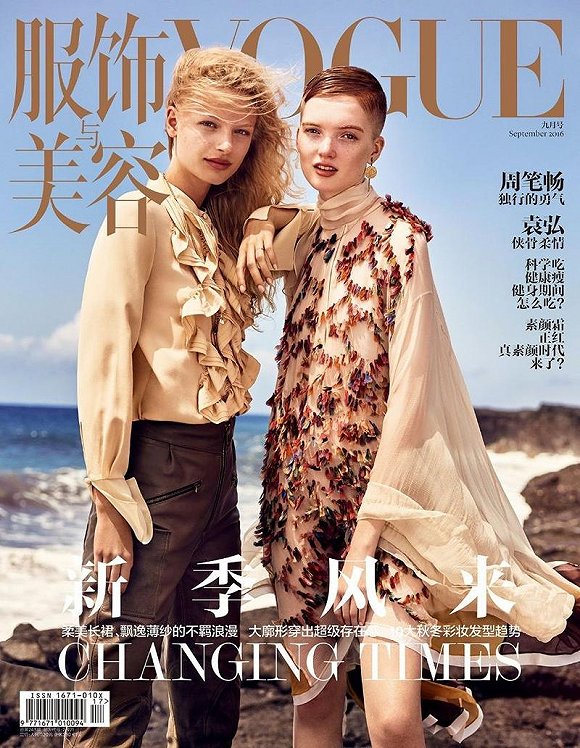
Cover characters: Frederikke Sofie, Ruth Bell
Cover clothing: Cholé, Jennifer Fisher, Quarry
Cover comments: This is the first time that new supermodels Frederikke Sofie and Ruth Bell appear on the cover of the Chinese version of VOGUE. Providing a high-quality platform for top models is what "Vogue Clothing and Beauty" has been adhering to since its inception. Even its covers have suffered from star power in recent years and have had to make some necessary compromises. Interestingly, among the 22 versions of VOGUE around the world, almost all of the American and British VOGUE have celebrities as cover characters.
Special volume:
Total page number: 16p
Content: Céline soft article
Cover characters: He Cong, Estelle Chen
《Harper’s Bazaar》
September issue composition: first half of the month + second half of the month
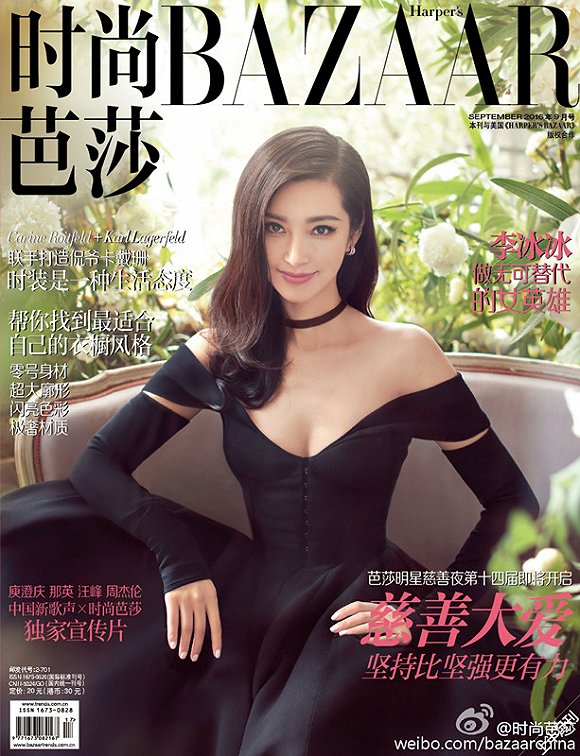
Cover 1:
Cover character: Li Bingbing
Cover clothing: Dior Haute Couture, Bucherer
Cover comments: One "Harper's Bazaar" cover a year is standard for most of China's top female stars. I can’t remember how many times this is Li Bingbing’s appearance. As one of Dior's most recent female celebrities, she took the opportunity to go to Paris in July to attend the Dior 2016 Autumn and Winter haute couture conference. Chen Man took the photo to complete this decent cover shoot.
After changing to a semi-monthly publication, "Harper's Bazaar" has 24 covers a year, plus double issues in certain months, or a multi-version cover strategy, which makes "Harper's Bazaar", which itself uses celebrities as its selling point, almost become the first choice for celebrities to promote new works or come back after having children. Of course, this marketing model has also contributed to "Harper's Bazaar"'s status in China's entertainment industry. Regardless of the pros and cons of using this method to create a magazine, at least it is an absolutely profitable business. Wang Jianlin said that one of the three most promising industries in China in the future is the entertainment industry. It is always relatively easy to make money if you are closer to the entertainment industry, such as the annual Harper's Bazaar Charity Night. Su Mang's ambition is no longer a Chinese version of MET GALA.
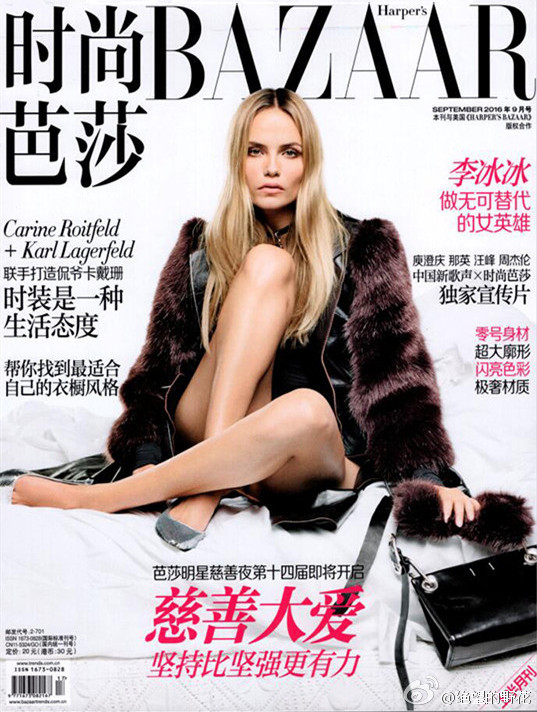
Cover 2:
Cover character: Natasha Poly
Cover clothing: Calvin Klein Collection, Loewe
The cover is taken from a fashion film curated by Carine Roitfeld, global fashion director of Harper’s Bazaar.
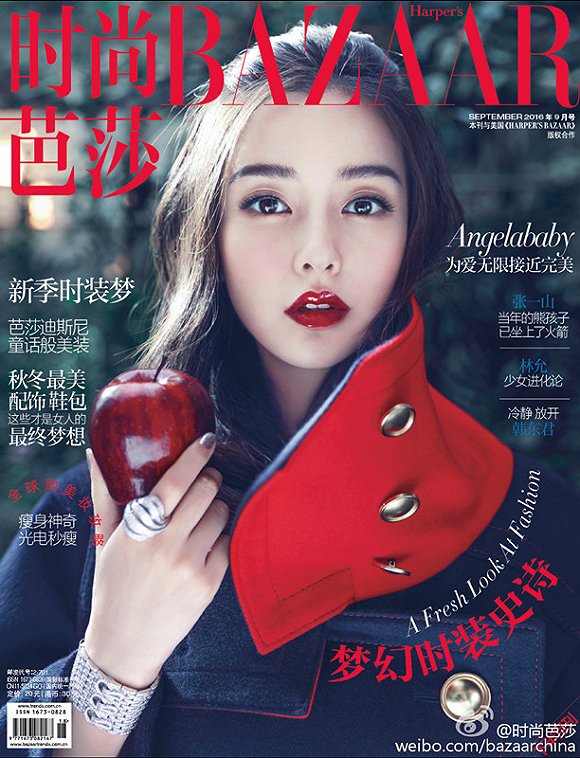
Cover character: Angelababy
Cover clothing: Burberry, Catier
Cover comment: Angelababy is only sweet.
"ELLE World Fashion Garden"
September issue composition: first half of the month + second half of the month
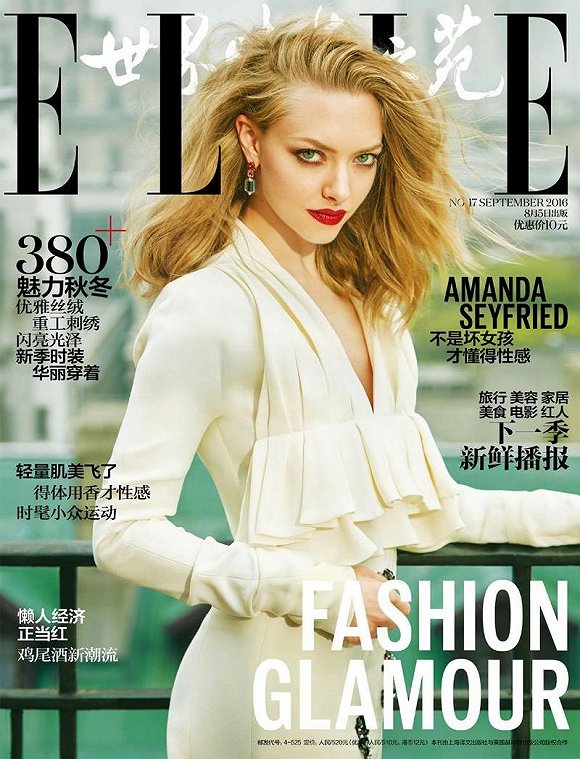
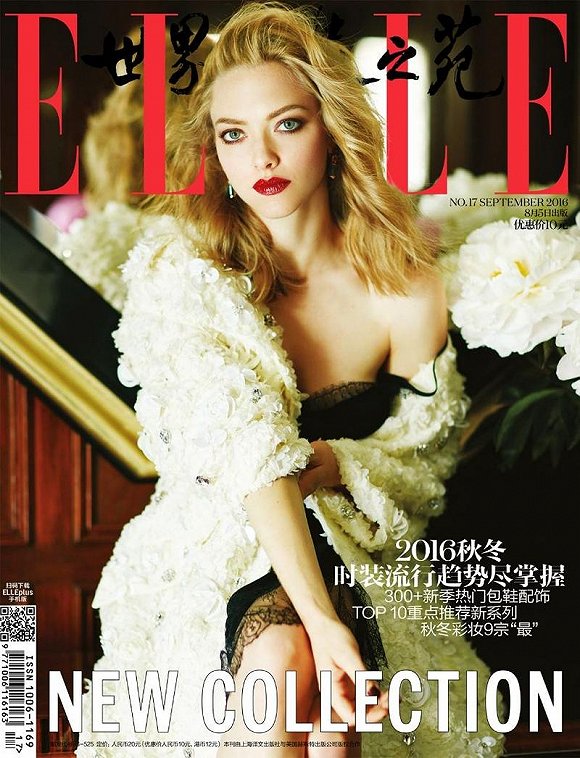
Cover: Amanda Seyfried
Cover clothing:
Front Christian Dior, Bvlgari
Back Shiatzy Chen, Etro, Bvlgari
Cover comment: Brand spokesperson Amanda Seyfried went to Shanghai to attend an event held by Japan's Shiseido Group's top skin care brand Clé de Peau (Key to Skin). ELLE took the opportunity to invite the popular Hollywood actress to shoot the cover of this year's September issue of the magazine. This is also the first time that Amand has appeared on the cover of a Chinese fashion magazine. Under normal circumstances, due to cost control, domestic fashion magazines will take advantage of overseas artists' visits to China and complete shooting tasks through brand inviters.
In the fashion field, Amanda Seyfried has maintained long-term cooperation and endorsement relationships with Clé de Peau and Givenchy, and has also served as the spokesperson for the Miu Miu 2016 autumn and winter series. But in Hollywood, her status has always been a bit awkward. Apart from her wonderful performances in ensemble dramas such as "Mamma Mia" and "Le Miserable", she is still a vase-type actress in terms of personal works.
Special Volume 1:
Total page number: 12p
Content: Swarovski soft article
Cover character: Jiang Shuying
Part 2:
Total page number: 16p
Content: Rose Mark soft article
Cover characters: Wang Zulan & Li Yanan couple
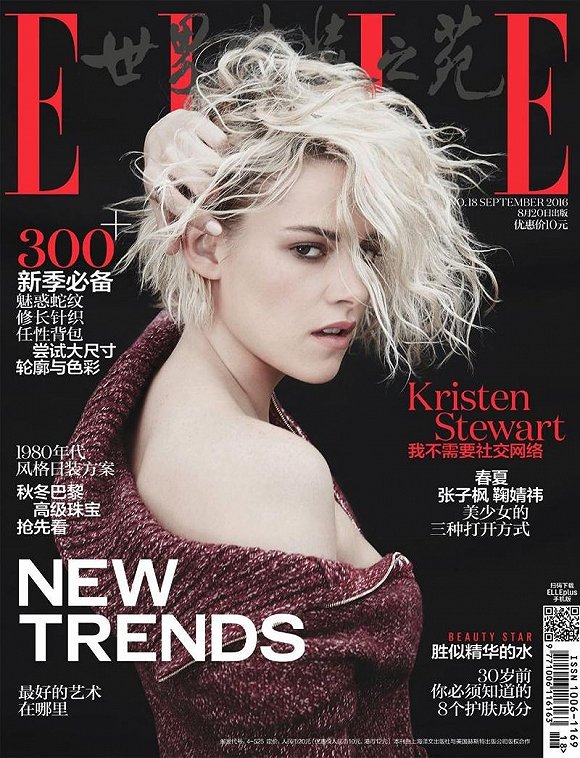
Cover: Kristen Stewart
Cover clothing: Chanel
Cover comment: "Twilight Girl" Kristen Stewart attended Chanel's "Paris-Rome" 2016 Early Autumn High-end Handicraft Workshop Series Conference held in Beijing as a brand spokesperson, and incidentally completed the shooting of this set of covers. This is Stewart's second visit to China, the last time was the year before he starred in "The Twilight Saga". Perhaps because of the over-achievement of "Twilight" and the fact that the actress has been acting in niche literary films since then, the outside world's impression of her has always been stuck in her early works. This year, Stewart will have three works released, namely Woody Allen's "Coffee Society", Olivier Assayas' "Personal Shopper", and Ang Lee's "Billy Lynn's Long Halftime Walk." Western film media predicts that this young actress, who is only 26 years old, will gain something in this year's awards season.
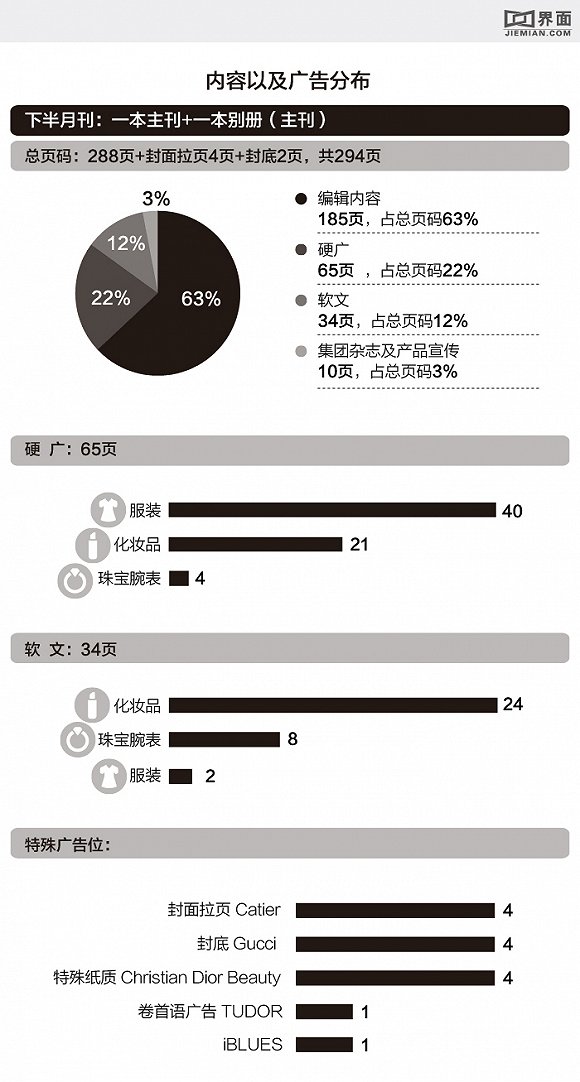
Special volume:
Total page number: 16 pages
Content: Chow Sang Sang soft articles
Cover character:
Side A Zhang Chilin & Anita Yuen couple
Side B Xu Jiaying
《Fashion Cosmopolitan》
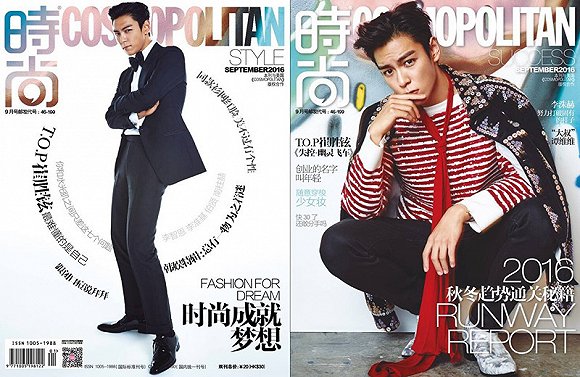
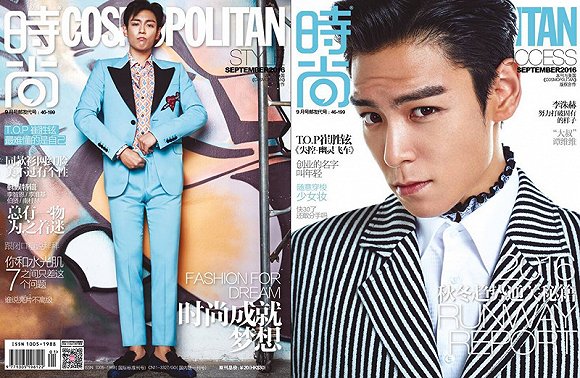
Cover character: T.O.P Choi Seung-hyun
Cover clothing:
A cover Tom Ford
B Cover Gucci, Burberry, Givenchy by Riccardo Tisci
C Cover Gucci
D cover Xander Zhou
Cover comment: Bigbang is the Korean pop boy group that is truly popular in Asia after TVXQ. Among the five boys, T.O.P may not be as popular as G-Dragon, but he is the only member who has achieved success in the three fields of film, television and singing. With this cover, COSMO produced a so-called special report on Korean entertainment. However, this report is more like a celebrity shooting column produced for the leading actors of "Moon Lovers: Step by Step", and is not the expected editorial and analysis report on the Korean entertainment industry.
As the four flagship publications of the fashion group (Harper’s Bazaar, COSMO, FHM, and Esquare), a few years ago, the two women’s magazines had highly overlapping target readers and customer groups. In addition, there were only a handful of female stars qualified to appear on the covers of top women’s magazines at that time, resulting in unnecessary internal competition between the two magazines for resources. At that time, COSMO's advertising sales volume had always been at the top of the fashion group. Especially after COSMO adopted the publishing method of one magazine and two books, the advertising revenue became even more gratifying. In 2014, Su Mang officially became the group's executive president. This female entrepreneur who single-handedly established the Harper's Bazaar empire must not only consolidate Harper's Bazaar's position within the group, but also take a series of measures to effectively differentiate between the two flagship women's magazines. Overseas, the readers of "Cosmopolitan" are generally younger, so the content will naturally be more relaxed and lively, and gender content is one of the features that establishes the image of this female publication. Due to the particularity of the Chinese market, this is the first women's fashion magazine that a fashion group has entered into mainland China through copyright cooperation. Its emergence has quickly filled the gap in China's high-end fashion magazines. However, the magazine market in China does not have the awareness that magazines need to be segmented. As the market becomes more saturated, the positioning between it and Harper's Bazaar becomes increasingly blurred. In order to obtain profits more effectively, it is necessary to revise the content and adjust the positioning. New media is a weakness of the fashion group. After Su Mang came to power, he worked hard to develop new media projects. COSMO became the first magazine in the group to transform into an all-media magazine. As the first "person" to try it, COSMO launched its own vertical website. At the same time, in line with the magazine's positioning, it launched an app called "hiGirl", which mainly attracts young female consumers.
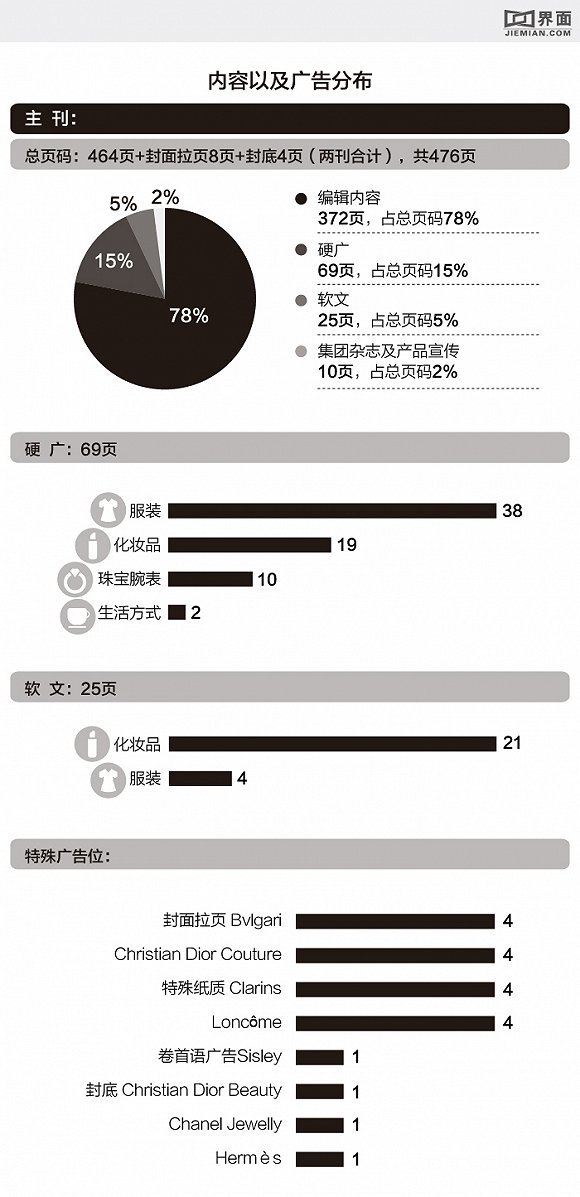
Special volume:
Total page number: 16p
Edited content: 15p
Group magazine and product promotion: 1p
《Marie Claire》
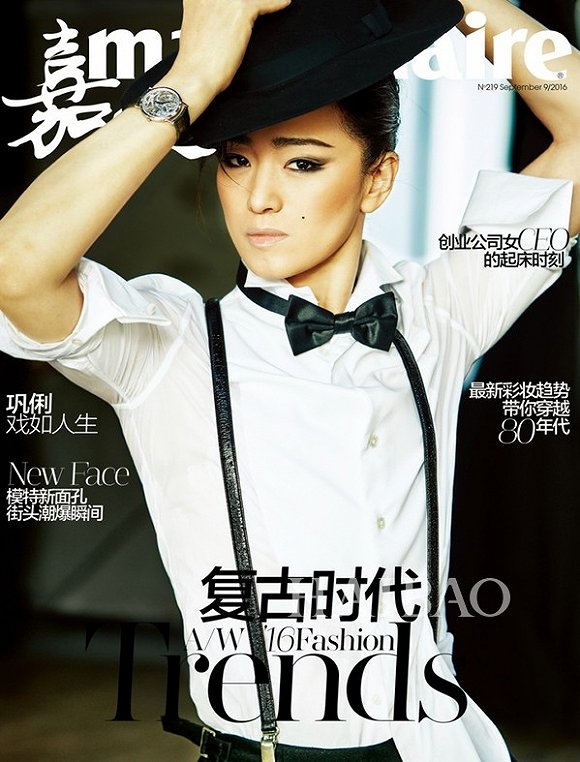
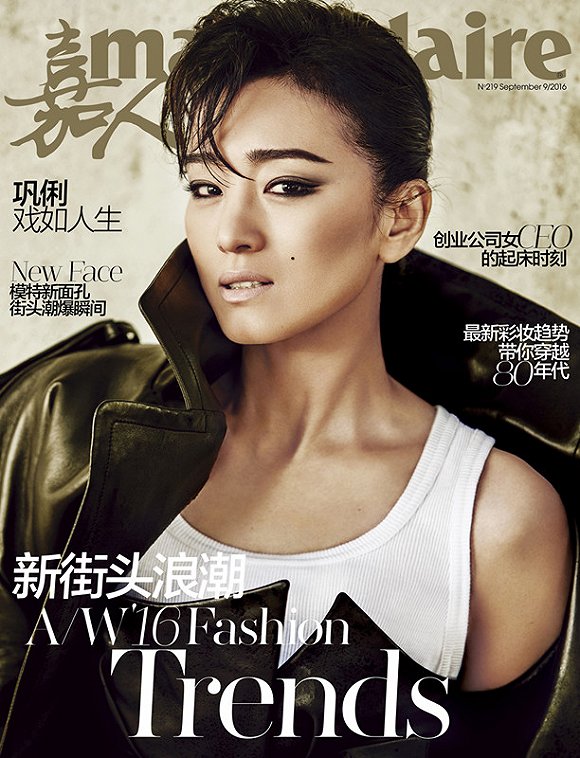
Cover character: Gong Li
Cover clothing:
A cover Ralph Lauren, Piaget
B Cover Alexandre Vauthier
Cover comment: This is the third time Gong Li has appeared on the cover of "Marie Clarie". Everyone knows that "Gong Huang" only shoots one magazine cover a year. Feng Hai is still the royal photographer, and Mix Wei is still the royal stylist. At a time when big and small celebrities are filling the covers of fashion magazines, Gong Li seems to be one of the few top female celebrities who can attract the active attention of people inside and outside the fashion industry. Last year this month, Gong Li was also the cover star of the September issue of "Marie Clarie". The magazine published the slogan "The Queen is Coming, One Against Ten", openly provoking the 10th anniversary issue of "Vogue Clothing and Beauty", which featured 10 top female artists and models in the Chinese-speaking world.
In the current slump of paper magazines, the cover of a top female star can not only compete for a certain amount of attention in the Internet world, but also bring quick money to the magazine such as brand placement. Unless the clothing brand on the cover has a rigid rule in the annual list that requires the magazine to give away the cover for free, in most cases, the magazine will treat the artist as a commodity and sell it to different brands from head to toe, including clothing, jewelry, watches, accessories, and even cosmetics. At this time, the star's level is directly related to the revenue from the current cover. But for brands, top female celebrities (except Li Yuchun) are always no match for Xiaoxianrou in the field of fan economy. Gimmicky covers can indeed stimulate the sales of the current magazine, but does anyone really care about magazine sales nowadays? Even people outside the industry know that magazine circulation has reached an inflated ceiling.
According to people familiar with the matter, the overall revenue of "Marie Clarie" has declined significantly compared with the past. Relevant personnel from Hearst's U.S. headquarters clearly pointed out in a meeting that the publication has operational problems.

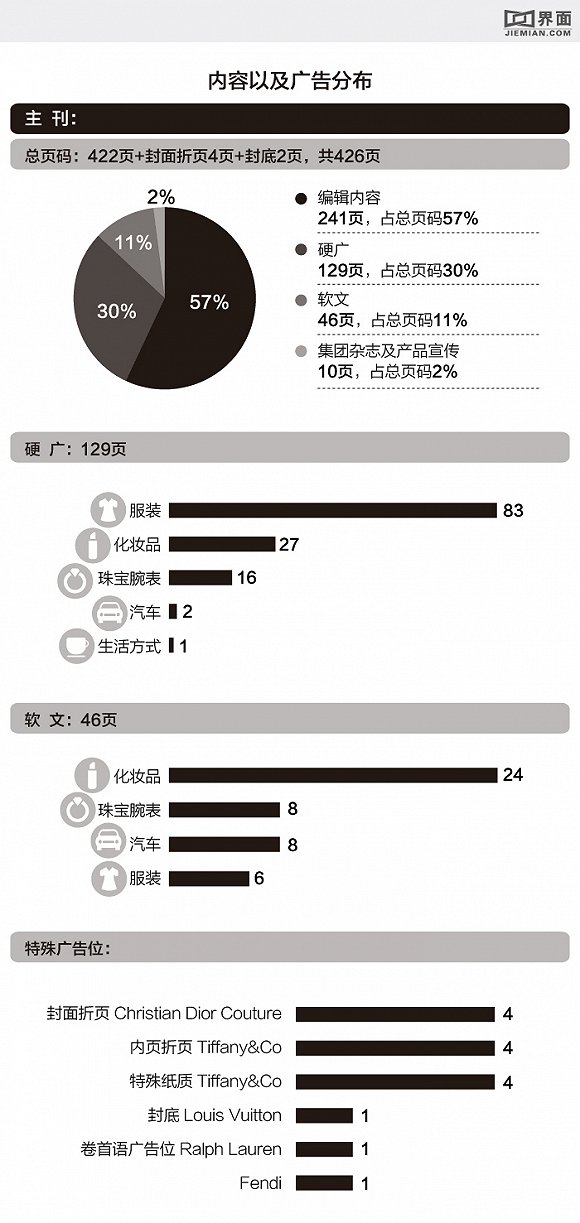
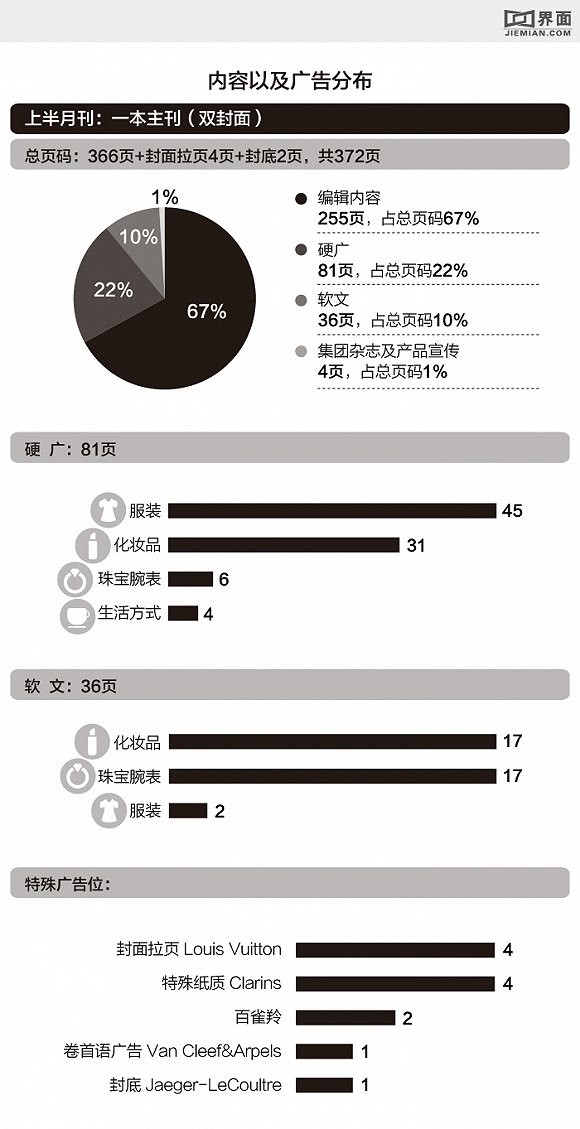
(Because some brand soft articles are produced as a bonus product with the hard advertisement at a package price, or are embedded in the cover or fashion shoot in the form of a purchased shoot, and the hard advertisement price of each publication is different, we only use the total number of pages of the hard advertisement as the only ranking criterion)
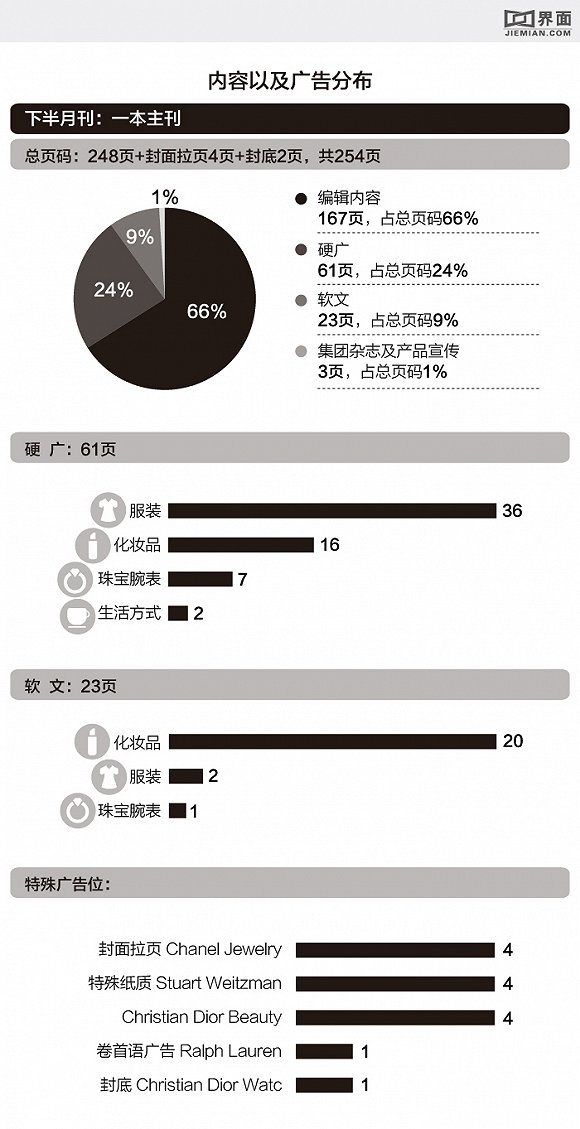
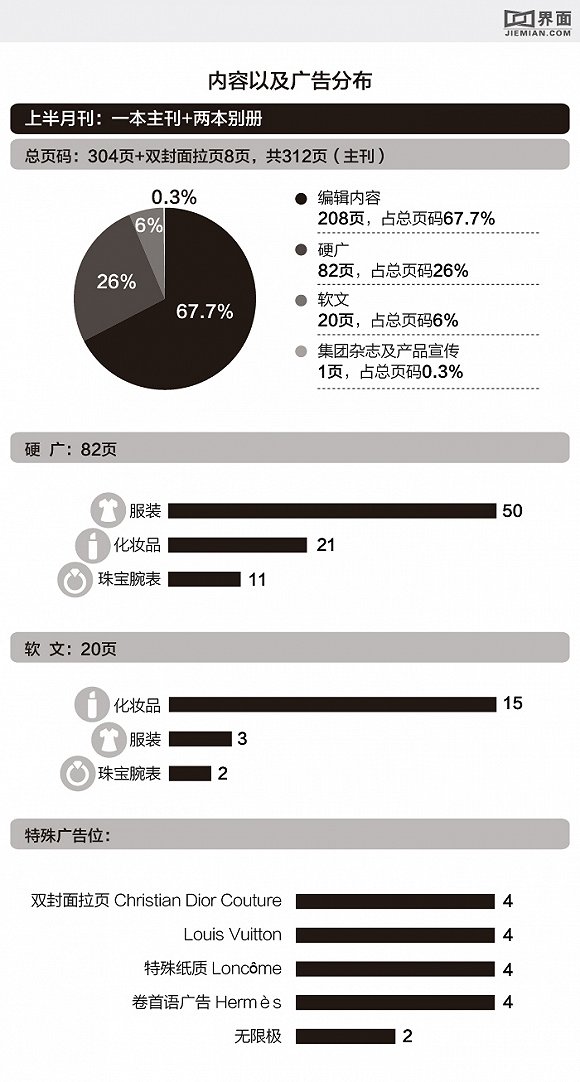
1. The ranking of the total number of pages of hard advertising in the five women’s magazines is: ELLE (147 pages), Harper’s Bazaar (142 pages), VOGUE (129 pages), Cosmo (69 pages), Marie Claire (43 pages)
2. Among the fashion advertising statistics, ELLE has the most pages (90 pages) and Cosmo has the least (19 pages)
3. Among the hard advertising statistics of cosmetics category, Harper’s Bazaar has the most pages (47 pages) and Marie Claire has the least (10 pages)
4. The total number of pages of the clothing category of VOGUE, Harper’s Bazaar, ELLE, and Marie Claire far exceeds that of the cosmetics category. Only the total number of pages of the Cosmo clothing category (19 pages) is less than that of the cosmetics category (38 pages)
5. Compared with men’s fashion publications, women’s fashion publications have almost lost ground for automobile advertising. In the September issue, only VOGUE received hard advertising in the automobile category (the advertising client is Audi, and the advertising format is a spread)
6.Christian Dior ranks first among the five media in terms of brand advertising volume, including product advertising in the three fields of high-end ready-to-wear, cosmetics, jewelry and watches
7. The three major cosmetics groups (L'Oréal, Procter & Gamble, Estee Lauder) have almost the same total brand advertising volume in the five media
8. Among single cosmetics brands, Loncôme ranks first in brand hard advertising among five media outlets
9. Common major investment players such as L'Oreal Paris and Estee Lauder have experienced a significant decline in investment
10. Among the brands exposed in the editorial content, the top five brands are: Gucci, Prada, Louis Vuitton, Christian Dior, Chanel
11. The investment of lifestyle brands (maternal and infant, toiletries, digital, travel, bank credit cards, real estate, hotels) has declined severely, mainly because most brands have shifted their investment focus to digital media platforms
Finally, for this September issue report, we randomly interviewed several people from different industries and asked them to talk about their views on the covers and content of the September issues of these five media.
1. Rosa Huang (anonymous), public relations manager of a certain brand in China
Normally I prefer Cosmo. The current layout of Cosmo is easy to read, the non-fashion feature reports are also interesting and meet the needs of young women, and the layout is also very lively. The blockbuster is generally not cold-blooded and has a quirky appeal. This can also be seen from the cover title of the magazine. Under normal circumstances, women’s fashion magazinesThey mainly focus on fashion, beauty and lifestyle reports, and there are not many special reports. Cosmo's September issue has two special reports this time, one is about young people's entrepreneurship, and the other is a special feature on Korean entertainment. In addition, I am relatively Korean, so I deliberately read these two special reports. In fact, in terms of topics, ELLE has always produced some interesting topics that are relevant to current hot topics. You can feel that they are indeed attracting a group of female readers who have received higher education. As for the cover characters, the covers of this year’s September issue are generally very bland and there are no surprises, whether it is the choice of cover characters or the cover style.
2. Lily Yang (anonymous) PR and Marketing Director of a certain brand in China
To be honest, I rarely pay attention to magazine content now, unless there are some reports related to the brand I am responsible for in this issue, or to see what special forms of cooperation other brands have done in the magazine. As far as content is concerned, every women's magazine will put all their efforts into producing fashion shoots for the opening season. Although every editor wants to shoot a different style, the content is inevitably relatively similar. That’s all the fashion magazine shoots that come and go. It’s just that the clothes are different every season and there are some changes in styling. But it is undeniable that the film is still glamorous. For this year's September issue, I prefer the cover of ELLE. It feels very fresh. At least it's not the enervating Si Dan and Shuang Bing Bing, plus some Xiao Hua Dan and Xiao Xianrou who have no works. While big-name artists can bring some attention to magazines and brands, Chinese fashion magazines also need some new faces on their covers.
3. Newsstand owner at Sihui Metro Station
The September issue is a magazine released in September, right? ? I feel like the best-selling one is Cosmo. Many girls requested this issue by name, saying that the boy on the cover is famous? I don't understand either. Anyway, if there are some special celebrities on the cover, the magazine will sell well. The previous VOGUE cover of Li Yuchun sold very well, but this time they used two unknown girls, and suddenly there was no movement. In fact, the profit from selling magazines is very low, and I don’t expect to make money from it. The magazines that cannot be sold out will be recycled, so it is true that there is no pressure to stock up.
4. The owner of the newsstand at Beijing International Studies University
It’s really hard to sell fashion magazines nowadays. Three or four years ago, about 20 copies of each magazine were purchased, but now there are definitely no more than 10. There are fewer and fewer students reading magazines. But this issue of Cosmo sold well. It seems that the Korean boy is very famous. During the time when school was over at noon, all 10 magazines were sold out at once. Next is Marie Claire. Even people my age think Gong Li is still very beautiful - but is she a lot darker? Compared with the five magazines you mentioned, weekly magazines really sell better, like Yizhou and Hongxiu, which have always sold well.
5. Ma Ting, a mid-level employee in an automobile industry in Shenzhen
Our company happens to order VOGUE and Marie Claire. When I have nothing to do, I will browse through them. When I see good-looking bags and clothes, I will discuss them with my colleagues. Clothes are so expensive, so it’s okay to save money and buy a bag. After all, you can carry it every day. I feel that Marie Claire pays more attention to the lives of working women. They often make some relevant reports, and it is quite rewarding to read them occasionally. They made two this timeVery interesting reports. One is about the waking up time of female CEOs of startup companies. This was shared by our HR department as a meeting. The other is called "Time and Pointe", which is inexplicably shocking and touching. As for the content of VOGUE, they are all very stylish and a bit aloof.
6. Xiao Di, a bank employee in a fourth-tier city
In fact, there are very few places where you can buy fashion magazines in a small city like ours. If I remember correctly, there are only three bookstores in the whole city where you can buy newspapers and magazines distributed nationwide. Since we can flip through magazines at will, I usually look through them in a bookstore first. In the past, I always read magazines based on their covers. If the covers were interesting, I would buy them. Nowadays, everyone has some understanding of fashion, and they still read the content to some extent. For example, the fashion film is beautifully shot, or the skin care knowledge is well introduced, and then consider whether to buy it. In fact, I wouldn’t recognize it even if I bought it. Nowadays, everything is available on WeChat. And a fashion magazine priced at 20 yuan is not cheap in a small city. For a while, I subscribed to Harper's Bazaar myself, but later I discovered that receiving the magazine by subscribing through the post office was at least a week later than buying it directly from a bookstore, so I decided not to decide. I still buy magazines now. I think reading them occasionally is helpful to improve my personal taste. As for the September issue, I have no awareness of this aspect, so I didn’t pay much attention to it. I just feel that every March and September, these magazines are much thicker than usual.