
At this week's TechCrunch Disrupt conference, Facebook became the opening act. David Marcus, the head of Messenger, made no secret of his future goals: to become the main chat application for users and a communication channel between users and merchants. He also announced that Messenger will soon launch a payment function. These words may sound familiar because WeChat has done it all in China.
Facebook’s Messenger has aroused a lot of heated discussions recently. Almost every day, you can see articles about chatbots, digital assistants and artificial intelligence.
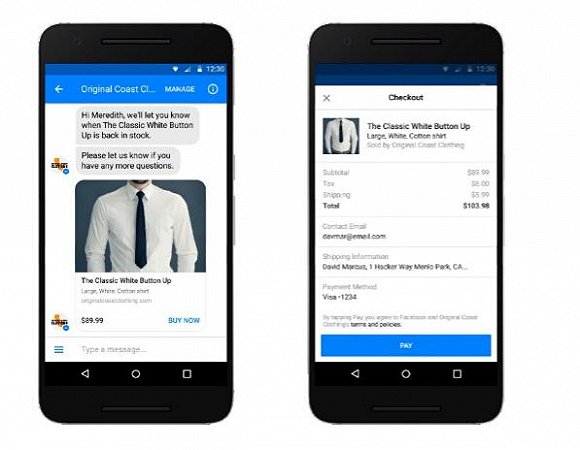
At the F8 conference in April this year, Facebook launched the first generation chatbot in Messenger, allowing merchants to provide automated interactive experiences, e-commerce wizards and customer support services. In the process of interacting with customers, merchants can not only send text, but also pictures and hyperlinks. Users can jump to the web page to complete shopping.
Not long ago, Facebook also announced that chatbots can now send promotional messages based on user interests. Merchants have expressed great interest in this, and they hope to use Messenger's functions to enhance customer relationships, enhance brand image, and earn more profits.
As exciting as these may seem, are chatbots really the next generation way of interacting on the internet? Can Messenger eventually connect consumers to various services like WeChat?
Chatbots – Hype or Reality?
Currently, the industry is interested in chatbots, which are believed to be a new way to enhance consumer interaction and may improve user satisfaction. These robots can also perform more complex tasks in the future, not just calling you a ride or booking a ticket.
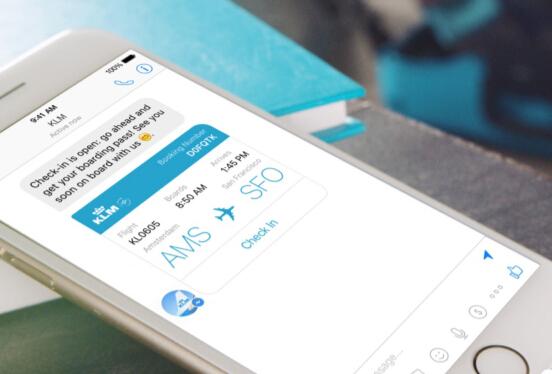
A lot of people have mentioned the word "disruption" because chatbots can change the entire advertising industry through integrated marketing. And the best part is that you don’t need to install any other apps to access the service through the chatbot. But now, to what stage has chatbots developed?
The total number of Messenger bots has exceeded 18,000. While some of them do engage consumers and increase user satisfaction, most chatbots have yet to prove their worth. And outside of this high-tech scene, most people don’t even know what a chatbot is. The sad truth is: no one really wants to chat with a bot.
What users want is that you can help them solve their problems, they want to get answers to their questions, and they want you to meet their requirements in the most effective and natural way. They don’t like typing questions on their phones to see if a bot understands them.
For chatbots to be truly useful, developers must stop treating them like chatbots. Instead, think of them as a new channel to interact with your audience through an automated process. .
There is no one-size-fits-all solution for all services. Chatbots are only valuable when they can provide the most effective channel for customers to interact through questions and answers. If a customer wants to know something specific, chat is a great way to do it. Conversational interaction is better than searching, browsing, or clicking a button.
But when I wanted to browse all the available products, the chatbots didn't feel very useful, and button-clicking was five times faster than text input. Not every service should be delivered as a chatbot.
However, over time, as this technology becomes more mature, virtual digital assistants will automatically combine different chatbots to provide you with the best solution. This is the next stage of human-computer interaction.
Messenger should learn from WeChat
Facebook Messenger has the opportunity to become an all-in-one platform that hosts all different types of services. But it's not the only such platform.
Just look at WeChat to see how a messaging platform can evolve from a chat application into a more powerful platform, portal and operating system.
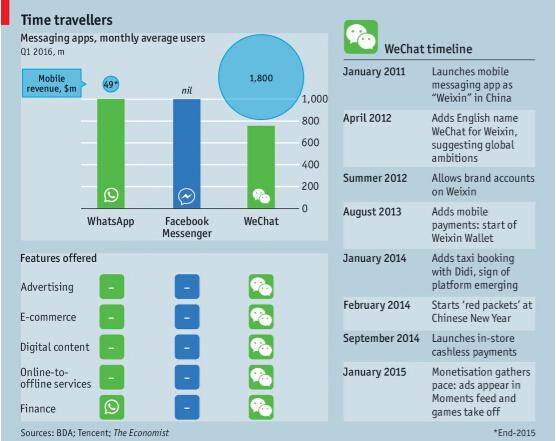
Perhaps all messaging platforms hope to become WeChat: it accompanies users through all aspects of daily life. In users’ minds, WeChat is an indispensable service. Users can not only chat with friends, groups or strangers, but also conduct business or e-commerce activities, access financial applications, play games, and even connect to various IoT devices.
Although WeChat’s number of active users is growing slower than Facebook’s, WeChat leads the way in terms of monetization and user engagement. KPCB analyst Mary Meek estimates that Chinese users use WeChat for an average of 70 minutes a day. Facebook said its users spend a total of about 50 minutes a day on Facebook, Instagram and Messenger.
WeChat’s approach is very similar to Messenger, in that it also integrates third-party applications into its ecosystem. However, where Messenger is just getting started, WeChat has already achieved success. A report by eMarketer, a market analysis agency, estimates that WeChat’s average revenue per user exceeds US$7, and the vast majority of its users are in Asia. Facebook's average revenue per user in the Asia-Pacific region was only US$5.45 last year.
WeChat has a lot to learn from Facebook. For example, using WeChat Wallet, users can call a taxi, pay utility bills, and purchaseMovie tickets, hotel reservations, or discounts, and shopping on JD.com.
When you ask users about their experience on WeChat, you often hear nothing but praise. One thing WeChat does particularly well is provide customized experiences to target groups.
More importantly, WeChat continues to provide new innovative features and continues to surprise users. At this point, WeChat is far ahead of other messaging platforms. Grabbing red envelopes during the New Year is a good example. Although Facebook Messenger is a good communication platform, so far it has not provided any surprises related to user segmentation.
And another big difference is that WeChat is not only a messaging platform, but also has social network elements. Users can update their status on WeChat or follow the official accounts of celebrities or brands. In China, brands often use WeChat as a primary channel for PR, content and brand marketing. Facebook clearly has this intention, but it lacks the influence that WeChat has in China.
WeChat’s real big move is the integration of payment functions. This feature is not only easy to use, but also fun. You can send money to friends, pay merchants, and sometimes get discounts. So in China's big cities, some people have given up using cash altogether.
The biggest opportunity for Messenger is in markets like India, which are very similar to China. But Facebook so far still focuses on the US market. Facebook should try to shift its focus and learn from WeChat's approach in e-commerce, which could help it increase its average revenue per user in Asia-Pacific and other regions.
People are sharing less and less content on Facebook, and Facebook has yet to find a real way to reverse the downward trend. Although Messenger has a huge user base, it needs to remain innovative and think about what users want, rather than focusing on making money.