
From May 11th to 13th, 2016 Asia CES was held in Shanghai. At the exhibition, the most popular thing was the virtual reality equipment. Since many products are not yet on the market, consumers who love early adopters come here to experience the latest equipment and technology and participate in trial trials. There were long queues at many VR/AR booths.
On the other hand, it is different from the traditional impression that VR/AR equipment is contracted by large foreign technology manufacturers. In interviews, Jiemian News reporters found that since VR/AR represents an industry trend, the capital market is also making arrangements, and a number of domestic VR/AR equipment manufacturers have emerged. They all firmly believe that their products are different from other brands. Some even take the low-price and cost-effective route, and some have applied for partial patents in the research and development of VR/AR equipment.
Below, Jiemian News reporters will take you into CES Asia to get up close and personal with these VR/AR devices:
1. Dapeng VR all-in-one machine
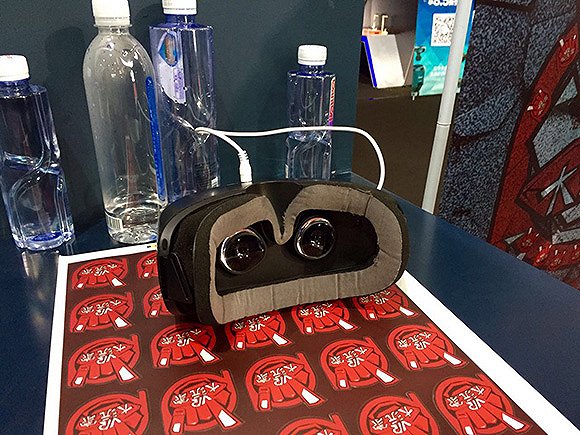
From the outside, there is no essential difference between Dapeng VR and other VR headsets. The current crowdfunding price on Taobao is 1,499.
The Jiemian News reporter played the game for about 5 minutes, and the picture quality was relatively clear. The operation method is not significantly different from other VR devices. But what stands out about the design of this product is that it takes into account the vast number of myopic people on the market. The degree of the mirror can be adjusted according to different people.
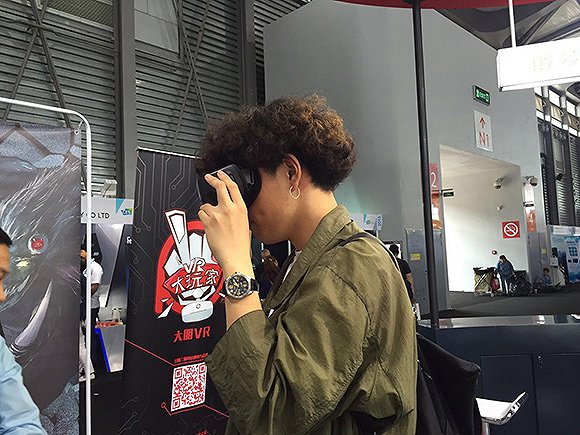
According to Dapeng staff, the lenses of this product use optical lenses from all over Japan. The picture is not easily deformed. The pupil range of the people it is suitable for is from 54mm to 74mm. Regardless of whether they wear myopia glasses or not, they can participate in experiencing this product. This device has a 120-degree arc, allowing you to fully experience the full immersion effect.
In terms of content, Dapeng has also established its own content aggregation platform 3D Bobo, which claims to have as many as 2.3 million users. Most of the company's employees come from domestic and international technology companies such as Intel, BAT, Shanda, and PPTV.
Up to now, Dapeng has obtained 10,000+ hours of genuine film and television resources; 100+ games have been continuously updated, and have been recommended by Alibaba VR Lab. Dapeng Helmet claims that its market share in China has reached 68%.
2. Dlodlo VR
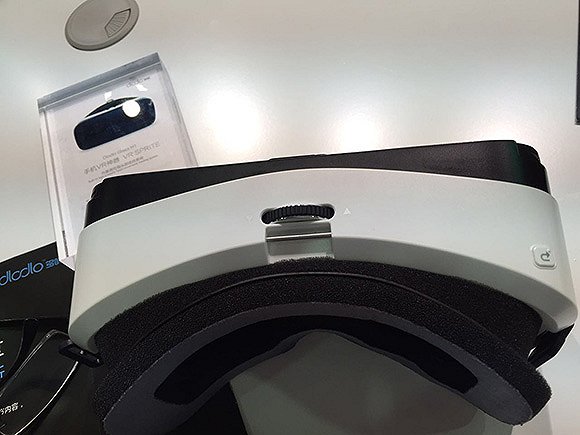
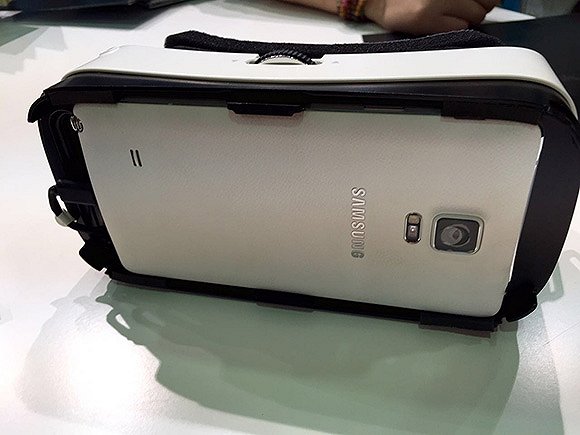
There are two types of DlodloVR devices. One is a helmet product, and the other is a product that supports Android devices, similar to Google Cardboard.
The popularity of VR products has been questioned. Even with excellent game content and clear video experience (such as HTC Vive), it is still not optimistic. The reason is that most VR devices on the market fall into two categories. One category only requires a mobile phone to be stuck into a plastic box with two magnifying glasses, and the viewing experience is very bad; the other category is a helmet that has a good experience but is expensive and inconvenient to carry, making it difficult to become a mass consumer product.
When a reporter from Jiemian News asked about the difference between Dlodlo’s VR equipment and other products during the experience, the staff explained that compared with the previous generation of smart glasses, the biggest highlight of Dlodlo is that it is lighter and thinner (78g weight, product size 147mm*55mm*16mm).
In terms of hardware, it uses a bionic optical imaging system to form ThinVR optical imaging technology, which is more realistic with a 2K+ resolution screen display and creates a better sense of immersion.
At the same time, due to the pixel problem of the 2K+ screen, its latency is even lower, which has been reduced to 10ms. Even if you are nearsighted, you can use it even if you take off your glasses. Currently supports Android phones.
When the reporter experienced it, he clearly felt that its imaging effect was not good due to pixel problems. So the sense of immersion is not that strong.
3. Second Space Rainbow Stone VR
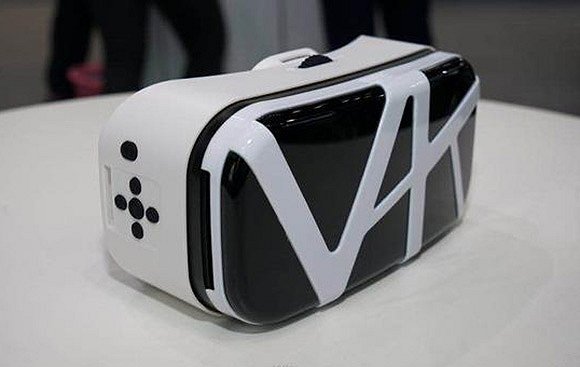
This product also has 2K imaging and is divided into PC version and mobile version.
According to the staff, the biggest advantage of this VR device is that it is equipped with a universal external gyroscope, which allows the mobile phone to obtain a stable experience like the PC version and avoids the distortion of the mobile phone's gyroscope output data due to heat.
At present, this device equipped with a gyroscope has applied for a company patent.
The mobile version is priced at 299, and the PC version is priced at 2,999. At the same time, the company is still cooperating with gyms, and also wants to penetrate into various fields such as home decoration and cinema live broadcast.
Take home decoration as an example. Using a virtual reality home decoration platform to create a virtual model room, compared to traditional pictures or sandboxes, owners can personally "walk" into parks and buildings thousands of kilometers away or even a few years later. for the best immersive experience.
But when the reporter experienced it, he still had the biggest problem, which is that this product has 2K pixels. Its imaging effect is not as good as advertised.
4. Pico
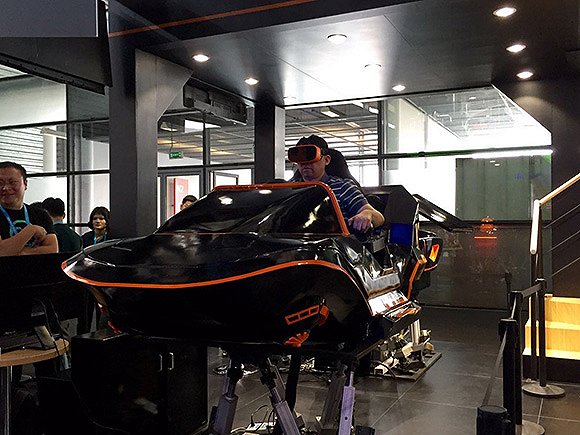
Gathered in front of Pico’s boothLots of crowds. Everyone is rushing to try out the games that come with the PicoVR device.
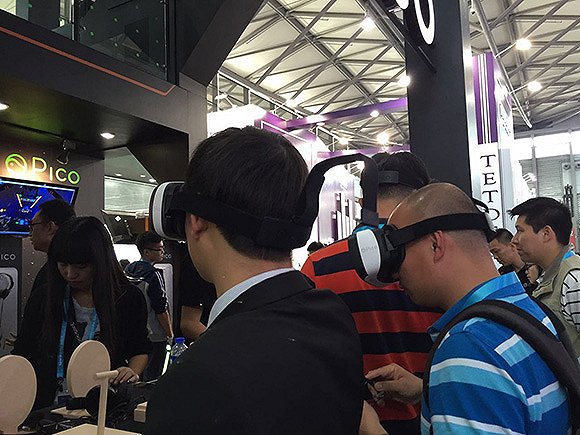
In terms of product configuration, Pico uses Qualcomm Snapdragon 820 chip, 2K display, compatible with PC VR applications, and is mainly targeted at the gaming market. The most important point is that because this VR product is equipped with a game controller, part of the weight of the helmet is reduced. It can also optimize user experience.
In April 2015, this company cooperated with LeTV to launch a super helmet; in April 2016, it released the first Xiaolong 820 VR all-in-one machine. The current price is 3399.
5. Otto Technology AR Glasses
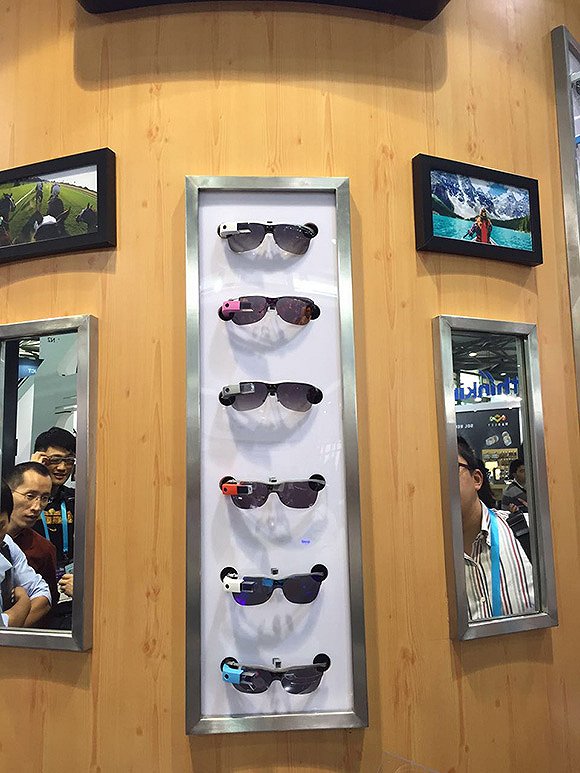
The company’s AR glasses are displayed at the Otto Technology booth. Its dazzling display makes people feel like they have mistakenly entered a fashion store.
This pair of glasses, which look very much like Google Glass, can last for 8 hours with normal use. However, due to the large number of people trying on the products at the booth today, the commentators usually hold on to the power bank while letting everyone experience it.
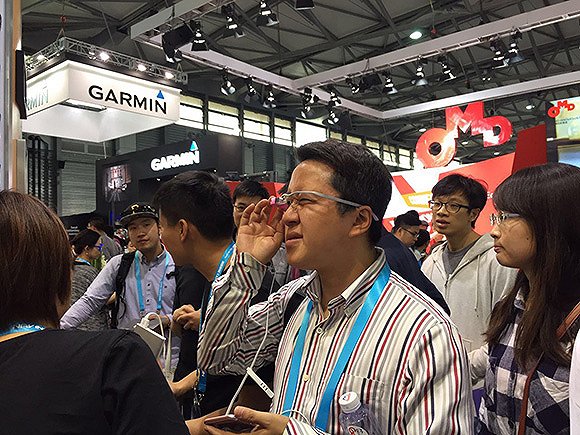
The functions it can implement include: voice shooting, real-time sharing, voice communication, voice navigation, etc. Unlike Google Glass, it is priced at 2,999 yuan. However, there are obvious problems with the picture quality and it is not very clear. The reporter has 300 degrees of myopia and it is very difficult to focus while wearing it.
6. Cycling AR glasses specially designed for sports
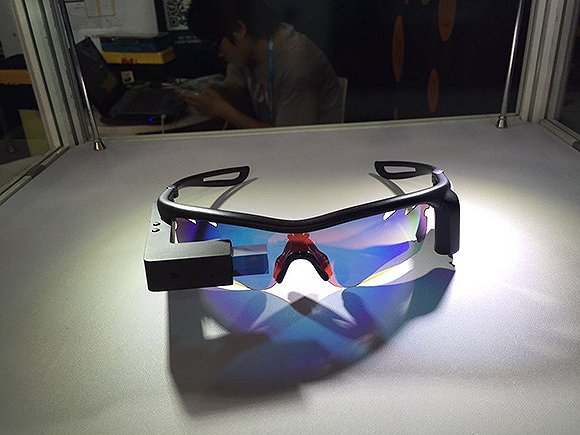
In addition to general-purpose AR glasses like Google Glass, more and more companies are focusing on specific industries and specific groups of people. At the 2016 Asian CES, Jiemian reporters discovered an AR glasses specially built for cyclists.
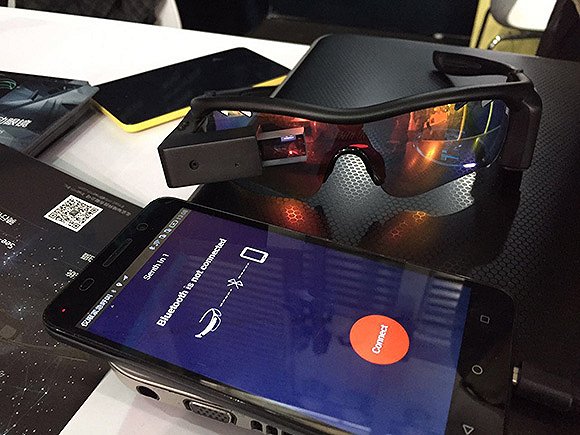
In appearance, it looks like sunglasses. The specific covered functions are shown in the figure below:
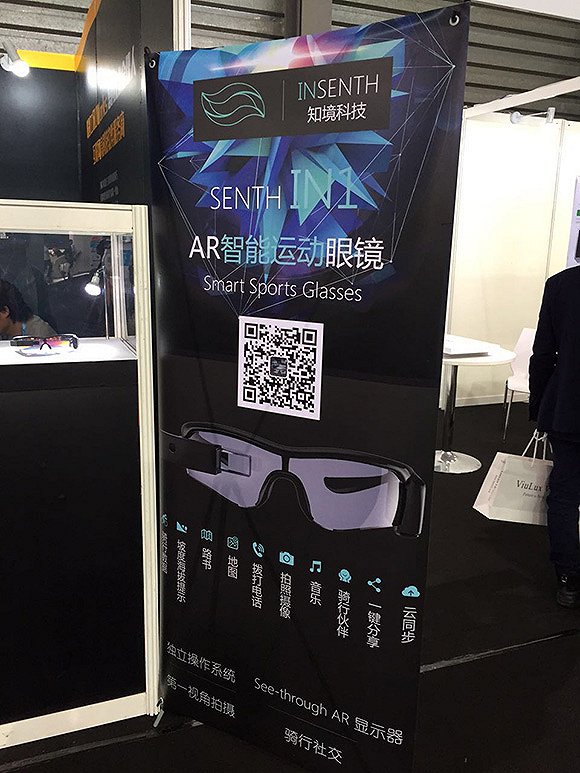
It is worth mentioning that it can be connected via Bluetooth and remotely controlled via Bluetooth buttons. Accurately record your exercise data. This oneThe purpose of the company is to free your hands.
However, will wearing such glasses on your head really not affect the riding effect?
7. Peripheral VR glasses
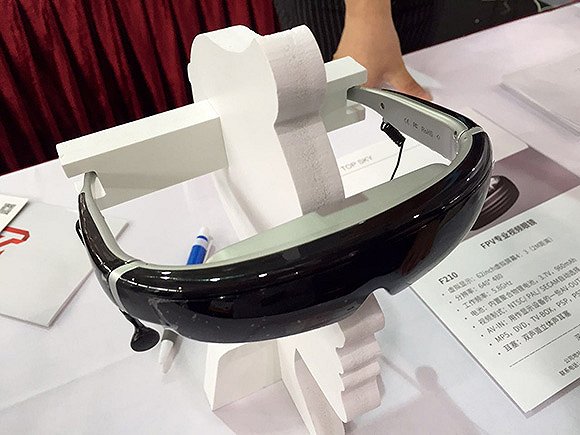
When you play games on PS or Xbox, have you ever had an idea: It would be great if peripheral VR glasses were as convenient as a keyboard and mouse. Now, Shenzhen Hongtian Digital is making such FPV professional video glasses.
From a hardware perspective, it does not have very high configuration. The internal 62-inch virtual screen is 4:3, and the space distance is required to be at least 2 meters. The resolution is only 640*480, which is not on the same level as the 1280 resolution of some VR glasses.
The main purpose of this machine is to use it as a display device for some AV-OUT devices, such as FPV, drone, MP4, TV-BOX, PS2, PS3, PS4, PSP, etc. Its purpose from the beginning is to provide a better interactive experience for other game hardware.