In 1939, Hitler's Nazi German troops invaded Poland, igniting the Second World War.
During that war, Hitler's engineers secretly developed some ambitious weapons projects. In a short period of time, they created cutting-edge technology that was decades ahead of the times.
In the 2015 autumn issue of "Weapons of WWII" magazine, columnist KM Lee introduced some of these cutting-edge weapons and equipment in detail.
Stealth "Flying Wing" bomber
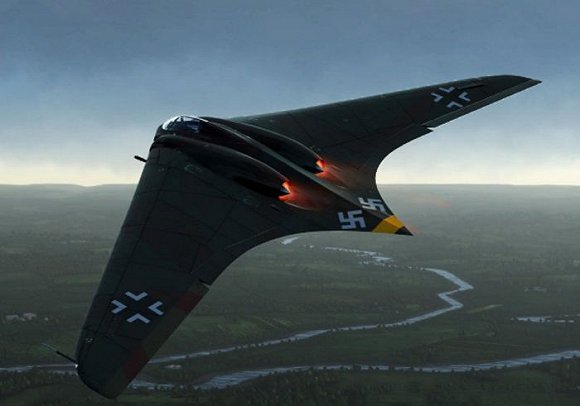
The Horten Ho229 bomber, known as "Hitler's secret weapon," can fly at an altitude of 49,000 feet (about 14,935 meters) and at a speed of 600 miles (about 966 kilometers) per hour, carrying 2,000 pounds (about 900 kilograms) of ammunition.
This bomber is equipped with a pair of turbojet engines, two cannons and R4M rockets. When it first flew in 1944, it became the world's first stealth fighter.
According to information from the Smithsonian Museum in the United States, Hermann Göring, Commander-in-Chief of the Nazi Air Force, allocated 500,000 German marks to brothers Reimar and Walter Horten to build this aircraft.
However, the Horton bomber, which was plagued by various problems, did not serve in actual combat for long. However, the bomber's engineering did inspire the creation of modern stealth aircraft, such as Northrop Gruman's B-2 bomber.
Fritz X radio-guided bomb
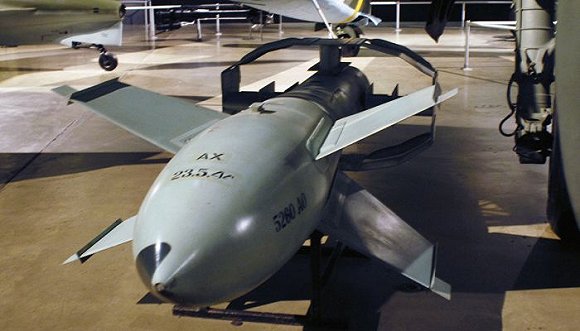
The Fritz X radio-guided bomb is considered the "originator of smart bombs." The 3,450-pound bomb is equipped with a radio receiver and a complex tail control system to help it aim at its target.
According to U.S. Air Force data, the Fritz
Less than a month after the Fritz X came out, the Nazis used it to sink the post-Mussolini Italian battleship "Roma" off the coast of Sardinia in December 1943. However, the actual combat use of the Fritz X was very limited, and only a small number of Luftwaffe aircraft could carry it.
Remotely controlled track mines
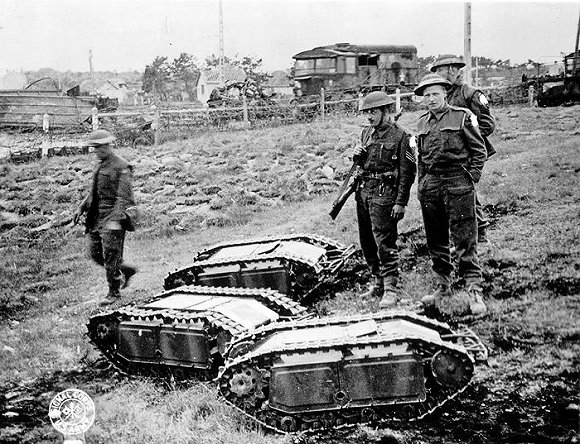
The Nazi's "Goliath" track mine (Goliath) looked nothing like the biblical warrior Goliath. Known as the "doodlebug" by the US military, the mini-tank bomb was controlled by a joystick and driven by two motors. The motors were later replaced with gas engines.
Goliath mines can carry 133 pounds to 220 pounds (about 60 kilograms to 100 kilograms) of high explosives and are used to detect paths in minefields and deliver ammunition to defensive positions.
The Nazis built more than 7,000 Goliath mines during the war, which pioneered the development of radio-controlled weapons.
A rocket-propelled aircraft capable of traveling 300 miles per hour faster than the fastest aircraft of its time
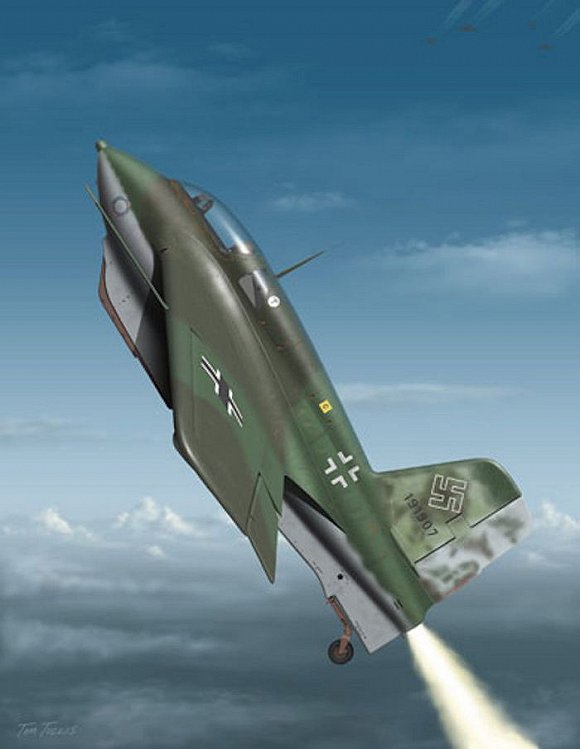
In the late 1930s, the Germans had been developing the Messerschmitt "Me 163 Comet" fighter aircraft (Messerschmitt Me 163 Komet). This is a rocket-propelled jet fighter that can reach speeds of 700 miles per hour.
"World War II Arms" magazine wrote: "In that era, the much touted American P-51 Mustang fighter jet (P-51 Mustang) had a top speed of less than 440 miles per hour (about 708 kilometers per hour)."
In the end, more than 300 Comet fighters were produced, equipped with two 30mm cannons. The Comet's speed was a double-edged sword. On the one hand, it was fast enough to dodge Allied anti-aircraft guns, but on the other hand, it was too fast to hit Allied aircraft.
(Translator: Wang Yinuo Editor: Zhang Xiaotian)