
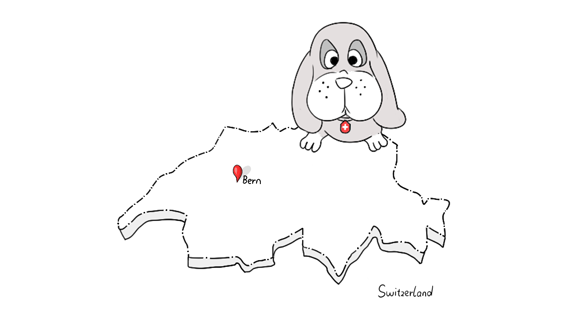
A country with only over 40,000 square kilometers
Equivalent to 7 times the size of Shanghai
The land is not big and the resources are limited
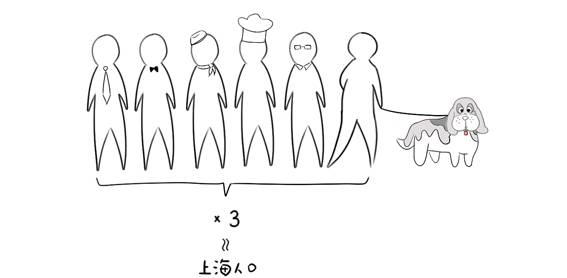
Population 8.29 million
Only 1/3 of Shanghai
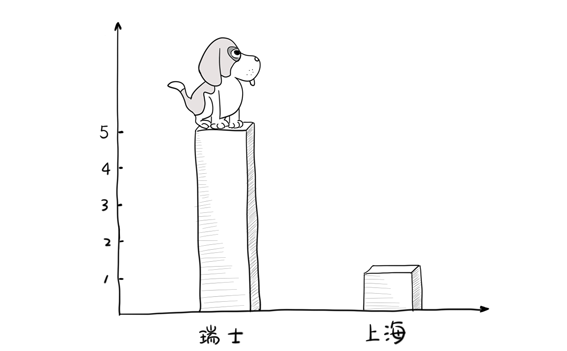
Last year, per capita GDP reached 80,215 US dollars
More than five times that of Shanghai
When you mention it, do these three words come to your mind:
Skiing, watches, banks
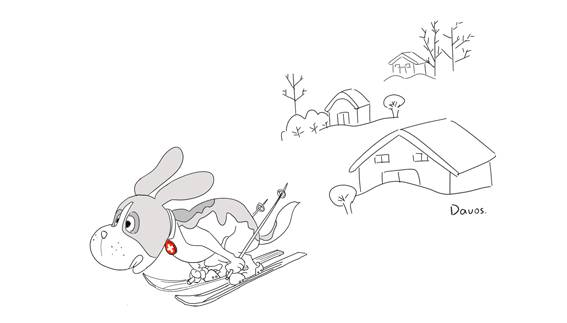
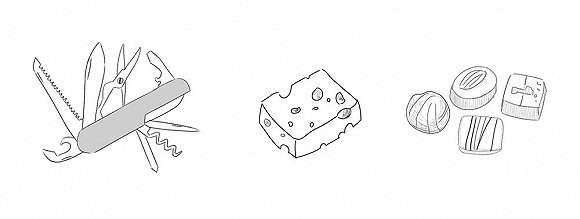
Well, actually there are sabers, cheese and chocolate...
We are still a tennis powerhouse...
Martina Hingis and Roger Federer are both Swiss
...Football is not weak either
Has reached the World Cup finals nine times,
In the 2010 World Cup in South Africa, they defeated the favorite Spain 1:0
2014 Brazil World Cup, reaching the top 16
Above.
But what you may not know is that in Switzerland
"I" is also famous
The legend about the Saint Bernard is like the loyal dog Hachiko to Japan
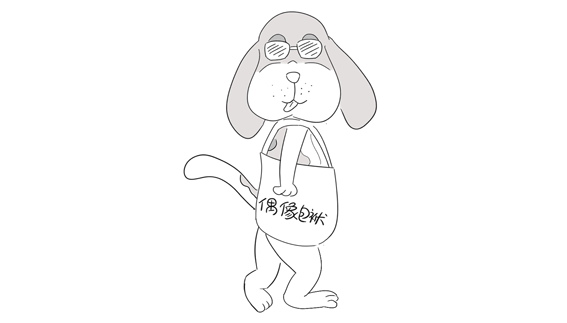
The St. Bernard dog is named after the St. Bernard Abbey in the Alps and is famous for guarding travelers who cross the dangerous Alpine passes. It has a docile personality, is easy to get close to, is loyal to its owner, and is very tolerant of children. The most famous St. Bernard dog is called "Barry" and has rescued 40 people.
What you may not know is
Switzerland
It is also the happiest country in the world according to the United Nations
It is also the most competitive country in the world as rated by the World Economic Forum
It is also the country with the highest per capita income in the world
……
Specially
Switzerland also ranked first among the world's most innovative countries in 2016
This is the fourth consecutive year it has received this highest rating
If you are familiar with Israel as a "startup nation," you may not understand why Switzerland has become a globally recognized "innovation nation." In the 2016 Global Innovation Index report jointly launched by the World Intellectual Property Organization, Kearney Consulting and other institutions, Switzerland once again topped the list.
It scored high on all six pillars that measure a country's innovation capacity, including institutions, human capital and research, market maturity, business maturity, knowledge and technology output, and creative output, higher than the average score for the top 10 high-income groups to which it belongs. Such as political environment (ranked 3rd), research and development (R&D) (ranked 6th), investment (ranked 9th), knowledge workers (ranked 3rd), knowledge creation (ranked 1st) and network creativity (ranked 5th), etc.
Among the more than 120 countries participating in the Innovation Index ranking, Switzerland ranks ahead of Sweden, the United Kingdom, the United States, Finland, Singapore and Germany. Over the past six years, Switzerland has performed stably, ranking first in the European region, and consistently ranking first among high-income countries classified by the Global Innovation Index. From 2014 to 2016, Switzerland has performed stably in terms of innovation output, consistently ranking first.
However, Switzerland's innovation efficiency has declined compared with last year, falling from 2nd to 5th place, and its ranking of major innovation investment is lower.
Switzerland’s overall strengths and weaknesses in the Global Innovation Index model
Advantages |
Weak |
|
Global Innovation Index (Ranked 1) Innovation output sub-index (ranked 1) 1.1. Political environment (ranked 3rd) 1.1.2 Government effectiveness (ranked 2) 2.3.3 Average expenditure of the top three global R&D companies (ranked 3rd) 2.3.4 Average score of the top three QS universities (ranked 3rd) 4.2.2 Market value (ranked 1) 4.3.1 SuitableUse tax rate weighted average (ranked 1) 5.Business maturity (ranked 3rd) 5.1. Knowledge workers (ranked 3rd) 5.1.1 Proportion of knowledge-intensive employment (ranked 3rd) 5.2.1 University/industry research cooperation (ranked 3rd) 5.3.1 Intellectual Property Payment (ranked 4th) 6.Knowledge and technology output (ranked 1) 6.1. Knowledge creation (Ranked 1) 6.1.1 Number of domestic patent applications (ranked 1st) 6.1.2 Home countryNumber of PCT international patent applications (ranked 1st) 6.1.4 Scientific Papers (ranked 4th) 6.2.3 Total expenditure on computer software (ranked 3rd) 6.2.5 High-end and mid-to-high-end technology output (ranked 2nd) 6.3.1 Intellectual property income (ranked 1) 7.2. 7.2.3 Global entertainment and media market (ranked 2nd) 7.3.2 Country code top-level domains (ccTLDs) (ranked 1) |
1.3.1 Easy to start a business (ranked 57th) 2.2.2 Proportion of science and engineering graduates (ranked 44th) 3.1.3 Government Internet Services (ranked 64th) 3.1.4 Electronic participation (ranked 84th) 4.1.1 Easy access to credit (ranked 53rd) 4.2.1 Easy to protect small and medium investors (ranked 86th) 5.3.2 High-tech imports (ranked 56th) 5.3.4 Net FDI inflow (ranked 53rd) 6.2.1 GDP growth rate/worker (ranked 83rd) 7.2.4 Proportion of printing and publishing production (ranked 45th) |
R. James Breiding is a master of the Swiss Business School, Harvard Kennedy School, and a researcher at the Harvard National Development Center. In his book "The Nation of Innovation", he described and evaluated the source of innovation in this small European country. This article is excerpted from the preface of the book, with some editing and deletions. Let’s get to know this amazing country that ranks first in the 2016 Global Innovation Index.
○ ● ○ ● ○
A country of innovation
“Switzerland has succeeded precisely because it is small and poor” - Jean-Pierre Roth, former president of the Swiss National Bank
In the highly creative book "National Competitive Advantage", Harvard University professor Michael Porter believes that due to the excessive use of low-cost labor, the basis of competition of most enterprises has rapidly shifted to the innovation and absorption of knowledge. Therefore, a country's competitiveness mainly depends on how it uses the unique factors in its national history and national characteristics to improve its innovation capabilities and labor productivity.
Michael Porter did not list Switzerland as a model in his comprehensive study, as he could have done. Indeed, long before the modern global environment took shape, the importance of the country as a competitive force had long been highlighted in Switzerland. Surprisingly, since the early 19th century, a large number of globally competitive enterprises have emerged in many industrial sectors in the small landlocked country of Switzerland. This book describes and attempts to explain how, starting from the early days of the Industrial Revolution, Swiss companies became global leaders in textiles, machinery, chemicals, and other industries. What this book seeks to show is that this continuing and ever-expanding success is largely attributable to the country's national values, cultural traditions, social institutions, and historical origins. Next, this book also discusses how to deal with the rapidly changing global work environment in today's world.Questions have been raised about whether Switzerland can maintain its old leading position. If so, can the so-called Swiss model provide lessons for entrepreneurs and policymakers in other countries?
No other country of such a small size can achieve such high levels of disposable income while providing a fairly reasonable distribution of social benefits. No country of similar size maintains leadership in so many industrial sectors, despite the effects of globalization. Even other developed countries are struggling to avoid burdening future generations with huge debt burdens or mired in providing for their citizens’ pensions and health care costs. There is no other country where the individual rights of citizens are so strong and their opinions are so valued.
Switzerland is successful because it is small and poor
Jean-Pierre Roth, former president of the Swiss National Bank, has long said: Switzerland has succeeded precisely because it is small and poor. Of course, to say the least, the probability of such success is extremely slim. Switzerland is lacking in mineral resources, the land in most areas is barren, and the terrain is not suitable for agricultural production. The only thing that is abundant is water resources: whether it is residential or industrial water, there is no problem. Ice and snow provide convenient conditions for the development of the entertainment industry, and water has also become the main channel for energy development.
Despite its location in the center of Europe, Switzerland's mountainous terrain has posed continuous challenges to transportation over the centuries. Switzerland has no direct access to the sea. Compared with those coastal countries, Switzerland is at a clear disadvantage. In the early modern period, those countries took advantage of this advantage to gain a place in the international market, and at the same time gained imperialist power and seized colonial wealth. On the contrary, transport routes through the Alps placed Switzerland in a strategically important position linking important commercial areas of southern and northern Europe, although this provided potential opportunities for its more powerful neighbors to expose their imperialist ambitions.
Switzerland's language, culture, politics and religious sects have always shown a pluralistic character. To say the least, this characteristic is usually not conducive to maintaining peace and achieving public goals. The former Yugoslavia is an example. This heterogeneous character was consolidated with the arrival of early immigrants from various foreign cultures. Nearly one-third of Switzerland's current population is immigrants or descendants of immigrants. Many immigrants in the past moved to Switzerland as political refugees, taking advantage of Switzerland's long-standing policy of neutrality. The latest wave of immigrants reflects Switzerland's labor demand.
However, the Swiss have found a secret to living in harmony that is the envy of many other countries. For more than two centuries, Switzerland managed to remain neutral in international conflicts, which both preserved the country's independence and built a strong industrial base.
Switzerland’s rise never had a set goal: there was no overarching strategy imposed by a powerful government. Jacques Herzog, winner of the Pritzker Architecture Prize and co-founder of Herzog & de Meuron Architects (located in Basel, Switzerland), believes that Switzerland’s success is partly due to the lack of vision: “Vision restricts people’s thinking and requires guidance from others, both of which are incompatible with the Swiss concept of corporate development.”
High solidarity: few conflicts among Swiss companies
The Swiss tend to have a very high work ethic. This is a common occurrence in Switzerland and is undoubtedly crucial to industrial success. Even more unusually, Swiss practitioners demonstratedVery high professional standards.
In addition, Switzerland’s education system is also remarkable. While doing a good job in higher education, it also focuses on developing traditional vocational education (apprenticeship). People with professional qualification certificates will gain respect even if they engage in humble professions, and therefore they will be proud of their profession and identity.
There are few conflicts among Swiss companies, which promotes respect for workers. Improvements in productivity, controllability and credibility benefit from good relationships between companies, which makes Swiss companies more competitive in the international market and is also beneficial to good relations between labor and management.
Government departments: less control
The governance structure of the Swiss government is characterized by three principles: less regulation (“less is better”), federalism (administration and taxation are reduced to a minimum), and respect for citizens’ rights.
The Swiss government often behaves as the minimum requirement, which reflects the traditional "social contract" transaction characteristics, that is, the government provides public safety, social security and judicial fairness; in exchange, citizens should show loyalty to the government. Georg Kreier, former president of the Swiss Association of Private Bankers, believes that the Swiss do not want to be ruled by anyone at all: Just like farmers who want to buy the cheapest cabbage on the market, the Swiss bought a "social contract" on the market, giving up the least freedom in exchange for the least control.
The second important feature is Switzerland’s federal system. The Swiss cantons enjoy a high degree of autonomy, higher than the U.S. states and Canadian provinces. The Swiss believe that this management model can urge self-discipline among government departments at all levels. If Zurich imposed too many taxes, commerce would be diverted to Zug or Schwyz. If a planning authority somewhere is unwilling to approve a company's application for a factory, it's likely that a planning authority elsewhere will approve it.
The third factor is civil rights. Regularly organized referendums (effective democracy) illustrate this point very eloquently. Referendums are held in a variety of forms and with astonishing frequency, covering issues ranging from trivial to major, including working time, genetic research, mosques and European integration. What's most striking about these votes is that they're not aimed at some extreme outcome, but rather at confirming the strength of the centrist majority.
The end result of these three characteristics is the emergence of a "bottom-up social structure." Jonathan Steinberg, an economic historian and professor at the University of Pennsylvania, pointed out that Switzerland’s political system is “like a tumbler, which will restore its original balance no matter which way it falls.”